

What Is Memory Care?
“At Bridges, we center our approach to memory care around the individual. Our goal is to enhance residents’ well-being while reassuring families that their loved ones are receiving the specialized attention they need.”
Alicia Seaver, Vice President of Memory and Brain Health
A Note on Vocabulary
What Is a Memory Care Community Like?
It must be secure
Those with dementia are at risk of wandering and endangering themselves. So, memory care communities must be secure to keep residents safe, with extra measures in place beyond what you would typically expect from other senior living spaces.
Specialized care
Those experiencing memory loss need trained caregivers who understand the needs of individuals with dementia. These caregivers utilize specialized de-escalation techniques such as validation and redirection.
Engaging activities
Memory care communities will feature daily programs with activities tailored to those with dementia. Accessible exercises adaptable to various stages of dementia encourage socialization and mental stimulation.
Routines
Routines are critical in a memory care community. Predictable patterns in daily life help soothe an individual with dementia, so a consistent schedule reduces distress and confusion.
Therapeutic, purposeful design
Memory care communities feature easy-to-navigate layouts, calming color schemes, and familiar home-like settings. Intelligent, purposeful design choices take all possible steps to reduce agitation and distress.
What Does Care Look Like in a Memory Care Community?
24/7 Support and Nursing Oversight
Assistance with Activities of Daily Living (ADLs)
Therapeutic and Clinical Support
Technology in Care
Collaborative Care
What Are Some Specific Dementia Caregiving Techniques and Approaches?
Validation Therapy
Redirection and Gentle Guidance
Reminiscence
Person-Centered Care
Alternatively, read our article that covers 7 practical tips for dementia caregiving at home. These speak to a need to get creative as a dementia caregiver and move away from a mentality of ‘fixing’ behaviors, instead focusing on emotions. This is at the heart of memory care.
What Does Purposeful Design Mean in Memory Care?
Lighting and Visual Cues
Bright, even lighting minimizes shadows and glare, which can confuse or startle individuals with cognitive decline. Contrasting colors help define doorways, furniture, and bathrooms, improving independence and safety.
Simplified Layouts
Clear sightlines and open common areas help residents navigate confidently without dead ends or confusing hallways. Thoughtful artwork, memory boxes, or themed décor help residents recognize their surroundings.
Flooring and Furniture Choices
Non-slip flooring without busy patterns helps avoid visual misinterpretation and falls. Rugs are best avoided, since they can appear like holes or steps to those with dementia.
Safety Features
Secure doors, unobtrusive alarm systems, and enclosed courtyards allow residents to move freely within safe boundaries. Handrails and accessible bathrooms support balance and mobility.
Homelike Environment
Memory care communities should feel like a home rather than a facility. We need to reflect that through design choices. So, think of spaces featuring open kitchens, cozy living rooms, and personalized suites. In a community like Bridges®, we organize neighborhoods to feel homelike, with open kitchens and suites that connect directly to living spaces rather than long corridors. This layout helps create a true home-away-from-home atmosphere, encouraging personalization in private spaces and a real community feel in shared spaces.
What Are the Benefits of a Memory Care Community?

Find out more about the Bridges difference and the benefits of memory care.
About Memory Loss
What Does Dementia Do to the Brain?
Common Types of Dementia
What Are the Stages of Dementia?
Does My Loved One Need Memory Care?
“When a loved one is experiencing memory loss, it can be challenging to understand exactly what is happening and whether you should be worried about certain behaviors. It is important, once you notice a potential issue, to make notes of changes as they occur so you can track progress over time.”
– Alicia Seaver, Vice President of Memory and Brain Health
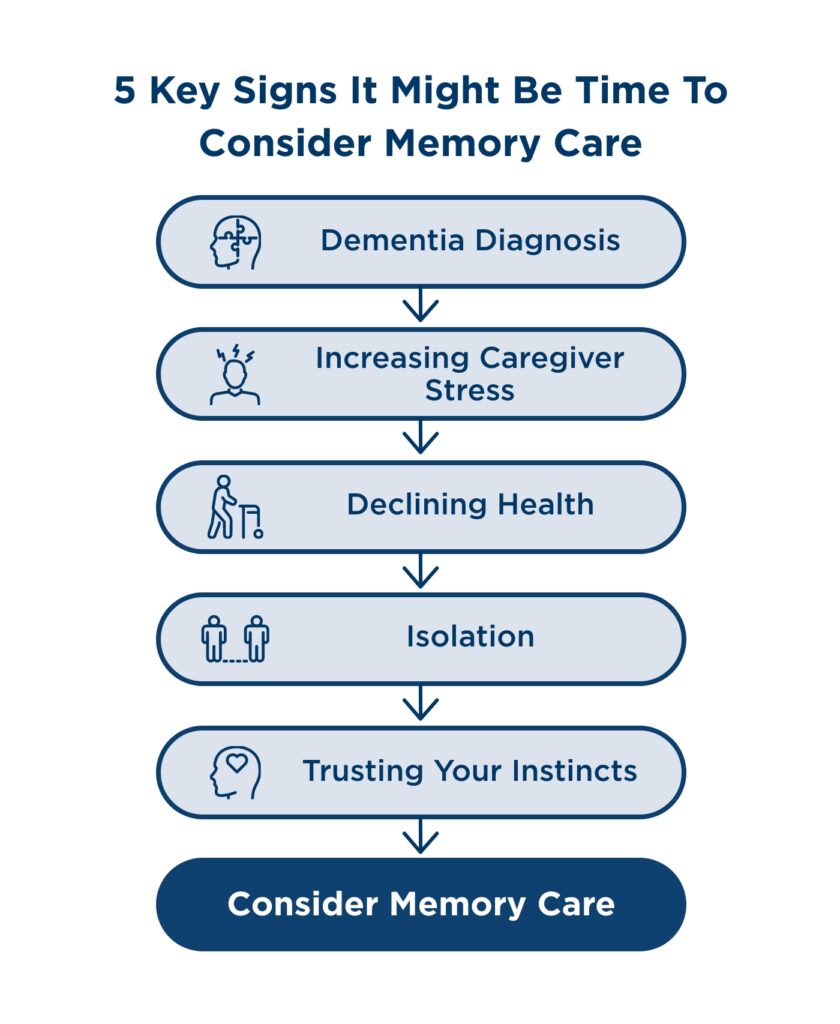
1. A dementia diagnosis
If a loved one has been given a dementia diagnosis, it’s time to start the conversation around memory care. Most seniors will want to stay at home for as long as they can to retain their independence. Of course, if there are friends and family to provide care when needed, this is a valid choice. However, even at this stage, you should be planning for scenarios as the disease progresses to ensure your loved one can stay safe and enjoy a continued quality of life.
2. Increasing caregiver stress
Dementia affects everybody who encounters the disease. When we talk about memory care, we include caregivers because they go through the trauma of the disease alongside their loved ones. There comes a time when a caregiver may not be able to provide the level of care needed, perhaps due to a lack of training, lack of time, burnout, or other reasons. When dealing with increased caregiver stress, know it’s okay to ask for help. A memory care assisted living community can lighten the load to protect the health of both caregivers and those with dementia.
3. Declining health
Hygiene and self-care become issues as the person with dementia loses the capacity to take care of themselves. It can be difficult for caregivers to fill the gap and provide the fundamental level of care needed to keep their loved one healthy. If caregiving is affecting your loved one’s or your own physical, mental, or emotional well-being, memory care can provide essential support and safety.
4. Isolation
Withdrawal and loneliness can worsen dementia symptoms. As you juggle other life commitments, it is incredibly challenging to provide structured opportunities for all-important engagement for your loved one with dementia. Memory care offers daily opportunities for meaningful social engagement. This regular schedule of activities is likely simply not feasible in a home setting.
5. Trusting your instincts
If your intuition says it’s time for memory care, it likely is. You are coming to terms with the reality of the situation and the fundamental change of your relationship with your loved one. This can be a traumatic process. Remember that choosing memory care when appropriate is a compassionate decision rooted in love.
How Do I Choose a Memory Care Community?
What Should I Look for During a Tour of a Dementia Care Community?
“A tour is more than a walkthrough; it’s your opportunity to experience the environment firsthand, observe team-resident interactions, and determine whether the community truly feels like a good fit for your loved one.”
Alicia Seaver, Vice President of Memory and Brain Health
How Much Does Memory Care Cost?
Pricing is often the biggest factor for many families when choosing a memory care assisted living community for their loved ones. Some may wonder how much it costs and how they will pay for the care, especially if the need comes unexpectedly.
Let’s first deal with the cost.
Memory care almost always costs more than traditional assisted living because it offers a higher level of specialized care. Beyond that, you need to account for various factors that affect cost:
- Level of care needed: The more care your loved one needs, the more the care will cost.
- Services provided: Many communities structure their payment plans based on the quantity of services provided. Naturally, in these circumstances, if you use more services, you’ll pay more per month.
- Location: Prices vary depending on where you are in the U.S. As a rule, memory care costs reflect the cost of living and real estate costs state-by-state. So, memory care in Boston, MA, is going to be more expensive than in Louisville, KY.
- Floor space: More spacious communities, both in terms of private and public shared spaces, tend to demand higher monthly fees.
- Amenities: The more amenities in any given community, the higher the monthly price.
What’s the Average Cost of Memory Care?
Recent data (as of 2025) puts the national average cost for memory care at around $7,900 per month, or nearly $95,000 annually. Most families can expect to spend between $190,000 and $285,000 for a two- to three-year stay. That said, some memory care communities charge as little as $4,000 a month or more than $10,000, depending on the factors mentioned above.
What’s Included in Memory Care Community Costs?
Though every community is different, monthly memory care fees typically include some services, but not others.
Here’s a summary table:
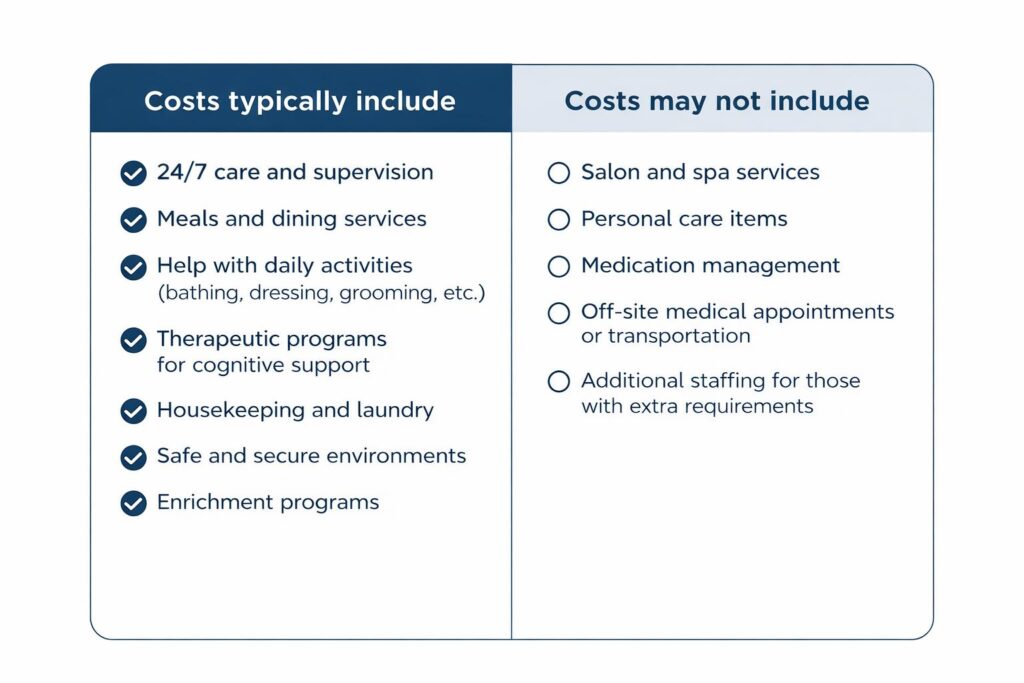
This is not an exhaustive list. It’s important to explore the fee structure to determine exactly what you are paying for and what may be excluded. Many communities will advertise a basic rate without showing you the costs of various extras. Others will offer different pricing tracks depending on the care level needed.
When evaluating communities, look for transparent pricing that clearly outlines what’s included in monthly fees.
Always schedule a call with a senior advisor to go through the intricacies of pricing. They will be more than happy to discuss the details with you.
Will Insurance Cover Memory Care?
Medicare does not cover long-term memory care. It may help with certain medical aspects, like hospital stays, prescriptions, or cognitive assessment, but not the residential or personal care elements.
Some other funding options to explore include:
- Long-Term Care Insurance – Ideal if purchased earlier in life
- Veterans Benefits – VA Aid & Attendance may provide up to $2,358/month
- Medicaid – Available in some states once assets are spent down
- Life Insurance Conversions – Some policies can be cashed in to help pay for care
- Reverse Mortgages or Bridge Loans – May help access home equity quickly
Paying Privately: Planning Ahead for Dementia Care
Most families use a combination of personal assets, including:
- Home equity (via sale or reverse mortgage)
- Retirement accounts
- Investments, annuities, or pensions
- Savings or Social Security
Planning ahead makes a significant difference. Working with a certified financial planner or elder care advisor can help you navigate your options and project future costs.
Since every family’s financial situation is different, it’s critical to get individualized advice.
Read more about the costs of memory care with our articles on the basics of Medicaid and Medicare and how to use VA benefits to offset costs.
How Do I Prepare for a Move to Memory Care?
Transitioning to memory care is a big step for both your loved one and your family. While the change can feel overwhelming, thoughtful preparation and communication can ease the process. The aim is to set the stage for a smoother, more positive experience.
Talking to Your Loved One About Moving to a Memory Care Community
It’s not always easy to talk about memory care with someone experiencing cognitive decline. Emotions often run high, and responses will vary depending on the stage of dementia your loved one is in. That said, clear, respectful communication is key.
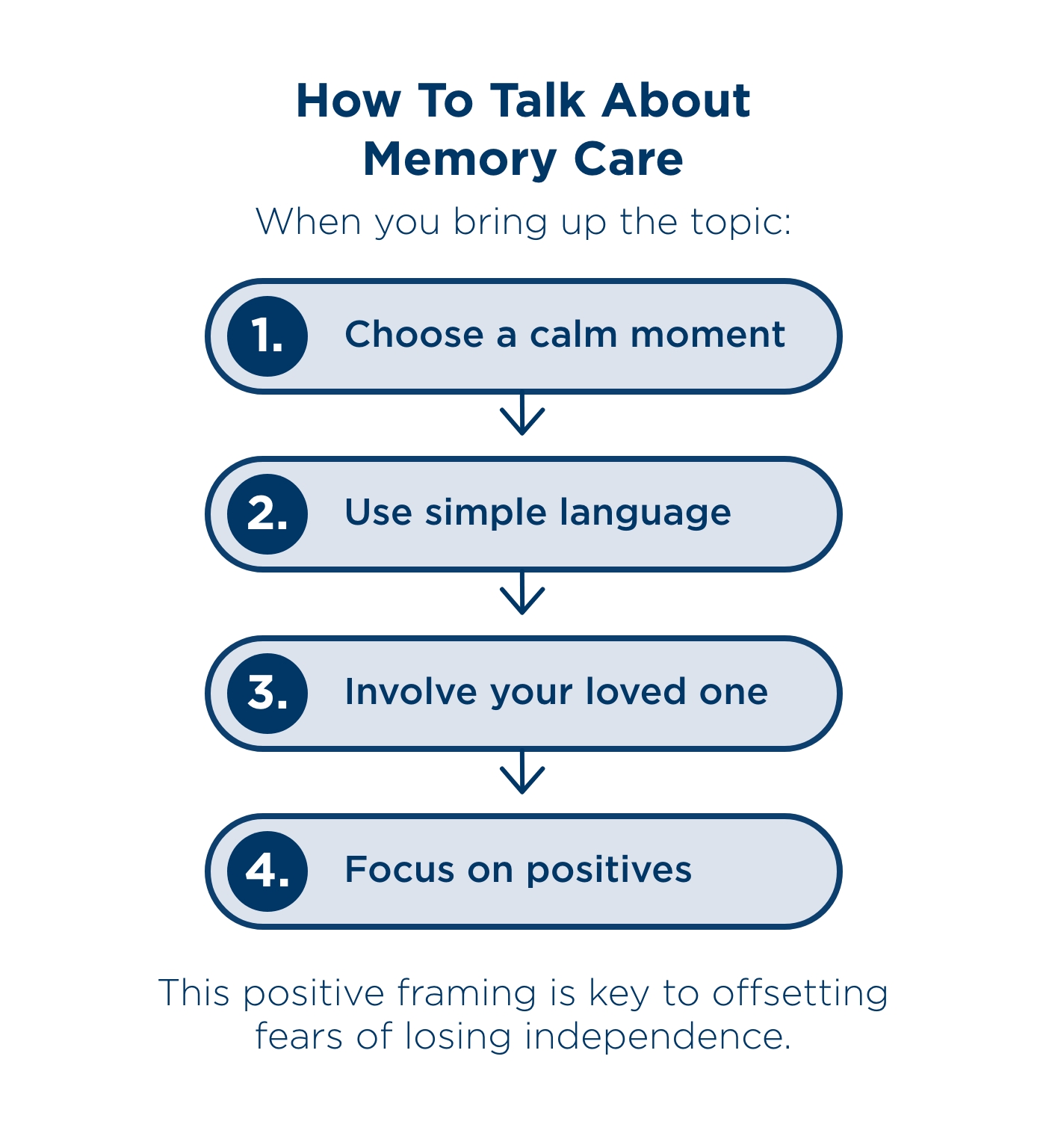
When you bring up the topic:
- Choose a quiet, calm time for the conversation.
- Use simple, reassuring language that emphasizes safety and quality of life.
- Involve your loved one in the decision-making process as much as is appropriate.
- Focus on how the move will help their independence, safety, comfort, and well-being. This positive framing is key to offsetting fears of losing independence.
Some loved ones find that framing the move as a “new chapter” or a “supportive community environment” can help reduce anxiety and resistance.
In some cases, a move to memory care happens suddenly, perhaps after a fall, hospitalization, or a behavioral crisis. These emergencies can feel like they come out of nowhere, like a bolt out of the blue, leaving little time for emotional and literal preparation.
“If you’re facing an urgent transition, know that you’re not alone. Communities experience this all the time. They can respond quickly, and teams can help you navigate logistics with compassion and clarity. Even under pressure, there are still ways to support your loved one emotionally and ensure their new environment feels safe and comforting.”
Alicia Seaver, Vice President of Memory and Brain Health
Helping Your Loved One Prepare for the Move
Every transition to memory care is unique. Some families have weeks or months to thoughtfully prepare, while others must move quickly due to an unexpected change in a loved one’s condition or a caregiver emergency.
If you have time to plan ahead:
- Involve your loved one in decisions where appropriate, such as choosing favorite décor or selecting familiar items to bring.
- Create a sense of continuity by replicating the look and feel of their previous home. This can help reduce disorientation and bring comfort. These decorating ideas offer inspiration for turning a new space into a welcoming home.
- Visit the community with your loved one ahead of time, if possible. Meeting team members, seeing the layout, and even joining an activity can make the environment feel more familiar.
If the move is sudden or in response to a crisis:
- Lean on the memory care team. They are used to working with families under stress and can offer step-by-step guidance, including what to pack, how to manage transportation, and how to gently introduce the new environment.
- Prioritize comfort and routine. Bring key personal items like a favorite blanket, framed photos, or familiar music to create a quick sense of stability.
- Prepare yourself emotionally, too. Sudden moves are often emotionally taxing for family caregivers. Know that it’s okay to feel overwhelmed. Remind yourself of the reasons for the decision. You are placing your loved one in a supportive, safe environment, and this is a loving decision.
Even with a rushed timeline, you can still support and care for a loved one during the transition.
Read more about moving into memory care:
- When is it right to transition into memory care?
- Decorating memory care apartments ahead of time.
- 7 Tips for the move
- Making the transition easier
Visiting Loved Ones in Memory Care
Your ongoing involvement and care are essential after your loved one moves into memory care. Visits offer emotional comfort and reinforce their sense of identity and connection.
Here are a few suggestions to make your visits meaningful:
- Go at a time of day when your loved one is typically most alert.
- Bring a favorite snack, photo album, or music they enjoy.
- Don’t worry if conversations feel one-sided or if there are moments of confusion and agitation. Your presence alone is reassuring.
- Be patient and flexible. Every visit will be different.
- Follow these tips for effective communication
- Visiting with children can be challenging. Read our advice on talking to children about dementia.
Read more about how and when to visit your loved one in memory care.
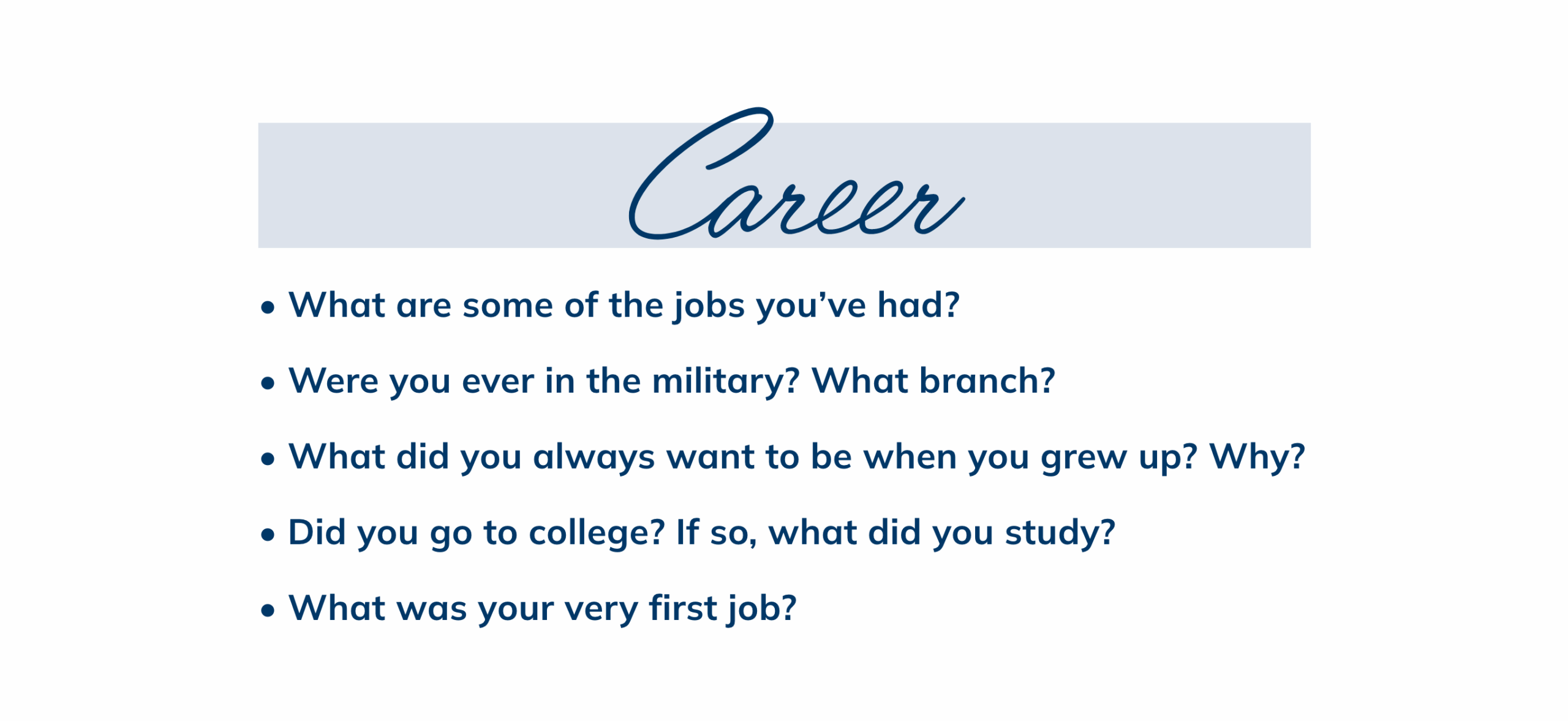
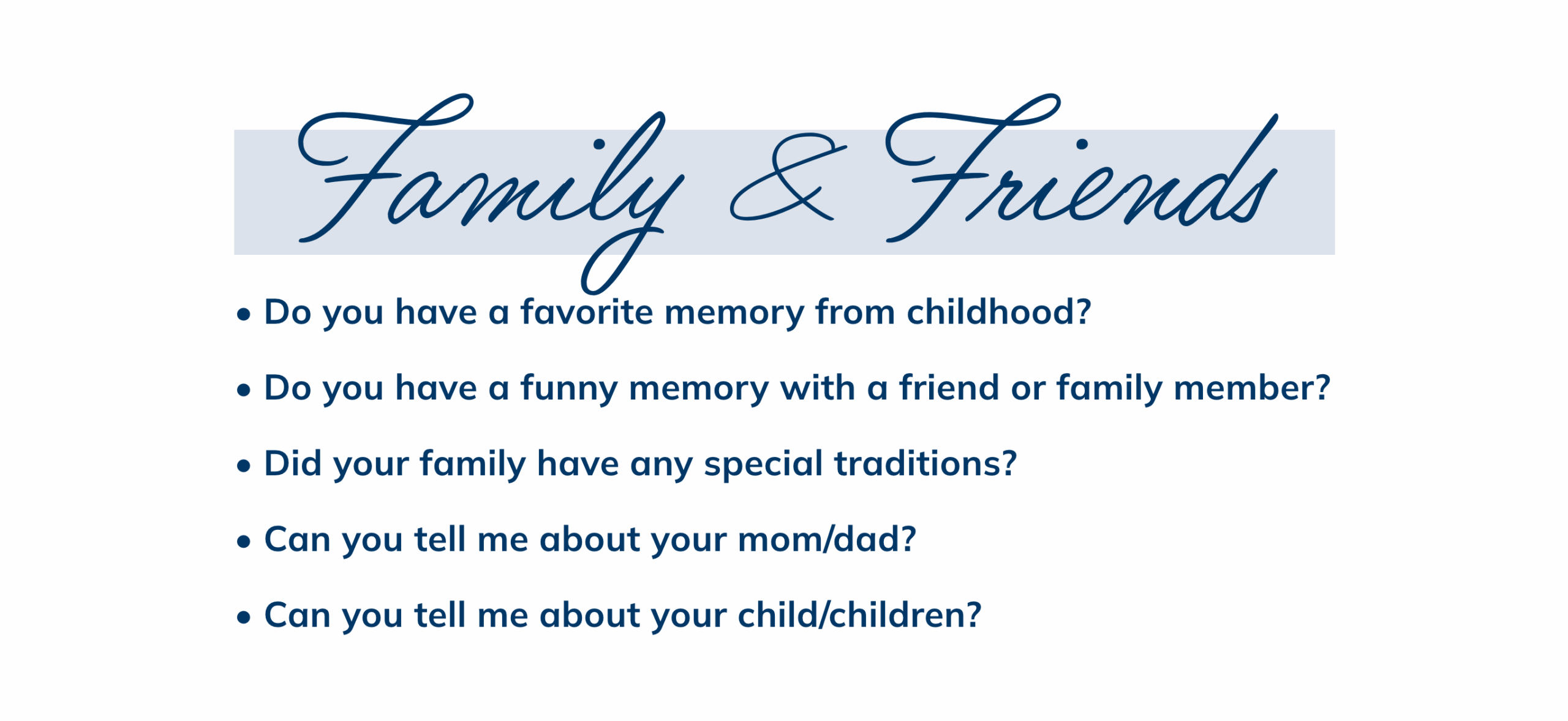
We also created some helpful conversation cards. Remember to stay patient and give your loved one plenty of time to articulate their answers.






What Does Programming Look Like in a Memory Care Community?
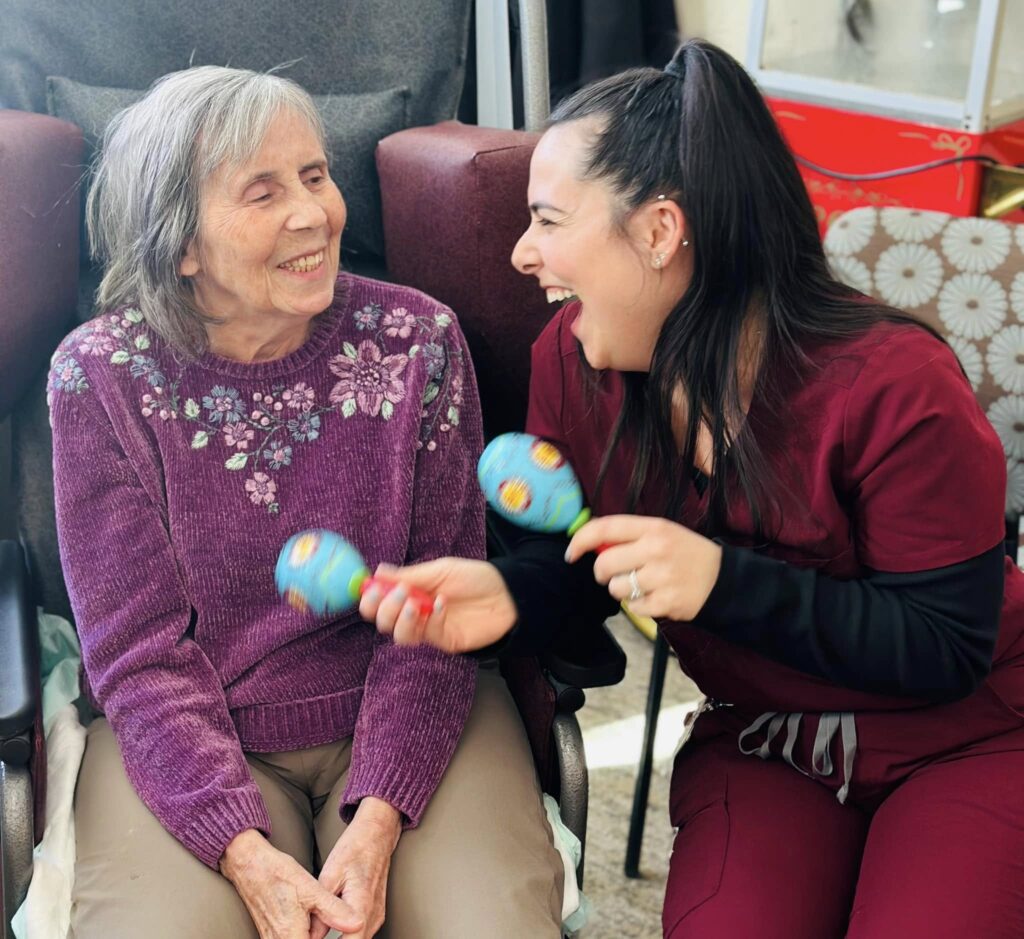
Daily life in a memory care community centers on structure, familiarity, and engagement. While safety and support are essential, equally important are the opportunities for residents to participate in activities that reflect their abilities and interests.
Strong life enrichment programs are built on personal knowledge. Care teams learn about each resident’s background, interests, and routines, using that information to shape a schedule that feels recognizable and comfortable. This approach helps reduce anxiety, encourage participation, and maintain a sense of independence.
Programming typically runs throughout the week, offering a steady rhythm of small-group and individual activities. Residents may take part in social gatherings, seasonal events, or quiet, one-on-one interactions depending on their needs and preferences. The goal is to create a balanced day that supports both engagement and rest.
Here’s what an enriching memory care lifestyle looks like:
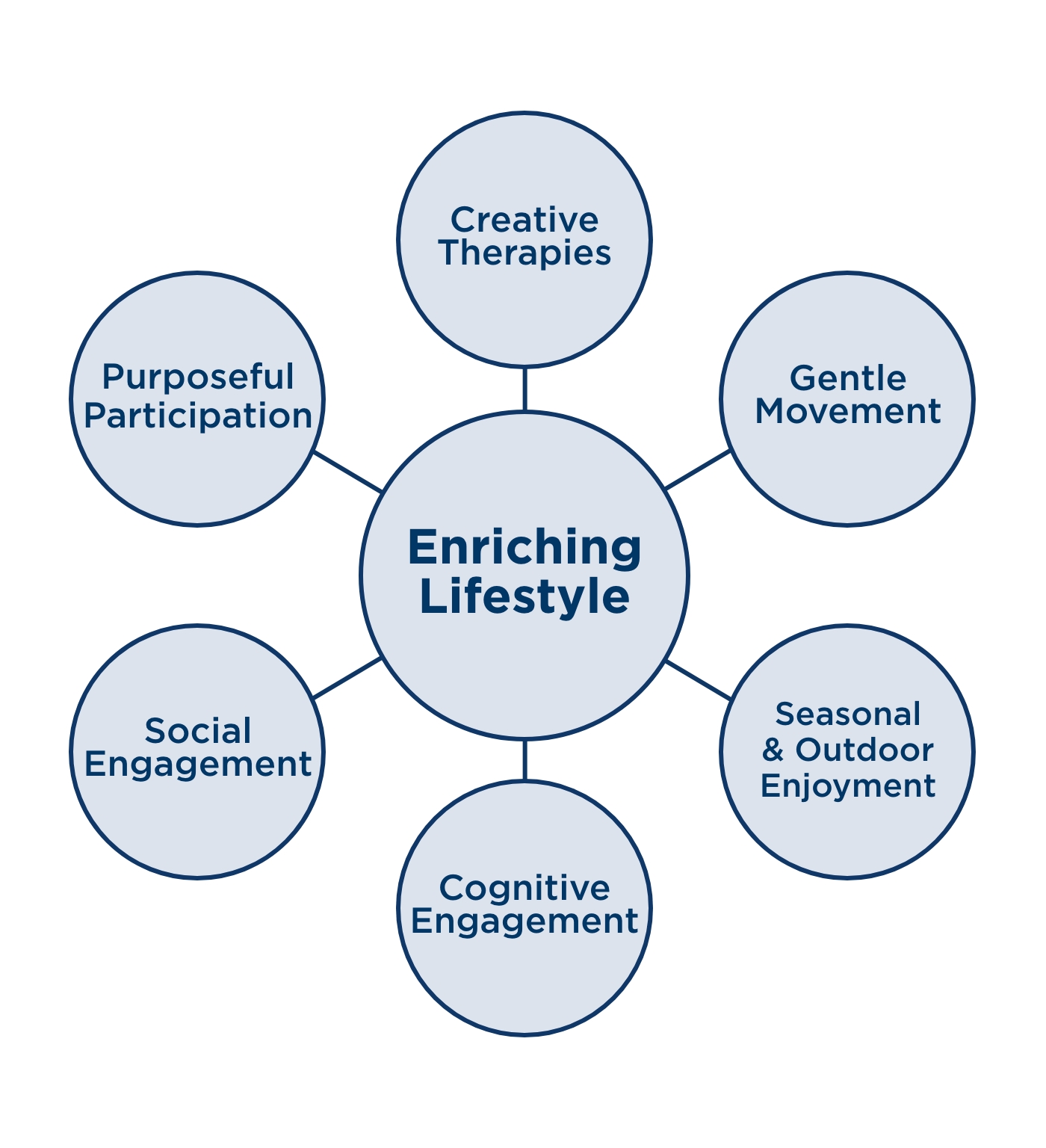
- Creative and sensory therapies
Residents may explore artistic expression, enjoy live music, or engage in calming sensory experiences through aroma, nature, or pet therapy. These moments help tap into long-term memory and soothe anxiety. - Gentle movement and physical wellness
Programs like yoga, tai chi, stretching, and group walks are part of daily life. These low-impact, safe exercises support strength, mobility, and mood, while also offering structure and a sense of accomplishment. - Seasonal and outdoor enjoyment
Whether it’s gardening in the spring, soaking up the sun with summer games and music, or taking in the beauty of a local park, residents stay connected to the world around them through safe and stimulating outdoor activities. - Cognitive and social engagement
From group discussions and trivia to reminiscing circles and storytelling, there are opportunities for residents to stay mentally active and socially connected. Communities design programs to support communication and preserve a strong sense of self. - Purposeful participation
Residents thrive when they’re given opportunities to contribute, not just receive care. Whether it’s helping prepare a meal or sharing a special talent, communities always try to honor each person’s individuality and strengths.
“Loved ones are always welcome in a memory care community. Join a favorite activity, attend a celebration, or simply visit during a quiet moment. Your presence makes the experience even more meaningful for loved ones. Typically, flexible programming makes it easy for loved ones to participate as their schedules allow. Just call ahead to your community so they can prepare for your visit.”
Alicia Seaver, Vice President of Memory and Brain Health
Learn more about how Bridges® structures its life enrichment programming
Memory Care vs Assisted Living vs Nursing Homes vs In-Home Care vs Adult Day Care
There is a lot of confusion around memory care and how it compares to other senior care options. We think it’s helpful to dwell on this for a moment to help clear things up for you.
We created this handy grid to establish the differences:
Comparing Senior Care Options
Key Takeaways
Memory care stands apart for its specialized support for individuals with dementia, including dedicated caregivers, secure environments, and daily therapeutic programming.
While assisted living and nursing homes offer valuable services, they often lack the focused structure and expertise that memory care provides. In-home care and adult day programs can offer supplemental support, but may not meet the full spectrum of needs for someone with cognitive decline.
What Does Age in Place Mean?
“Age in place” refers to a person’s ability to remain in their chosen home or community safely, comfortably, and independently as their needs change with age.
For some older adults, this means staying in their long-term residence with added support from family or professional caregivers. For others, it may mean moving to a senior living setting, such as memory care, that can provide increasing levels of assistance over time.
“At Bridges®, we support aging in place through a comprehensive model of care. Residents can remain in the same comforting environment even as their needs progress. There’s no need to move again or transition to another level of care, something that’s often difficult and disorienting for those with memory loss (not to mention stressful for families to organize).”
Alicia Seaver, Vice President of Memory and Brain Health
In other words, aging in place at Bridges means more than staying put. Instead, it means staying well cared for, engaged, and surrounded by familiar faces throughout every stage of dementia.
What Support Is There for Caregivers?
As a final point, it is worth noting that memory care is about providing help, support, and guidance to loved ones. At Bridges, we take this responsibility just as seriously as our care for residents.
We offer regular caregiver support groups, both in-person and online, as a safe space to meet with others who are on the caregiving journey. Our memory care experts share advice and tips, but this is also a place to voice frustrations in a nurturing environment. Many caregivers benefit from this opportunity to share and learn from others.
Besides the caregiver support groups, we also host educational seminars and talks covering various caregiving and dementia-related topics.
You can browse our upcoming events here.
For a quick review, check out our collection of caregiver tips.
Above all, loved ones of those with dementia are a part of our community of care. We are always available to talk and answer your questions.
Our monthly topic:
Summer Safety in Dementia Care
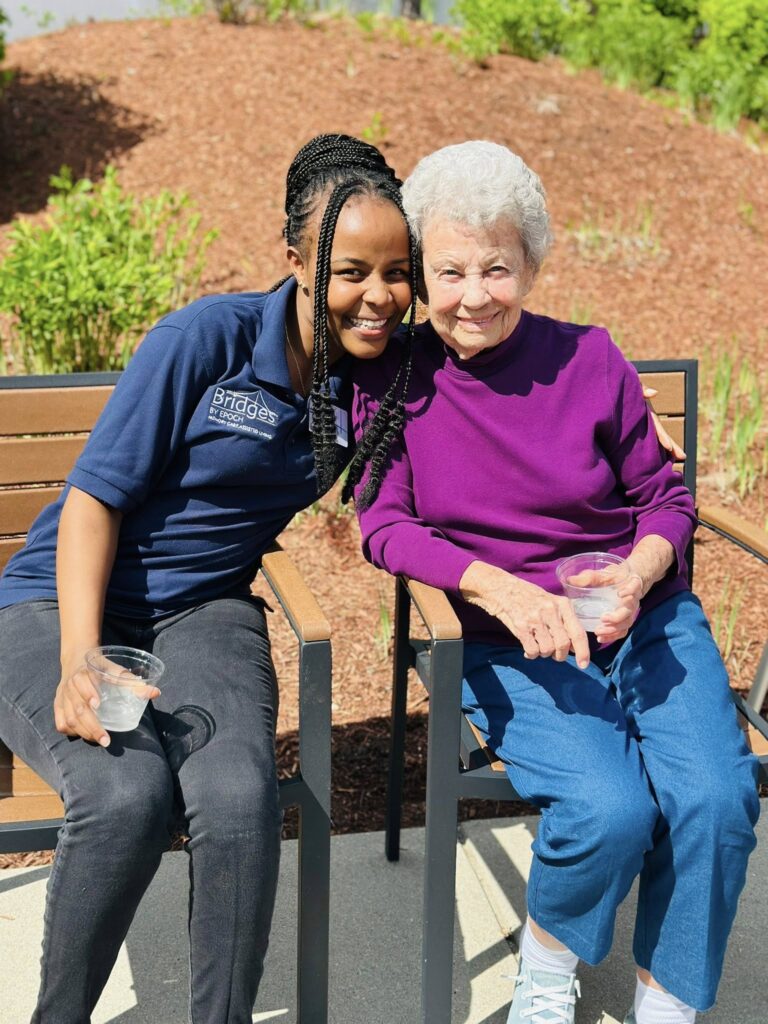
Final Thoughts on Memory Care
Making the decision to transition a loved one to memory care is never easy, but it can be one of the most loving and supportive steps you take.
At Bridges® by EPOCH, we understand the emotional journey families face. That’s why we’re here to offer expert guidance, compassionate care, and a thoughtfully designed environment where those with memory loss can thrive.
From personalized care plans and life-enriching programming to secure, comforting communities and family involvement, our approach to memory care is centered on enhancing quality of life for everybody affected by dementia.
Let Us Help You Take the Next Step
Whether you’re just beginning to explore memory care or ready to schedule a visit, we’re here to support you.
Start your memory care journey today by requesting information below.