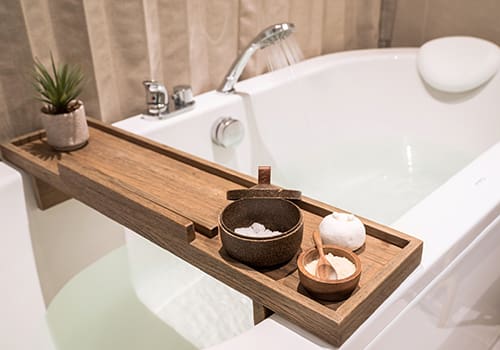
Bathing can become stressful for people with dementia. With preparation, you can make the experience safer and more comfortable.
Safety and Comfort
Install safety bars, a non-slip mat, and a shower chair.
Avoid bath oils, which increase the risk of falls and infections.
Gather everything in advance. Make sure the room is warm and well-lit.
Test the water temperature before starting.
Respect and Support
Use a gentle, calm tone. Explain each step.
Keep a towel over their lap or shoulders to reduce discomfort.
Let them do as much as they can on their own.
Use a handheld showerhead or try washing hair in the sink.
Pat the skin completely dry, especially in skin folds.
A full bath 2–3 times a week is usually enough. Use sponge baths in between.
If bathing becomes too difficult to manage alone, ask for help from a professional.
Top Tip: If you know of environmental factors that soothe your loved one, try to incorporate these into the experience. For example, a lavender scent in the bathroom could help. Playing some of their favorite music could also set their mind at ease. Consider how you can make the environment more invitingfor your loved one.
FAQs
What if my loved one refuses to bathe?
Stay calm. Reassure and try again later. Use simple statements like, “It’s time for a bath now.”
Can I bathe my loved one less often?
Yes. Focus on key areas between full baths.
Should I ask for help with washing?
Yes. Support from trained caregivers can reduce stress for both of you. Personal hygiene is important, so don’t hesitate to ask for help if you can’t do it alone.
Want to Learn More?
We hope this tip helps you on your caregiver journey. To learn more, visit our guides to dementia and Alzheimer’s and memory care. These articles are a great place to start learning about this disease and what care looks like in a memory care community.
For more answers to quick common questions, visit our FAQ page.
You can also check out our upcoming events for caregiver education and support.
Listen to the EPOCH Exchange
Did you know we had a series of podcasts about senior living and dementia care? Recent topics include: