
Listen/watch our EPOCH Exchange podcast episode below.
Released March 2026 | Duration: 30:49
In this episode, Sarah and Erica speak with Alicia Seaver, VP of Memory Care Operations at Bridges by EPOCH, about how families can recognize when memory care assisted living may be the right next step.
We discuss:
- How to recognize “it might be time” for memory care, especially when dementia-related changes start impacting daily life in a consistent way.
- Safety as a key turning point, the kinds of risks that prompt families to reach out (including examples like changes in routines and wandering/getting turned around).
- Caregiver strain and the emotional weight of decision-making, with a big focus on the guilt families often carry and how to reframe the decision as support.
- Education and guidance for families, including the role of support groups, and having a trusted expert to help families feel less alone and more confident.
- Meeting families where they are, acknowledging different circumstances (including financial realities) and emphasizing that support isn’t “all-or-nothing”—there are multiple paths and resources.
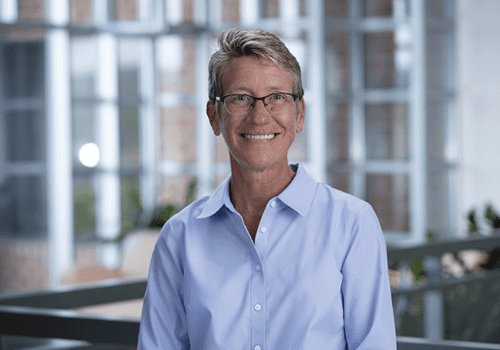
Guest: Alicia Seaver
VP of Memory Care Operations, Bridges by EPOCH
Alicia has three decades of experience as a dementia care specialist. Alicia serves as an educator and trainer for both families and team members, as well as an expert resource for Bridges by EPOCH communities.
Episode Transcript
Welcome to the EPOCH Exchange, where we get real about senior living, dementia care, and everything happening in senior life today. I’m Erica Labb, Director of Team Member Engagement and Culture at EPOCH Senior Living.
And I’m Sara Turcotte, Area Community Liaison for our Bridges by EPOCH and Waterstone communities.
Whether you’re a caregiver, a professional, or navigating memory loss yourself, or with someone you love, you’re in the right place. We’re here to share real experiences, practical insight, and the conversations that don’t always happen, but should.
Each episode, we sit down with people who are making a real difference, from care team members to clinical experts and community leaders, bringing you a closer look at what’s happening every day in senior care and senior life.
Our goal is simple: to help you feel more informed, more supported, and a little less alone along the way. And with that, let me introduce today’s topic. Today, we’re tackling a question many families face.
How do you know when it’s truly time to consider memory care for your loved one?
And to help us navigate this, we’ve brought in someone who truly understands what families are going through. Alicia Seaver is the VP of Memory Care Operations at Bridges by EPOCH, and a Certified Memory Impairment Specialist.
But before that, she’s been a trusted guide for so many families facing the uncertainty of dementia. Through her education and support groups she leads, she helps countless caregivers feel less alone and more confident in incredibly difficult moments. When it comes to knowing when it might be the right time to explore memory care, there are few people who have walked alongside more families with as much compassion and clarity as she has.
And Alicia, I just have to say, we’re so happy to have you back on our show. It’s been a long time.
It’s good to be here. Thank you so much.
Welcome.
Thank you.
And you have such a following with the families and caregivers that we support and people who are tuning in. And before we jump in, I would just love for you to share a little bit more about your journey into dementia care, and how you’ve become so passionate in supporting the families and caregivers that you do.
Thank you. Thank you for the best opening question for me. I think I knew right away, this is my third decade serving memory-impaired people. And I think I learned right away that no family goes without feeling this ride. Right?
And how difficult it can be. And I think I’ve also learned that dementia will impact so many. It doesn’t necessarily need to be a family member. It could be a friend or a neighbor. But it’s going to get everyone in the path one way or another.
So, to have a passion for the memory-impaired person, I feel like it’s a responsibility to educate and support all those in the care circle, because we know it truly takes a village.
Yeah. It sure does.
Can you talk a little bit about when a family finally starts asking questions, often coming to you and our team members, but in general, when they finally say, “Is it time?” What’s usually happening at home that brings them to you or brings them to someone like you?
Well, I think they come to us because they know they can, and they trust us, right?
Mm-hmm.
I feel it’s a very personal choice and decision for a family to make. I never want to make it, but I want to help people, and I want to help people before something happens. And I think for families, in my experience, it’s a privilege for them to even reach out and to trust.
It’s around safety, I think, a lot of times. People are nervous about safety, and then they’re encouraged to reach out. And I’m appreciative of being a part of that dialogue with families.
I don’t ever want to be a part of the decision-making for a family, but we want to guide folks, and we want to be proactive.
Yeah.
Can you give a couple of specific examples of when you say safety, because a lot of people don’t know what that might look like?
Sure.
Or may be thinking, “Hmm. I’ve seen a couple things that might be safety.” Can you just share a couple of things you’ve seen with families that they’re like, “Something feels unsafe”?
Sure. Well, I think safety is a relative term, so I’m glad that you asked me to clarify that. I think that it could be expired food in the refrigerator and that simple, or it could be leaving the home without your walker or your tool, whatever it is. And I think for others, it can be different.
Other families, it could be wandering. She walks every day, and it’s safe. She knows the route. She always comes back. Right. Today, she’s late.
Right.
Or she took a right when she should’ve taken a left. Those kinds of things we hear about a lot. Hear about leaving the oven on.
Yeah.
Not shutting the oven off, or confusing the thermostat at home with something else, and we check the thermostat, and it’s at 83. Those type things.
Yeah. For sure.
Absolutely.
And these things can come up and become clearer, but I think even when the signs are so clear that someone needs more comprehensive support and care, it can still be such a hard decision to make, and I would love for you just to touch a little bit on that, if you could.
It’s heartbreaking, I think, for a family. I don’t know where all the guilt comes from for people, but I wish to remove it all for the people, right?
Because if we can take the guilt out of the equation, we can get to the solution sooner. And I do often find myself saying to people, especially when it’s a Bridges by EPOCH Community involved, right? This is the greatest gift of a lifetime to be able to live and reside in one of our communities when you’re impaired.
So why are you wrestling so hard with the final gift, or one of the final gifts that you could give to your precious family member?
Yeah.
What are some of the conversations, because you have so many conversations. I know sometimes it’s cultural. Can you talk a little bit about the conversations you have? What is it? Where does that guilt come from?
Well, I don’t know, but I just recently on one of our support groups, there was a family member saying, “Our mother made us commit to never placing her in long-term care.” Well, I did that.
We’ve heard that a time or two.
I did that in my own family.
Yeah.
And the truth is, fast forward 30 years, I don’t feel guilty for the choices that we made, and the decisions that we made in the best interest of my mom. Yes, she did throw a blanket threat out there to all of us, “Don’t do it or else.” And we had to do it.
Yeah.
And I think that that personal experience can help other family members. I don’t know where it comes from. I think some of it comes from people not knowing all the care models that are out there.
Totally.
And it doesn’t need to go from zero to long-term care, which could be a nursing home. It doesn’t need to.
Sure.
There are so many stops in between for people where they’ll fit. I think the other thing for me is being on the other end of the business, and seeing the results, and seeing those people appropriately placed in the right environment, and those little lives coming back, almost like a plant without water.
And then all of a sudden, you kind of see it. You just, I don’t know, you see good quality added to the life, and then you’re so glad you made this decision. Right, and then everyone around them being happier.
Like their whole- The whole family
Yeah. All their care partners, all their friends, their family, everyone flourishes.
I always wondered about that for myself, looking at families.
We focus so much on the residents because that’s what we do. But before and after photos of our families, before placement and after placement, when they’re back to doing the things that truly fill their cup, what a gift that is.
Yeah.
Because I don’t think there’s anything better than the right fit.
Right.
For all of us.
Absolutely.
And I think you bring up a great point of, sometimes, people kind of make up reasons or excuses as to why they need to keep their loved one home. And can you just share, because I know you hear a lot of things that come up on our caregiver support group calls, what are things are you hearing caregivers say that they’re kind of explaining away or dismissing, when that’s kind of a telltale sign for you that they should be looking into some support or some type of resource?
“These people are too far along.” Yeah.
“These people are old.” Yeah.
“My mother isn’t this impaired.” Mm. Or, “We’re not there yet.” Which, and okay, you may not be, and that’s okay, and we’re happy for you.
I think the miss is the quality that we can add to the life of the memory-impaired person, and then their care circle. And I feel there with education and showing people the true value, that’s a miss.
Yeah, absolutely.
And it might be a great way to share with families the differences between kind of healthy, normal aging in place and kind of signs that they should really– These signs are affecting someone’s safety, and they should move forward with getting some support.
Sure. I think that, for me, I don’t know, I’m on the other end of my life, so we look at things differently. And if you can get through a day with your senior person, and they don’t need help to get through the day, they can get through it independently, then maybe that is normal aging. When they need that support to get through what we think could be simple, we should pay attention to that.
Yeah.
Things staying the same and not improving, we should pay attention to that. “Oh, she’s been this way a long time.” Like, “Okay, good. All right.” “No, we’ve tried these things, and they’ve not worked.” “Okay, great. We’re glad you tried them. Good for us to know.” But those are signs for me to pay a little more attention.
Right.
That it may not be normal aging. And to your point, there’s so much between home alone and a nursing home that you can learn, like tools you can learn, supportive things you can do to prolong each state of where someone’s at. I think people panic that by saying support, that it means, “Oh, you got to move somewhere.” No, that’s not necessarily it. You go on journeys, and you too, in your work as a liaison, you’re working with families for years and helping them every step of the way. It’s not like this or that.
No. No, it isn’t that. I’m appreciative that you say that, because what about all the families that can’t afford, that don’t have the financial means?
They can do this at home. People do it every day at home.
Right.
And I think that’s what I appreciate about our reach is that we’re not just serving the people that have a loved one that resides with us.
Right.
That we do serve them, and that’s a beautiful thing, but then there’s a whole ‘nother group of people that are never going to reside with us, and being able to adapt what we do in the communities that’s rich for the residents, those things can happen at home.
Like a schedule.
A routine.
We just said the other day on a support group, fresh air and sunshine, move the chair next to the window, and then crack it.
Yeah.
Right.
Helping to educate these caregivers into things that they can fill their toolbox with that they can do are so helpful. And, I think that we’re talking a lot about, what is happening with the person living with memory impairment, how they’re progressing, and signs to look for when they need that support, but I’d like to turn a little bit towards the caregivers.
Mm-hmm.
Because, oftentimes, we oftentimes see they’re putting themselves as second place, and they’re not paying attention to their own needs. And sometimes their needs, they need to pay attention because they’re at risk, almost more so than their loved one.
As much so as their loved one.
Yeah.
Sure.
I think that, for me, I am always paying attention to that, because professionally I’ve lived it, and it’s a sad thing to live. And I think caregivers, spouses, and adult children struggle with this all the time, and they prioritize the care of that person over themselves. It’s funny, but the times are changing, which is the good news, because I think people are investing in themselves more than they ever did.
And we were on a support group recently, and there was a husband caregiver saying, “Oh, my wife’s at rehab,” and managing the trips in and out of Boston, and, “Now we have the dog, and we have all these other things.”
And I said to him, “Don’t get lost in it all.” And he had to pause to think about, “What is she saying?” Don’t lose yourself in that whole scenario that you just described to me, because it can eat you up. And he said, “Oh, don’t worry about that. I have a professional that specializes in dementia that I see weekly.” Some psychiatrist that he sees. Unbelievable.
“Oh, and I’m also doing Reiki, and now I’m doing some acupuncture.” People are engaging because, “I don’t want to get lost in this.”
Sure.
Right.
What a blessing, right, to be able to be here long enough to see those types of results from families.
But I think the education, it’s people that going to these support groups, and going to the educations that are offered, then you know, “Oh, if I don’t do this, it’s even worse for my loved one, because I won’t be there to support them.” You have to prioritize yourself, but I think they’re learning that through the education, too.
I hope so.
You know?
I hope so, because for me, that matters. What matters is when a daughter says yesterday on the support group, “I finally listened to you, and I skipped two visits, and good enough, my father didn’t know. And I was depressed, and I was so down myself that I was afraid to bring my down-ness to my dad to bring him down. I didn’t want to do it.
So I skipped two days, and guess what? Everybody’s fine.” Yeah. First of all, what a privilege to sit on a Zoom with someone that’s never met me in person, and to have her tell me what she’s living with her own mental health.
And then to say that she’s learned from all our time together that our energy can be matched by our memory-impaired people, and she didn’t want to do it.
Yeah.
And the pressure that she put on herself to visit every day. And what would happen if she didn’t show up, and then she didn’t struggle with the guilt.
Yeah.
Right.
I’m like, oh, you know what? Talk about filling your cup. I think I always knew that education and support were going to keep me humble on this journey, and it’s done a lot more than that. I have stayed humble. I’ve stayed true to it all, to myself in it. But when I hear things like that, I’ll never stop it. I’ll never stop educating and supporting people to this disease, its journey, and all of its bumps, because they’re worth it. When you hear something like that-
Yeah.
Mm.
Absolutely.
And then all the other daughters and spouses and caregivers that were on that Zoom call, in that support group, could be like 80 people, and all of them go, “Oh, hmm.” “What if something happens?” “I guess I could skip a visit.”
Yeah, they can relate. And they know that they’re not alone.
Right.
And it’s the true importance of why these resources are so important, and truly can’t thank you enough for being that resource for us.
Sure, got it.
And I think, too, that for maybe listeners who are not tapped into a resource like this, what are some things they should be looking for to say, “I might be an overwhelmed caregiver.” What are signs people are missing? Because we hear it so often they don’t realize that they’re missing these signs.
Right.
I don’t know if they realize… I don’t know what people realize until they’re hurting. And these are family members, so we all have them, and we care about them, and we’re going to do anything we can to help them, and then sacrifice themselves on top of it all.
And I think I look at the way that we look at our teams and how we take care of our teams.
Yeah.
And we don’t let our teams work an extra shift, because we don’t want them working burnt out or tired or edgy. How do we train our teams to fake it until they make it, and to push this forward this way for stress and all kinds of things in the best interest of the residents or their people? So, my approach is the same, right?
That’s why we take care of our employees the way that we do.
Yeah.
This is fragile.
Yeah.
They’re fragile. The situation’s fragile.
Yeah.
So, the better job we do here, the better job we’re going to do pushing it out.
Right.
And I think that that’s a lot for a family member.
Sure.
You’re asking me to take a step back? Yes. In your own best interest, and I’m asking you to go have a dinner out with a friend and not even look at your phone for 24 hours.
Yeah.
You’ll be better tomorrow.
Right.
People say like, “Oh,” my friends call and say, “What can I do?” It’s like, “They can go grocery shopping. They can come to the house while you go grocery shopping.” Like, say yes, take the help. You don’t have to be a hero all the time.
No.
And that guilt is there with just trying to navigate day-to-day life with managing a loved one, aging in place at home, let alone the guilt when it comes to making this decision.
Yeah.
And you’re talking with families through this process, so I would love for you to share with family members who may be considering making a move to a memory care, who are living with this guilt and grief through this process. How do you walk families through that when they’re making this decision?
I’m sensitive, and I listen, and I stop talking, because I feel like that’s a wonderful way to be supportive.
And I do my very best to befriend them, and let them know when you love someone the way that people love family members, you can’t make a mistake, and there’s nothing that can’t be undone or redone when you look at the big picture.
And I don’t know if family members spend a lot of time thinking about what it feels like to be a square peg trying to fit into a round hole, but when you’re memory impaired, it can oftentimes feel like that at home, or when you’re not in the appropriate environment.
Mm-hmm.
And then when you see people, which is the benefit of our communities in a visit, because when you come for a visit, and you can watch your family member or loved one really enjoy, really, truly enjoy 30 minutes of quality time doing something other than whatever you do at home, they see the impact.
Mm-hmm.
Come and look. We don’t stage joy. We don’t.
Yeah.
It’s joy. It just happens. And to let families know there’s life after. There’s life after. All we’re doing is doing it differently.
Mm-hmm.
And we do it, and it’s not personal. It’s not our loved one, right? And that, I think, helps take some of the sting out of it. I think, for me, the conversations around guilt are real. And I don’t know. I remember once, being before a professional that told me that my guilt was self-induced, and that I was in charge of it.
Mm.
And I really had to pause a long time and think about that. So, like, “Okay, lady, what are you saying?” Yeah. So, I’m making myself feel that way? Think about that for a minute. And I’m okay to talk about that from my own personal experience, and I think that helps families. Like, “Let’s get you off the hook for a minute here, because nobody loves this person more than you.”
Sure.
And once we can get beyond that, right, then we can talk about all the other things, because they’re worth it. Life is worth it.
Mm-hmm.
And to see families through that process, I feel is a privilege.
Yeah.
And not necessarily to end up with us, right- Mm-hmm … but to end up in the right place, whatever that is for them. Because that’s the beauty of working for EPOCH Senior Living for us, is that it doesn’t always have to be about us.
Right, exactly.
We’re- It’s about the person, the family … it’s about that family- Yeah … and what’s right, and that may never be us.
Right, and that’s okay. I always think, back when I was an executive director working with you, and you, it was interesting. I always wanted to fast-forward for someone.
To be like, “Okay, you’ve found help,” right? It happened to be us, “But you’ve found help. We’re going to partner with you.”
Mm-hmm.
And I wish I could… I’ve said this to spouses and stuff. Like, “If I could fast-forward for you, even just a few months of how you’re going to feel and what’s going to be different,” whether it’s a move-in, or the proper support, whatever it is that we’re going to help them with, because then they can see. Because then they’ll know, like, “Okay, we’re in it together. We’re going to get you through this.” And then after, right, so six months or a year after, they help somebody else, and they say, “You’re going to be okay. You’re in the right hands.”
I love that.
How many times have we heard, “I wish I didn’t wait so long?” Yeah. And it’s a true reminder to not wait for the breaking point, or a crisis situation. There truly is benefit to making these decisions and tapping into these support systems sooner.
It’s a true story.
Because we’ve worked with people, you and I have worked with a couple people that waited too long, that didn’t want to take advice, weren’t ready. This is all we do. And we have compassion, but the person, that’s not my loved one, right?
It’s a personal choice.
You’re really looking at it for them as a professional, and you give advice, and we’ve seen catastrophic results when people don’t take the advice of professionals. And you’re really just trying to support and help, and you want them to have the information and the support they need to make decisions in the best interest of their loved one.
Absolutely. And I think sometimes, and I know, Alicia, we’ve all kind of worked through kind of situations like this, sometimes family members might get to this decision process and have the education and say, “All right. I’m ready to tap into this support and put these care supports in place.” But maybe they have another family member that’s in disagreement, and they’re not seeing eye to eye. Can you maybe give some advice on how you can kind of come together better with your family support? Because family dynamics are tough.
Oh, family.
No.
You know what? Well, okay, yes. I do want to do that. But I was stuck thinking about what Erica said about showing a family the future.
Mm.
Because that matters. Because if you had that tape to roll, it would be easier for people.
And I’m an executive director, my whole life, and I prided myself on being able to ask a family to draw me a picture of what these years are going to look like for them. What do you expect it to look like? And then I’m able, at that time, to be able to describe the picture that I’m hopeful to provide or to see for that memory-impaired loved one, right?
Mm-hmm.
Now, to your dynamic question. I am one of six children. I feel like the more children, the messier it is. Hello, siblings. But you know what? The truth is, if we were all the same, families would be boring. And what I love for my family is a disinterested third party, and we’re all clean and correct.
Mm-hmm.
And we stay focused. And truth is, I do remember this woman from the Alzheimer’s Association teaching me early on that if you stay focused on the memory-impaired person and not your own stuff, you’ll do better.
Yeah.
And so to have someone at the table saying, “Yeah, I realize that’s how you feel, but that’s not why we’re meeting.” Right.
Mm-hmm.
We’re meeting to talk about the future care of your dad or whatever it is, whoever it is, and keeping it flat.
Mm-hmm.
And understanding that we’re not all going to be good at the same things, and we shouldn’t be, and how to complement each other. And you don’t have to agree right now, but please come and see what I saw, because the believing is in the seeing, right?
Mm-hmm.
And, “My brother’s dragging his feet.” Well, I can’t control the dragging of your brother’s feet at all, but what is it for him?
Right.
And is there a way that we can get around that? “He’s nervous. He’s never been inside an assisted living.” Well, there’s the first thing that needs to happen.
People don’t even know what assisted living is and what it looks like, or how it feels.
Mm-hmm.
And that they still have choices, and they’re still driving the bus.
Right.
For a lot of people, that matters. But I feel like the healing is in the talking.
And I feel the more time we spend on the things that don’t matter, the less time we spend encouraging the joy of it all, if we can find it. You know?
Right.
It’s hard, though. It’s hard. It’s so easy to relate, because we’re all families. I wouldn’t call my family to any healthcare decision. Sorry, guys. I wouldn’t.
Because we’re all so different, and we all come from where we come from, and we look at situations differently and there’s still a way to get there together.
Yeah.
Right?
Sometimes it’s like, “Will your brother come to education?” Right. “Do you think he’d come to a session?” “No.” “All right. Will he read a book?” Right. “Would he listen to a podcast?” There are ways to reach people. “No.” “Well, maybe,” using one of our current families as a reference, “maybe you could go have coffee with this fella. He’s walked the journey, and he can help you and share his experience with you.” You just keep trying, because the truth is you know that the end game is the solution, for everyone.
And is there anything better once the decision’s been made, even if there’s still feathers ruffled or whatever, and then the community hosts, and everybody piles in, and then you get to see them on that side of it, like, mm.
Right.
Yeah.
It’s very cool, even though it was bumpy getting here.
Yeah.
Right.
And everyone’s journey is so different, and there’s many layers and many different dynamics, but you prove a good point, is that, we’re here to be a resource. If this is something that’s on top of your mind, reach out, because we can help navigate families to various resources. That’s what it’s all about.
And we have like a minute left. We’re, of course, going over. We knew we would. We knew we would.
But can you just, in a-
Session two?
Yeah, we’d love to have a part two.
I hope so.
Please.
Can you share a couple important things to look for when choosing a memory care community, just to wrap things up for us today?
Yes. Feel it. Make sure you can feel it. “Oh, it’s old,” or, “It’s been here a long time.” Just feel it.
Mm-hmm.
Experience it. Like our communities, you can just come in and have an experience.
Mm-hmm.
Do that. If it feels good, go with it. We have guts. We never talk about them. But it’s a good time to use it.
Mm-hmm.
And that’s all.
Yeah, I think that’s like when people, they feel it, and they go, “Wow, that was unexpected.” It’s like, “Okay, let’s talk.” Yeah.
Yeah.
Yeah.
That was beautifully said. Well, we cannot thank you enough for being here to share your knowledge and expertise. I really do hope we can have a part two, a part three, or four, maybe.
But- That’s so fun … I appreciate everyone listening in, and until the next time, thank you for joining us on “The EPOCH Exchange.”
Thank you so much.
Thank you.
You too. Thank you.
A pleasure.
Want to Learn More?
Visit our guides to dementia and Alzheimer’s and memory care. These articles are a great place to start learning about this disease and what care looks like in a memory care community.
For more answers to quick common questions, visit our FAQ page.
You can also check out our upcoming events for caregiver education and support.