
In this episode, Sarah and Erica are joined by Katie Smith, Life Enrichment Director of Bridges by EPOCH at Westford. Together, they discuss the benefits of art and music therapy for those with dementia. Katie shares examples of art and music programs at Bridges and the effect they have on residents. She also shares ideas for things people can try at home.
EPOCH Exchange | Ep. 1 | Released August 2025
We discuss:
- What wellness programming looks like in a memory care community
- Why music and art are particularly powerful to engage those with dementia
- Examples of art activities to try at home
- Examples of using music at home to soothe, engage, or entertain
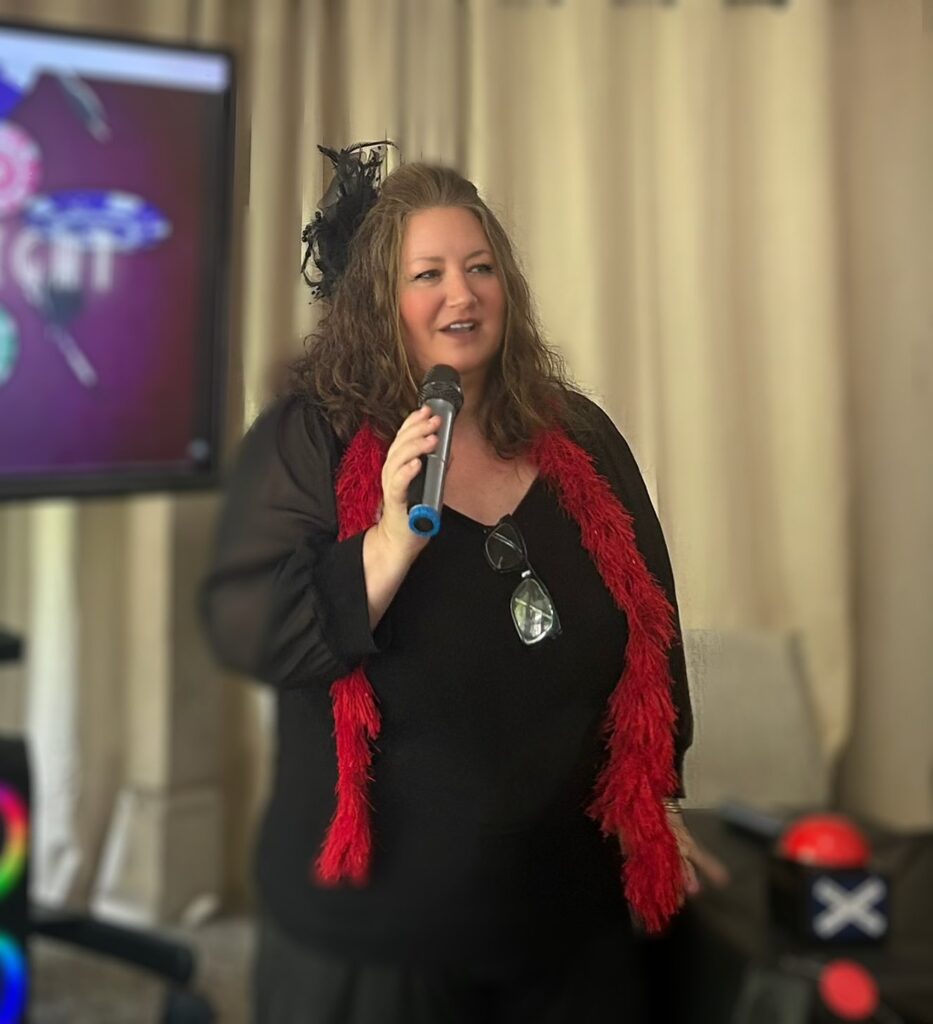
Special Guest:
Katie Smith
Life Enrichment Director at Bridges by EPOCH at Westford
Katie has decades of experience working with seniors, working her way from concierge all the way to Life Enrichment Director here at Bridges Westford. She has always felt that working with seniors is her calling.
Episode Transcript
All right, welcome, everybody. My name is Sarah Turcotte. I work with EPOCH Senior Living. I’m so happy to be here today on our brand-new EPOCH Exchange podcast.
Our rebranding, our official rebranding.
Our official rebranding. I’m excited to be here with my colleague.
Hi, everyone. I’m Erica Labb. I am also with EPOCH Senior Living, proudly, and we’re so excited to bring you EPOCH Exchange. It’s the same great content, just a little bit of a refresh. We are very happy today to have with us a very special guest. Katie Smith is from Bridges by EPOCH at Westford. She’s the Life Enrichment Director. It’s a fabulous program there, and we are delighted to have her with us to represent EPOCH Senior Living and the wonderful work they’re doing in art and music therapy among many other things. This program is fantastic and vital, and we’re gonna talk all things music and art and therapy, and how it’s good not only for folks with memory care needs and challenges, but for all of us really. So great to have you with us, Katie.
Thank you so much for having me.
Excited to be here.
Yes.
And you know, this podcast is really about sharing information and education and resources. And I’m excited because for all of us sitting here at this table, life enrichment and engagement is near and dear to our heart. It’s been a big part of our career, and I’m excited for you to share your expertise and knowledge around this subject because you are a musician yourself.
Oh, boy.
I’ve got to experience this personally.
That’s right.
But, you know, why are we talking about art and music therapy? You know, as Erica shared, it’s important in dementia care, but I think art and music therapy can be applied to everyone’s, you know, lives and day to day.
Absolutely.
And really just wanna talk about, you know, if you could share the importance of creating these types of therapies, not only in dementia care, but just in general. Let’s start there.
Okay.
Why is this so important?
Well, I believe that music can bring you back to a time in your life where things were probably at peak. You know, you think about music, think about your teen years just getting your license, going to prom, getting married, all these big life milestones. You can associate some sort of music with those milestones in your life.
Nostalgia.
It is nostalgic. And, I think that we’ve seen time and time again, just the benefit of being, just a joy that is brought to people, just remembering that special time in their life, when their daughter got married, or when they got married, or, you know, getting that driver’s license and going out for burgers and shakes with their friends and things like that.
Like you said, all of those milestones. And I think about, you know, when you’re thinking about music, I can remember when I hear an old song, it brings me back in time.
Sure does.
And could you share a little bit about how this might resonate with someone, most especially with dementia? What part of their brain is music affecting?
So, I believe that everybody, whether somebody has dementia or not, it always taps into that long-term memory side of your brain. And I’m not a scientist or anything, but studies have shown that music and art all come from the same portion of the brain as your memory, and so if you can utilize music and art to tap into somebody’s senses and just enhance their life through music and art, then that’s what we want to be doing.
And I think we’ve seen too, like there’s been like viral videos and stuff of these folks with pretty advanced dementia, or advanced age that really have gone inward, right?
Mm-hmm.
Sure.
That have become more and more isolated sort of because of the challenges with the brain, and then you add music and like, you reach them.
You do.
And it’s so beautiful and it reaches us. I mean, you think about songs that give you the tingles, or songs that bring you back to like a special time and for our residents, like it’s a magical tool.
Sure.
For folks in, you know, assisted livings or memory care assisted livings, and a great tool really for all of us.
Yes.
At any age, but particularly as we get on in years where we have memory challenges.
Yeah.
It’s pretty amazing. Like, that portion of the brain that gets tickled sort of.
It does, yeah. It’s a good way to put it. And it also can bring people together. So, if you play a song, or you dance to music in a group setting, maybe somebody hasn’t necessarily been social for a week or so, but you play that music and you set them with friends in their community, and all of a sudden they’re really just starting to become, oh, what’s the word I’m looking for?
They’re not isolated anymore. And actually, I did look up some facts and statistics here, and it says, actually, approximately 14% of adults over 60 have mental health conditions, with depression being common. And they say group singing programs showed reduction in symptoms of depression and loneliness.
Mm-hmm.
So it’s not just about, you know, nostalgic memories and bringing back time. There are true health benefits.
I have to say, there’s one example I can think of from EPOCH Senior Living. You know, I travel around to, you know, Connecticut, New York, New Hampshire, Massachusetts, and you can walk into any dining room, and not that you would do this ’cause it would interrupt, but if you walked into any dining room or as, let’s say an activity room and you said, “take me out…”
“To the ball…”
They would all start singing.
Everybody would.
Everybody! It’s like such a cultural, like you know especially like the New England area, right. You, you have this sort of cultural, shared cultural reference.
Yeah.
And everyone starts singing and it’s such a, it’s like a church experience.
Sure.
Or a synagogue experience where like you have this like, shared community.
Yeah.
And even people, like, I’m not a big baseball fan, but I know that song. You know, and so…
And you sing it right away.
And I sing it and I join and I feel part of something.
Sure.
And music really does that for us in a beautiful way, particularly older generations.
Yeah. Mm-hmm.
You know, before the internet brought us, you know, all sort of these options for music that we’d, we don’t all listen to the same things anymore, but back then, really, like whatever was on the radio, everybody was listening to it.
Yeah, absolutely.
And so you have that, um, for many of our residents obviously, you know, there’s, they’re more diverse than that.
Yeah.
But generally speaking, like folks that share the same cultural references can enjoy the music together that way.
And connect with one another, like you said, Katie, it’s about connection.
Connecting, yep. It is.
You know, and I also like to share too, just a little bit more of the health benefits to, you know, the physical and motor, you know, benefits to music is listening or engaging with music can actually help lower your heart rate, your blood pressure, support better breathing, and help reduce stress and support physical health.
Mm-hmm.
And who would think that just listening to music could do all of this?
I see it every day.
Magic.
I even think about physical therapists, you know, people utilizing music in everyday therapies.
Sure.
I remember working with someone who had suffered a stroke and they utilize music therapy to help them to speak their needs again because having a general conversation was not, they weren’t capable of doing that after the stroke, and they were able to use the tune of music to help her sing her needs.
Yeah.
Which was just totally incredible to me to watch and see.
That’s wild.
Can we hear, I’d love to hear some examples of programming that y’all have done that utilizes the benefits of music, movement, art.
Sure, let’s see. So we do have a program we call Vintage Vinyl Club and this is something where we bring in actual old records, and some new records as well.
Literal records?
Literal records.
Oh, that’s awesome.
We have a record player and we bring in the albums with the covers and everything, and we have, sometimes we’ll just sit and listen, we’ll ask them to pick their favorite ones. Sometimes they’re picking like maybe a Beatles album that’s real colorful and we’ll put that on. We’ll listen to it, and then we’ll have a sheet of paper, and we’ll ask questions and queue off of that. Some of the questions might be, ‘when you look at this photo album, what does it remind you of?’ And we have a resident that one time said, “this reminds me of my childhood.” And we say “smell the record.”
Wow. Yeah.
Smell. They’re old, right?
Yeah.
They have some sort of a dusty old library smell to them, and if you ask a resident, let’s smell our records, they’ll laugh at you and they think you’re being silly, but they do it, and I say, “what does that remind you of?” Some people have said, ‘the library’ or, ‘ my dad’s old record albums,’ you know?
Mm-hmm.
And it does, albums are nostalgic, but music in general is just an incredible way for our residents to enhance their life every day.
And a huge means of expression.
It sure is. So that is one of our programs that we do love to do that’s about a 45-minute to an hour-long program.
That’s cool.
We switch off, we let people choose. Everybody’s sitting at a table holding five or six different records.
And it’s sort of like, um, the way that I’m gonna date myself, but the way we used to listen to music
Mm-hmm.
I mean, I remember like in the basement, it really smelled like an old record in the basement.
Yeah, yeah.
And we would, I would sit with my siblings and we would look, we would open and pass it and talk about it.
Oh, yeah.
Mm-hmm.
It was tactile, you know, it was like all these senses coming into place.
It is.
And so then you’re sort of, not only are you reliving the music, but the whole experience of sharing like the record, which what a brilliant, like activity, program.
It’s one of our most fun programs, I think, yeah.
And anyone can adapt that to do this at home, you know?
Oh, absolutely.
Whether you’re memory impaired or not, that would be a great program to have some girlfriends come over.
Yeah.
Have some, you know?
Fun time going through some cocktails and mocktails.
Yeah.
You could get a record player for like 20 bucks now. It’s crazy.
You can, and it folds up like a little suitcase, and you can carry it along with you wherever you wanna go.
Something about the sound, too.
Try to guess what year the record came out before this record, we can really bring some trivia to this.
Yeah. And it’s a funny thing too.
Should be another show.
Our collection goes all the way from say, Dean Martin to Pink Floyd.
Yeah, right.
Okay. Because we’re hitting the sixties, seventies, eighties, yeah.
Your younger residents. Yeah, well oldies changes.
It does change, yeah. And we’re seeing it now.
Yeah.
We’re starting to see some of those, what I would consider like maybe classic rock instead of crooners becoming the…
Yeah. Or oldies, yeah. Dylan, and Cash. Yeah.
Yes.
Yeah. I realized that when they started playing Pearl Jam on the classic rock radio.
Oh, ouch. Ouch. Yeah.
But, you know, this is, can you give another example of a music or art related therapy that you’re finding success and are really resonating with folks?
Art, yeah.
Well, sure. As far as art therapy goes, what we really are trying to do is tap into all of the senses, and so one of the things that comes to mind, I really didn’t think much about this, so I’m just gonna talk about this, is fabric art.
Mm.
Okay. So we’ll take fabric, which is textile, um, and we’ll rip that fabric up, um, and we’ll create something off of it, maybe a wreath.
Mm-hmm.
If we know we’re gonna do this program ahead of time, we may take essential oil and put that fabric in a Ziploc bag overnight with maybe a lavender essential oil.
Calming.
something calming, zip it up for the night, the next time you open it up, the next day when you’re getting ready, the whole room starts to come alive just smelling these beautiful aromas. So, we’re trying to tap into that, and then we’re feeling things, and then we’re creating.
Right.
Based on our own level, you know, whether we are doing hand over hand with some folks, or they’re just going all on their own, creating their own thing. We are creating, and I think that, that is probably one of the most exciting things that we do.
Yeah. I think like we have residents that are artists
Mm-hmm.
You know, that are in of their, you know, like actually professional artists…
Yeah.
That then try new mediums or do new things. And then you have folks like me that maybe are not artists, but like, enjoy that sort of thing.
Yeah.
And all of us can be successful.
Yes.
And all of us can have a good time and be included.
Mm-hmm.
And this can be at home with like, you know, you can do it with a parent or a sibling at, you know, at home. You can do it in an assisted living or an independent living type of community, but like these interactive, full sensory new type of activities for lots of people creating new pathways and enjoying all the senses.
Yes. Yeah.
I love that one.
And I just think about the means of expression. So, I would just like to talk a little bit more about how we’re utilizing music and art therapy, most especially with means of communication. You know, the using art therapy, you know, whether it’s, you know, painting with watercolors or, you know, even adult art pages, you know, selecting colors or music therapy. We’ve seen nonverbal residents be able to communicate and sing or even have, you know, communication with a loved one utilizing these therapies. Can you just give some examples of ways you’ve seen art therapy or music therapy help someone communicate?
Sure. Okay. Water coloring is definitely a great example. If you are with a resident or a family member and you’re water coloring say lilacs or something like that, they may not be able to articulate what they’re wanting, but you can do it for them, right? You can say, “oh, I really like this purple. How do you feel about this purple?” Somebody might nod their head, yeah, let’s try that. Or point, and then we try to help them get that work out on paper and that creativity on paper, even if they’re not able to do it on their own, and that’s a way of them communicating with us.
I even think about too, that’s a really great example. I even think about sometimes we’ve seen spouses who have been with their loved one and holding a conversation is hard, but as you were saying, sometimes we’ve actually created individualized playlist where we can, you know, come up with songs from their late teens, early twenties that they can listen to together.
Mm-hmm.
Whether it be on a stereo or both wearing headphones, and they can then sing the music to each other.
Oh yeah.
Because as you were saying, it’s bringing them back to a place when they might be reliving their wedding, or a vacation, or a road trip that they used to sing the song with one another. And you can almost see the connection that even though it’s not a word for word conversation, the way people look at each other in the eyes or grasp the hands that this is their way of talking.
Sure.
And I think that is just magical.
We do have somebody who will put our head right on his chest while they’re dancing to music, pretty much any music really, if you play it for them, they just start dancing.
I also think, like, for any of us visiting, right? Loved ones, wherever they’re living, right? Having something to do together.
Mm-hmm.
So, you think of like paint and pour, you know, you go with a bunch of friends, it’s your, you know, 30th or 40th or 50th or 60th birthday, you go to a paint and pour. Why? Because it gives you something to connect on.
Sure.
And sometimes, I mean, I remember I used to go visit my nana and I’d go and sort of like, be like, “Hey nana, I’m here.” Like, it was, you know, God’s gift that I was visiting, and then just sort of be like, you know, and it would shut off her program that she was watching. You know, I didn’t tell her I was coming ’cause I’m God’s gift, you know, and, and sort of like, expecting her to entertain me. That’s a big ask.
Yeah.
And so instead, if you bring a record player, or even just you’re on your phone, a music player or watercolors, you have a way to connect and focus on something other than like, verbally trying to make conversation about what you did.
Mm-hmm.
And I think our ask of people when we visit is way too high.
Mm-hmm.
And so to bring something and say, “I know you used to paint and you know, I’m not so great at painting, but I’d love to do this with you” and just get it out and have fun with it.
Yep.
It directs the attention.
It takes the pressure off.
Takes the pressure off.
It takes the pressure off.
It does.
It’s like dogs, you know, pets.
Mm-hmm.
Babies.
Yep.
Music, art, like, takes the pressure off.
It does.
You know?
Well, you know, one of the fun tidbits I have here, it says, art therapy creates a safe nonverbal space for emotional expression, grief processing, and emotional healing.
Wow.
So, it’s all of these things.
Wow.
Whether you’re utilizing it for something that’s positive or getting through something, it’s a powerful tool.
It sure is.
Well, we do have some more questions if you still have time, Katie.
If I have answers.
So I just love, I know that we’ve been sharing just some examples. Can you share, I know we kind of shared a little bit on how we’ve utilized music to help with kind of talk therapy, post-stroke, how it can help with speech therapy. Can you give some other maybe resident reactions or success stories that you’ve seen people utilizing these programs?
Sure. Karaoke with Katie.
Oh, I like the sound of that.
We do have a gentleman living in our community who, he is verbal, but, a lot of word salad, okay. His daughter had come in one night, and it was just before karaoke hour started, and we have two microphones that we pass around and residents, we’re bringing them over, and everybody’s singing. I’m singing, they’re singing, CNAs, I mean, everybody’s into this. And I went to go hand him the microphone and his daughter goes, “oh no, he’s not gonna.” And I was like, “well, let’s just see.” So, I put the microphone in front of him, and he starts singing the lyrics on the screen clear as day, singing the Beatles.
Wow.
And his daughter crossed her legs, sat up on the chair right with him, and they held the microphone together and they start singing together. And she stayed the entire hour. He did not give up that microphone, nor would I take it from him, because it was a moment where she could then understand that this is how we can get him to communicate and connect with us. Even if you don’t think, don’t count him out.
Mm.
You know, don’t count him out. He can still, he can do this and do it happily. And at the end, when I went to go get the microphone, karaoke hour was over, he hugged it and kind of pulled it away and was like, oh, I don’t wanna give it up.
Not ready to give it up.
Yeah. And wasn’t ready.
Oh, wow.
We stayed there for a very long time, and, um, his daughter left in tears. She was so happy.
Oh my God.
And obviously I took some pictures to share with the family and everybody was really touched and his wife had approached a staffer and said, “I had no idea that he could, number one, say a full sentence like that in that, the entire line, the whole” I said “Sentence? He sang the, all the songs, every song.” It was Elvis, it was The Beatles, it was Carol Carpenter. I mean, it was just like any random, and he was going back and his daughter was just, it was the most, probably a very, one of my favorite moments. I would say.
That’s like powerful.
Oh, it’s so powerful. And I, and the, it’s a great reminder of the expectations
Mm-hmm.
And our own expectations of those around us, and sometimes it takes someone outside of the family and outside of the friend group to really like, be open to possibility.
Mm-hmm.
And that’s what you do in your role.
Yeah.
And I know like, you do that in your role and in past roles, like
Mm-hmm.
That’s what we’re here for is like to tap into that.
Yes.
And like, crack open, like in a new way that maybe the family can’t.
Right.
And knowing that for families, as family members with our own loved ones to say like, what are my own, how are my own expectations holding back my loved ones, and can we get beyond that?
Yeah.
Can we try something new? Can we bring something new to the table? How many people in your life as a life enrichment director, me too as an activities director, many, many moons ago did people say, oh, he won’t do that.
Yeah.
She won’t do it, they won’t do it. And then six months later
Mm-hmm.
Everybody’s mind is blown.
Yep.
You know, and you’re like, yeah, we all can do new things. Yeah, and we can all try new things and learn new things no matter what.
Absolutely.
So.
Well, and I think it’s a true reminder to try something new.
Sure.
You know, regardless, sometimes folks with dementia they don’t have that filter of fear of trying something new.
Right.
So they might be more open to doing it, and then I’ll just share, even if you don’t have dementia, you know, one of our most requested topics at EPOCH Senior Living is proactive brain health.
Sure. Yes.
And, you know, practicing things like art and music therapy are very powerful and trying something new. You know, if you’ve never tried karaoke before, try it. If you’ve never tried watercolor painting, try it because you’re challenging your brain and trying something new, and that’s when you’re getting the…
The benefits.
The Best workout for your cognitive health.
Yep.
Totally. Totally. Um, we have a few minutes left if
We do I just before I, because I do wanna hear kind of Katie and what brought, led her here. But before we move on from that, can you just touch a little bit on like the emotional, spiritual side of participating with art therapy?
Sure. Well, spiritual can mean many things. And one of the things that we try to do is bring in folks from the outside professionals, really. Some that do some meditation type of work and some that might do, um, we’re looking into reiki maybe? I’m not sure. But that can definitely be, um, tapping into someone’s spiritual side of things.
Yep.
We, a lot of the population at EPOCH Senior Living back in the day, it’s a very strong Catholic faith base, I think I would say, and so we would, we provide any type of spiritual service that anybody asks for right now, the heavy hitter is the Catholicism.
At your community?
At our Community. So, at our community, we do a lot of hymns, a lot of church service. And we still try to acclimate that therapy in there as well with songs of their past that they recall.
With similar outcomes I would imagine?
Absolutely.
The “take me out to the ball game.”
Yeah. Mm-hmm. Yep. And so, I think that when we’re dealing in this population, the senior population that is, I think that we are going back to their childhood a little bit.
That long-term embedded memory.
The long-term memory.
Those prayers and hymns come like second nature, they come right back.
Even in French.
Yeah, yeah. Latin
Yeah.
We have a lot of, some French people in our community as well who like to sing their hymns in French.
Yeah. That’s so interesting. And I know at some of our other communities, you know, different religions are, you know, they’ll, depending on the resident population at the time, we’ll adjust to the culture of the folks that are there.
Yeah. A hundred percent.
And meet the needs of whoever’s there.
Yeah. Anything, I mean, I don’t say no to anything. I offer all of it.
I think too, like the sense of self
Mm-hmm.
And the spirit of the self.
Sure.
And our, the way we move through the world and with each other, like creating community with each other, you know, is just such a special part of senior living.
Yeah.
And trying to create those opportunities, which we do. I mean, I know both of you in, in your work, you’re doing it all the time.
Yeah.
Both with caregivers, with residents, with families, like we’re creating spaces to be with each other, and that is so spiritually giving and inviting to us as humans. It’s really beneficial.
And now we’re out there trying to spread this information at large. So now that we’re wrapping up, Katie, can you just share kind of a final thought since we have just a minute of time to a, just share what personally motivates you to do the work that you do, because you’re amazing at it.
Thank you. Oh, thank you so much. Well, I will try to make this quick, but, so my mother was a CNA for 32 years.
Wow.
Her entire working career was taking care of the elderly and she would bring my sister and I into her community quite often.
More than you would’ve liked?
At the time, yes. And so, we would leave there. My mother would say, “you don’t know it yet, but you’ve made a difference.”
Mm.
And eventually, you know, I got married, had my kids, and I was a stay-at-home mom for a long time and I needed to get back into the workforce. And what I had always kind of done as an adult career was kind of administrative assistant type work while they opened up Bridges in Nashua, New Hampshire, and they were hiring somebody to run the front desk. So, I just drew my name in the hat and interviewed and I got the job. But during that position, I continued to sort of flock to the residents. I always wanted to be doing something with the residents. Somebody can cover my desk so I can go do an activity or a stretch or whatever. I just absolutely loved that piece of it. And so eventually an opening came up, I took it, and I just felt like, at home. Is that the best? I think that’s like the best way I can describe it. I felt like I, this is what I was supposed to be doing. My mother had told me for years this is what I was supposed to be doing, and I didn’t listen.
There you are.
But there I was doing it and loving every minute of it. I have had what I called a momentary lapse of reason. And that is that I did leave Bridges for a little bit. My children wanted to go to public school, and I felt like I needed to make all this extra money now, so, I mean, to private school. And I felt like I needed to make all this extra money. So, I took a job in the mortgage industry and lo and behold, you wanna know what my job ended up being? Sitting with the elderly who are selling their house.
It’s where you belong.
Coming in a walker or anything. This is where I was always. So I finally called back to EPOCH Senior Living. I said, “I wanna come home.” And Shereen was, who you know, she said, “I think there’s an opening in Westford. Is that too far for you?” And I said, “Absolutely not. I’ll go to Westford.”
And the rest is history.
The rest is history,
You know, and you leave this place every evening feeling like you’ve made a difference in somebody’s life. At least one person that day. If you can leave your ‘work’, and I don’t even like that word for it, because it doesn’t feel like a job at all, and know that you made a difference somewhere, whether it was with a family or with a resident or another staff member, then I really think that you’re winning.
Yeah.
I really do. I love my job and, um, again, I’m still trying to find another word for it.
Well, EPOCH is winning, having you be a part of our team.
Oh, Thank you.
I can’t thank you enough for being a part of the EPOCH Exchange. We are so excited to be back in the studio and look forward to more topics that will help our community at large.
Many more.
Thank you so much.
You’re very welcome, Katie, Sarah, happy to be with you. A pleasure. A pleasure. Thank you, Sarah.
Until the next time, we’ll see you on the EPOCH Exchange.
Bye y’all.
Want to Learn More?
Visit our guides to dementia and Alzheimer’s and memory care. These articles are a great place to start learning about this disease and what care looks like in a memory care community.
For more answers to quick common questions, visit our FAQ page.
You can also check out our upcoming events for caregiver education and support.