
Listen/watch our EPOCH Exchange podcast episode below.
Released August 2026 | Duration: 30:36
In this episode of the EPOCH Exchange, Sarah Turcotte and Wendy Sage-Matsis welcome Sherene Hiljeh, Senior Life Enrichment Director at Bridges by EPOCH at Nashua, to discuss creative engagement in dementia care. Sherene shares how art, music, cooking, movement, and other purposeful activities can help people living with dementia feel connected, valued, and more like themselves.
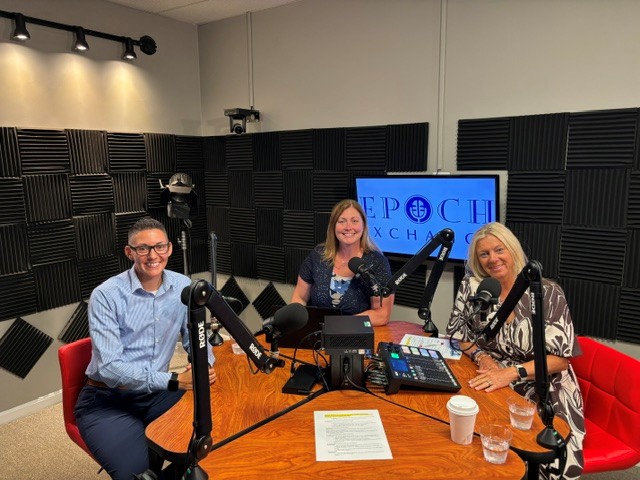
Guest:
Sherene Hiljeh
Senior Life Enrichment Director at Bridges Nashua
We discuss:
- How life enrichment programs are thoughtfully planned around each resident’s interests, abilities, routines, and personal history.
- Why creative engagement is not about the finished product, but about connection, expression, confidence, and simnply enjoying the moment.
- Ways families can adapt favorite pastimes at home, especially when a loved one can no longer participate in the same way they once did.
- The power of art, music, cooking, movement, and sensory experiences in helping people living with dementia communicate
- Practical tips for setting up activities successfully, including reducing distractions, choosing the right music, creating a calm environment, and keeping activities flexible.
Episode Transcript
Hello, and welcome to The EPOCH Exchange, a podcast where we bring together experts and community voices to share insight and guidance about senior living and dementia care.
I’m Sarah Turcotte, Area Community Liaison for our Bridges by EPOCH and Waterstone communities.
And I’m Wendy Sage-Matsis, Senior Advisor at Bridges by EPOCH at Nashua.
Today, we are honored to welcome one of my incredible colleagues, Sherene Hiljeh, our Life Enrichment Director here at Bridges at Nashua. I have the pleasure of working alongside Sherene every day, and I can honestly say that she has an amazing gift for creating meaningful experiences that bring joy, purpose, and connection to our residents. Whether it’s a creative activity, a special event, or simply finding ways to make each day memorable, she pours her heart into everything she does. Sherene has worked in the assisted living field since 2012 and currently serves as both Senior Life Enrichment Director for EPOCH Senior Living and Life Enrichment Director at Bridges by EPOCH at Nashua.
Sherene is a Certified Dementia Practitioner, a Brass Ring Dementia Practitioner, and recently, a certified Montessori dementia care professional who has leadership roles in programming across several respected senior living organizations. In addition to all of this, she’s leading innovative and engaging resident programs. Sherene mentors fellow life enrichment directors throughout EPOCH and is known for her creative community newsletters and activity calendars. Her passion for helping people live with purpose and dignity shines through in everything she does, and we are so excited to have her with us today.
Thank you.
Thank you, ladies.
Indeed, we are. And in this episode, we’re going to talk about creative engagement in dementia care, and there’s nobody better to discuss this important topic with.
We’ll explore why art, music, and other creative activities can be so enjoyable for people living with dementia. We’ll also explain how activities can be adapted to meet each person where they are, and what families can try at home. We’ll also discuss why the experience itself is often more important than the finished product.
Sherene, I can’t thank you enough for being here today.
Thank you, ladies. It’s a pleasure to be here. I’m so excited.
Thank you. Yeah. No, we’re thrilled to have you here, and I think before we dive into things, I would really love for you to share with our audience and caregivers listening in, just how did you get into this role? How did this all start, you getting involved in life enrichment and engagement for those with dementia?
Well, that’s a great question because I did not start in this world. I kind of fell into it, to be honest. In college, I studied journalism, communications major. I wanted to become a sports journalist. Right after college, I became a sports editor for a local newspaper, actually my hometown newspaper, so it was really neat. I got to interview former coaches and former athletes of mine. And I did that for a year, and I realized it just wasn’t quite filling my cup the way I was hoping it would. So I was without a job for one or two months and applying to really anywhere, and a friend of mine reached out to me, and she said, “Hey, I work at this assisted living community. You should apply.” And at that time, I knew nothing about assisted living. I’ve never even heard the term before.
Sure.
But I thought, a job’s a job, so I went in, and I interviewed for the receptionist position, got the job right away, and I was there for about two years, and within that two years, they realized that I just had way too much energy to be behind a desk. Sound familiar, Sarah?
I believe that. Way too much energy.
So they said, “You need to move over to programming.” So I went into activities as an assistant, and I sort of just worked my way up from that community to a sister property within that company, recruited to other companies, and became a senior life enrichment director, and I would say what really truly fills my cup is working with memory care.
Yeah. I love it. What a journey. What a journey.
I was just going to say, so we were looking for a life enrichment director in Nashua, and I think about two minutes after we knew that we were going to need a new life enrichment director, I walked into our boss’s office, and I said, “I know the person we need.” And lucky for us.
And the rest is history, because you…
Yes, Wendy and I do have history at a former company, so.
Well, I love that, and it’s been amazing to see the wonderful things that you do and the programs that you’ve created, inspired many other life enrichment directors to provide for the residents that live at the memory care communities at Bridges. And as you know, it’s not just planning activities. You really make this a work of art, and I’d love for you to just share a little bit with the audience, a little bit of the footwork and detail that goes into what are you learning about when you’re planning these activities?
That’s a great question, Sarah. I think a lot of times people think that we just sort of put games on a schedule or on a calendar and just roll with it, but there is so much, like you said, footwork that goes into planning these programs. A lot of research. I tell you, Pinterest is my best friend. My question when I’m building a calendar is, what would I want to do if I lived here?
Because a lot of times, when you build relationships with your residents, you realize, wow, I have those same similarities. I like that too. I like to do that too. I like to read those things. I like to eat those things. So you have a lot in common with your residents, so in my mind it’s, what would I want to do if I lived here?
Sure.
And, with the research that we put in and even with our assistants, we’re meeting constantly, and we’re going over different types of programs. What do you think about this craft, or this cooking demonstration, or this game? Should we try this? And we really play it all out. From start to finish, what are some obstacles we might face in those programs? How can we overcome those, or how can we adjust those to adhere to our residents that will make it successful?
So there’s a lot that goes into it. We meet, my team and I, we meet every month. We talk about the calendar, what worked, what didn’t, what should we add, what should we take away, and then we talk about next month. “Here’s what we’re going to do this month. What do you think of these things?” And there’s a lot of strategy that goes involved in that. And that’s what I love about it most, is that, like I said in the beginning, we’re not just putting things on a paper and just hoping, throwing our hands in the air of like, “All right, Jesus, take the wheel at this point. Let’s see how this goes.” But really, we’re so strategic in how we’re planning these things out to make sure that it’s successful.
Absolutely. And I’ve seen it in action. I might come in after meeting with a family or talking to somebody who’s moving a loved one in, and we find out what their interests are through our inspiration sheet and really getting to know our residents before they hit our door. And so, I will bring that stuff to our activity, our life enrichment department, and I see them start to think, “How can we incorporate this new resident’s likes and interests into our calendar now?” Because I think that’s what’s super important, too, is you aren’t just taking a calendar and regurgitating it month, after month, after month.
Right. It changes as our residents change and as the abilities within our community change as well. Correct.
Yes, absolutely. Yeah.
I think one of the great things I saw this winter, we have this great little group of residents who, they love to sit and chat and read. So all of a sudden, I look out in the lobby one day, and there’s a fireside book club going on. And I think it was just kind of born out of, “Well, let’s try it.” Right?
Yep.
Absolutely. And it’s person-centered. And I think that’s the success in keeping your activities colorful, but also, as Sherene pointed out, something that’s meaningful and purposeful to that individual. And I think that reminding the audience members who are listening in, that this can also take place in someone’s home.
Yes.
And I think that getting, as you were saying, and maybe you could share a little more advice as to how you get to know someone’s likes and interests, and how you’re kind of taking that and applying it into planning the schedule for the day.
Absolutely. As residents move in, they do fill out what is called an inspiration form. And I like to call it the foundation. It’s sort of a guideline, because you never know how much of that information is accurate at that point, once that resident moves in.
Sure.
And things could change, and truthfully, sometimes the person that’s filling out that inspiration form doesn’t have all the accurate information. Sometimes they think that this is what they still like, but now they prefer chocolate over vanilla ice cream. For example.
So, the best way for us to truly understand the ins and the outs and what makes that resident tick is by interacting with them on an individual basis. Within the first 30 days when the resident moves in, that’s our prime time, is what I call it. So we will each, my assistants and I, we will each take a turn at really getting to know that resident, having a one-on-one conversation with them, and truly understanding their language, their interests, and hoping that we could pull a few things out. As we all know, when a resident moves in, it’s, for lack of a better way of saying, kind of a traumatic experience.
They’re trying to figure out, “Where am I? Why am I here? What is going on?” And with all these strangers, so it’s a huge adjustment for them.
Sure.
So we go at it with grace, with patience, and we build that relationship with them from the start because we know that they should be with us throughout the entire day. So, what better way to start that friendship than right in that moment when they first move in.
Absolutely.
I want to be a familiar face to you. I want to be a friendly someone they can trust. Yeah, someone you can trust. A friend. “I’m here for you. I’m here to service you.” So that’s kind of the message we try to get from them. And as that relationship builds, they start to open up more. Sure. And then that’s when we really start to learn more about who they are, and their likes and their interests, and we take that information from there, and we run with it. Like Wendy was saying, we look at those interests that they have, and the individualization, and person-centered, and that’s how we’re able to build these successful programs.
Sure. And what would you say to a family member, because I know, and I know Wendy hears this a lot, we work with family members, and they come to us, and their loved one is living with a memory impairment, and oftentimes we might hear, “My loved one used to do this,” or, “They’re not able to do this anymore,” and we’re almost focusing on the things that they’ve lost. And you really focus on, well, how can we still incorporate this interest, but adapt it almost. And I would love for you to share the importance of that, because the interest is still there, it’s, I think, sometimes how we adapt it.
Absolutely, and you hit the nail on the head when you used the word adapt. So yes, the likes and interests are still there, but sometimes they can’t express it in the same way that they once used to.
So, we just make slight changes, but still keep the foundation of what that interest is intact. So if there’s a painter, for example, that really, really enjoyed the use of acrylics or something like that, and they can’t quite formulate the painting on their own anymore, they can’t quite come up with what they want to paint, maybe we’ll put an object in front of them. Maybe we knew in the past that they really enjoyed painting bouquets, so we’ll put a bouquet of flowers in front of them for that inspiration. And that’s kind of where the muscle memory will start to come in, where, “This, I enjoy doing this. I enjoy painting flowers.”
So, I’m looking right at a bouquet of flowers, and it might spark and ignite that fire back inside of them, and they’ll be inspired to just grab that paintbrush and start painting away. So it’s all about adjusting. It’s all about adhering to where they’re at in that moment and just going in that direction. And it doesn’t take away from the value of the program, because it’s not about the outcome; it’s about the journey. And we talk to a lot of family members, whether they’re reaching out for help and guidance for moving a loved one to our community, coming to our support groups, just not sure where to turn.
Give us some advice on how they might be able to create maybe their own little activity center in their home and keeping in mind all of the tricks of the trade that you employ in our communities.
Sure. I think a lot of times, again, it goes back to what their likes and interests are, and sometimes if they were to put that in a little area that is specifically designed for that, and being careful of the environment around them, I think that’s important, too. Sometimes they forget about that, when they have the TV on in the background, and they’re trying to focus on maybe a book that they enjoy reading or something to that effect. The environment plays an impact on how successful that’s going to be. So if we’re mindful of turning either the television off completely or even putting music on in the background that’s inspiring, like classical music, believe it or not.
I know some people don’t really care for classical music, but it is quite powerful. Music pulls emotions, so it stimulates different parts of your brain that other things just can’t. So using music in the background as well would be super helpful, but creating a space that is specifically designed for what it is you want to do. If you want to do something that’s nature-focused, maybe do it by a window. If you want to do something that is more intimate, maybe do that in a small corner of the house where there isn’t so much foot traffic coming in, or a lot of environmental stimulation where they can be distracted.
Little things like that. Again, it takes planning, it takes strategy, and thinking about all the different things that can impact the success of what it is you’re trying to do.
Absolutely, and weighing those things out, it’s going to be different for everyone and sometimes it’s trial and error, but as you were just sharing, Sherene, you talked about two things that stuck out to me, art and music. And they’re really two powerful tools that we use working in our setting, and I would love for you to just share why art and music often connect with people with dementia when other forms of communication become more difficult living with cognitive impairment.
Absolutely. As we know, working in this field, we’ve seen the changes that Alzheimer’s disease and other types of dementia can have on a resident or a person. And sometimes what was one of the things that might be taken from them is verbal communication. So what do we do with that? How else can we communicate?
And obviously, we have body language, but sometimes they can’t control their bodies anymore. So what are some other ways where we can allow them to get their voice back?
And that’s where music therapy and art therapy are huge. They are so powerful, and I’ll start with art therapy because I want to save the best for last, which is music therapy.
Yeah. Give us some examples.
Because you know how I love music.
I appreciate, the examples are so real, so I appreciate you sharing.
Absolutely. Art therapy, it’s an opportunity for them to get their voice back and express that freedom of expression on a canvas. If you were to give them all these different materials, they now have the freedom of choice. They can choose the different objects, thinking tactile-type things that might have sensation when they’re touching it, or specific smells when they bring it toward their mouth, or not their mouth, their nose. Let’s hope they don’t bring it to their mouth. And then, they’re allowed to just, with a blank canvas, create something that is their own, that is coming from, what I think, is their soul.
This is their soul expressing something, and that’s what I love most, is when they all start with a blank canvas, and every single image is different. My image is going to be different from yours, Wendy, and from yours, Sarah, because my soul is expressing something else. And I think that the power that they have in that moment is so exhilarating. They feel like themselves again, and they feel like, “Though I can’t verbalize to you how I’m feeling in this moment, look.”
Yeah.
“Look at, this is how I’m feeling.”
And sometimes it even comes with a story because i’ll actually just quickly share on top of what you shared, witnessing one of these watercolor painting projects in, I saw this gentleman painting, and there were some pieces on the table and some classical music playing, actually, and his painting looked nothing like the objects that were on the table, but when I walked up to the gentleman and I asked him, I said, “Well, beauty is in the eye of the beholder, right?” I said, “Well, what is your picture? Tell me the story of your picture.” And this gentleman, it was very much abstract, just beautiful colors meshed together. But he shared with me that he was a former air pilot.
Ooh, wow.
And he started talking about the times when he would fly the plane, and he picked blues and whites, and when I really looked at it, it was like the colors of the sky. The sky. But the way he shared his story about his service years, and he actually told me once when he, there was a story about a monkey and how a monkey got on the plane, and it was quite funny and, but you just never know what memories and conversation can come up.
So I appreciate you sharing that as an example.
Absolutely. Well, and can I just ask another question? Because we do, I believe, if I’m not wrong, our days will always involve some form of music, some form of art, and some form of movement.
Correct.
So, art doesn’t always have to be a canvas.
Exactly.
What are some other expressions that would be considered art that you guys deploy?
Well, I think cooking… is certainly an art. We do a lot of cooking demonstrations, and if you think about the different types of stimulation that comes with cooking, all of your senses being stimulated with that is huge. And we’ll mix it up. We’ll do some old familiar recipes, and then we’ll stick with maybe some seasonal things. Like yesterday, we made a fruit pizza. I’ve never made that before, as a kid or anything like that, and I’m sure maybe a good number of our residents have never done something like that.
So branching them out, but still using familiar things. With the dough, rolling the dough, making their own sauce, which was the cream cheese frosting-… and then the fruits that they were able to chop up that I’m sure they’ve done many years in their past. So cooking is definitely one of those things that I feel that we really do focus on in our communities and in other EPOCH communities, because of just all of the stimulation that you receive from that. And all the good smells.
Yeah. And you get to eat it after.
Oh, reap the rewards of your hard labor. And I know that you were also going to mention, you said you were going to save one of your best stories for last when it comes to music.
Yes.
I would love for you to touch on that.
Absolutely. You ladies know how much music means to me. There is so much power and value in music. And as you ladies know, in our EPOCH communities, we constantly have music playing for that reason, because even when they’re not focused on the music, their brain is. Other parts of their brain hear it and process it, and sometimes they’ll be tapping and not even realizing that they’re tapping. But music, it is stored in different parts of your brain, and that’s the only thing out there that is.
So, your music memory is not only stored in your temporal lobes, but also in other areas of your brain. It controls your movement, it controls the emotion that you feel when you hear a certain song. I’m sure you ladies have a song or two out there that really hits you in different ways. It might make you feel joy, it might make you feel sadness, it might make you think of someone. That’s the power of music. And so we are always, always playing music, whether it’s during exercise classes, it’s during any form of art therapy. Really, all day long, it’s playing music.
And I’ll share one story with you. In my time, my career working in this field, there was one particular resident that really stood out to me. She was in the later stages of the disease, so she was very reclusive, and eyes were closed, and she kind of would just curl up, and her verbal communication was virtually gone at that point. And so, for me, those are the ones that need us most, that sometimes they get overlooked because they’re not as bubbly and out and about as most other residents are, and those are the ones that need the impact the most from us.
And so I made it my work, for months, to try and find a way to bring that resident’s fire back, to remind her that she still has value in this world, and how can I connect?
The use of touch wasn’t quite working, and exposing her to different smells or just being in a different environment, it wasn’t quite bringing that resident back yet. So I tried music. I connected with her family, and I asked them, “What are some specific songs that Mom used to sing or really enjoy? Or sometimes you’d hear her humming these songs,” or whatever it might be, and they were very specific about gospel music. She was very religious. She went to church every Sunday, Bible studies, things of that nature. And so I said, okay. That is the type of thing for that generation. For most of that generation, they were always at church. They were always in Bible study and talking about religion and things like that. So I knew that that would be stored in the long-term memory factory, right there. So I thought, okay, here’s what we’re going to do.
So I brought her to a quiet area, and I had ordered these different types of CDs of all gospel music that they had mentioned to me, and I started to play them. And at first, I had to figure out the volume, which volume would work best, and then after one or two songs, I started to see her move a little bit in her seat. And it wasn’t an uncomfortable, like, ooh, I got an itch on my back or something, and it was starting to move to the rhythm. And then I started to see the hand tap, and I thought, okay, this is it.
This is the connection that we’re making. So now I sat in front of her, and I started to sing the songs with her, and next thing you know, she opens her eyes and she starts singing with me. And here I am, a blubbering mess, trying to keep myself composed, but in that moment, I gave her herself back. I won’t use her name, but I gave her back to her.
Yeah.
And she felt like herself again. And it started with the listening, so now she’s listening, and it’s coming back to her where her music memory is stored for the lyrics, and then with the movement, different part of the brain is now moving the way that she did when she first heard that song, and it just flowed.
And we stayed like that for the next half hour, just listening to that CD, and she came alive again, and it was just the most profound, magical moment.
I have goosebumps. I don’t know if you do but that was a beautiful story to share on the power of music.
Absolutely. Right. In my over 20 years of dementia care, I say a lot has changed, but not the therapeutic value of music.
Yes. And it’s so, so true. We saw something similar with my grandma. Same thing. She was late stages, pretty anxious, and kind of recalling things that we’ve learned from our time in this industry, playing, and the great thing is, is that we have music at our fingertips most of the time now, too.
Yes.
So, I do believe that’s something we say often to families, is find a playlist and play that music, and just let it work its magic, and if it doesn’t, try something new. But keep trying.
Yes.
And if you’re unfamiliar, not everyone might know their loved one’s favorite music. But I will say that someone once shared with me that if you’re unsure of your loved one’s individual music preference, to try to play different music from songs that would’ve been from their late teens or early 20s. And if you think of it, how many times have you been driving down the road and a song you heard in that timeframe comes on and you know every single lyric?
Music is the best. Oh, yes. Yep.
And there are different genres, but if you’re unsure, you can play different genres from that era and see if you strike a chord, because it is a powerful way to connect.
Absolutely. And I just wanted to share, because, for you to share, rather, is you use music, like you said, for different activities and for residents with different abilities and moods and attention spans. Can you just share, because I know that you use music, like you said, with a lot of thought process, right?
Yes. You’re not playing upbeat exercise music at 6:00 at night, I’m sure. So just how are you taking that into consideration and setting the stage?
Yes. So your music is designed to set the tone of whatever program you’re trying to do. So, every morning we do an exercise class, so we want music that reflects the energy level that we’re asking of our residents. So we’ll play songs that are 100 to 120 beats per minute, so that it gets the heart pumping, right, it gets things moving, and now when we’re doing the exercises and the movements, we’re going to the beat, right?
Because we want to get that cardiac going, that raise up their levels. And then when you have things like your art classes or even your cooking demonstrations, you want to have something that’s a little bit more instrumental so that they can focus on the task at hand, but still, like I said, where music, it stimulates all different areas of your brain, where they’re focusing on the motion of the cutting, but still getting stimulated by the classical music in the background. But their other areas of their brain are being stimulated with that music.
And leaving it instrumental so that they’re not trying to focus on the lyrics and singing the lyrics while also trying to cut, because that can be challenging, and we don’t want any incidents there. And then toward the end of the day where we’re changing up the level of the day a bit, after 3:00, you’ll hear the music change, and it’s for a specific reason. At that point, we’re doing more, again, instrumental, maybe two, three instruments playing, some softer music, because at that point in the day, we want to start to wind them down a little bit and prepare them for dinner.
And even during meal times, we’re also strategic in that as well. We’ll play only instrumental music for the sake of, again, trying to sing while chewing, we try to stray away from that to prevent any incidents there. And then toward the end of the night, it’s usually just one instrument. One instrument, maybe a piano or a guitar playing some very soft music that’s very, very light, again, to relax their bodies. Because your body is reacting to what it’s hearing, and it responds in the way that the music is asking it to.
So that’s keeping it less distractive. Exactly. Yeah. Very relaxed.
Yeah. So. Do we have time for one more question? Because when we talk about the programs, the type of activities that somebody might do at home or that we even do in our community, how long should those programs or activities be if you want to set yourself up for success?
So, it all depends. It’s a great question, Wendy. So, I think for the most part, the basis is 45 minutes, I think is an ideal time. But you never know, because maybe it’s going so well that we end up doing it for an hour and 15. Maybe even longer. It all depends on how things are going in that moment. But I think ideally, 45 minutes or even 30 minutes, depending on exactly what you’re doing. If you’re doing something that is a little bit more like exercise, for example, that’s very upbeat, you’re really getting your body moving and things of that nature, that’s probably something you want to stick to about a 30-minute range.
And then anything beyond that, I’d say 30 to 45 minutes is the ideal. But again, if they are just rocking it, they’re enjoying it, they’re loving life, who’s to say you can’t go any longer than that?
True, and I think vice versa, it’s also not about completing the project either. If you haven’t finished a project or an activity, it’s okay to put it away and pull it out the next day to continue on. Really, really great advice today, Sherene and Wendy. I can’t thank you guys both enough for being here and participating with the podcast. And I’ll just share to our audience members, if you are looking for ideas or ways to engage your loved one, please reach out to any one of our Bridges by EPOCH communities.
Our senior advisors, our life enrichment directors would be happy to connect with you. And if you want to connect with Sherene for some advice and ideas, you can reach her right at Bridges by EPOCH at Nashua.
Yes, please. She’s the best of the best.
And until the next time, we hope that you’ll join us again and take care.
Thank you.
Thank you, Sarah.
Thank you, Sarah. Take care. Bye-bye.
Want to Learn More?
Visit our guides to dementia and Alzheimer’s and memory care. These articles are a great place to start learning about this disease and what care looks like in a memory care community.
For more answers to quick common questions, visit our FAQ page.
You can also check out our upcoming events for caregiver education and support.