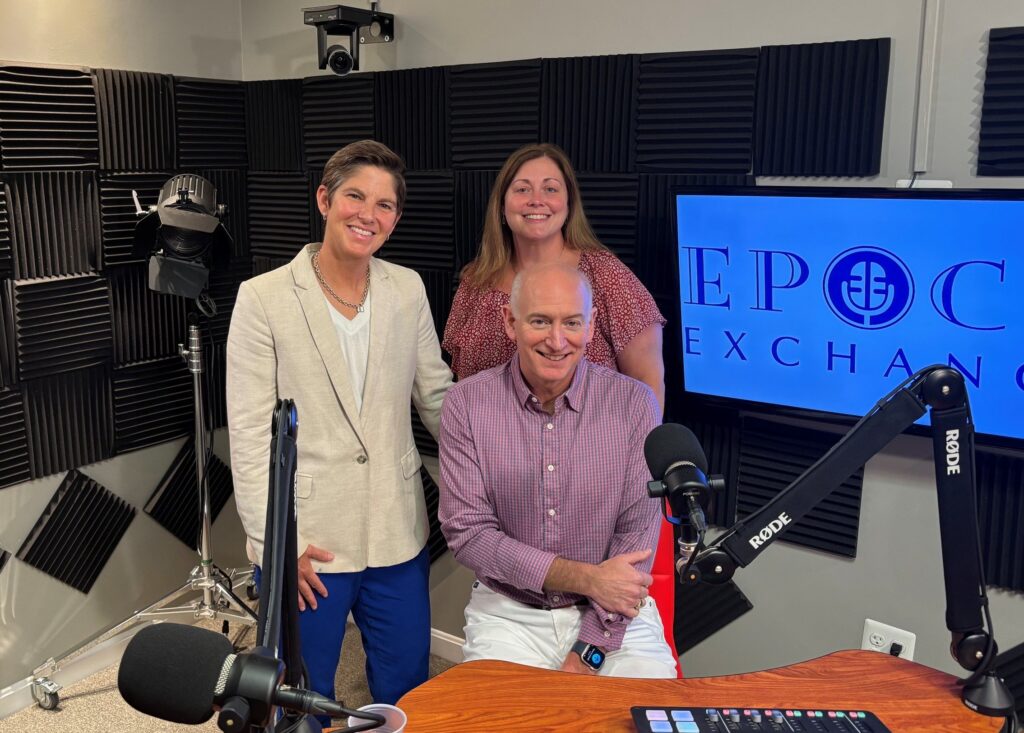
By Dr. Brent Forester, MD, MSc
Psychiatrist-in-Chief and Chair, Department of Psychiatry, Tufts Medical Center
Director of Behavioral Health, Tufts Medicine
Professor and Dr. Frances S. Arkin Chair of Psychiatry, Tufts University School of Medicine

Dr. Brent Forester is a collaborator and contributor with EPOCH Senior Living. He is the author of this article.
This article is part of the Dementia Care Pathway, a series exploring what good dementia care can look like over time, from diagnosis and treatment to caregiver support, planning, and living well.
The caregiver gives us information that we can’t always get from the person with dementia or from a medical record. At the same time, the dementia caregiver’s own health – both physical and mental – can affect what happens to the person they support.
For me, that means the caregiver must be part of the dementia care plan from the beginning.
*A quick note on language: In dementia care, there is a growing preference for the term “care partner” when referring to a spouse, adult child, relative, or friend supporting someone with dementia. The term reflects the reality that care is a relationship and that the person living with dementia still has preferences and a role in decisions about their own life.
In this article, however, I’ll generally use “caregiver,” since it remains the more familiar term for most families and is still widely used in research, support services, and healthcare. The two terms overlap, but the distinction is worth keeping in mind.
Why Does the Caregiver Matter to Dementia Care?
The dementia caregiver often helps us understand what’s really happening.
Someone may genuinely believe they are managing well even when family members have noticed significant changes. That’s often because dementia has affected their ability to recognize what is happening to them. That makes the caregiver an important source of information.
When I see somebody living with dementia, I can review their medical record and talk with their clinical team. I can examine the person and observe how they are functioning. All of that is useful information.
But the caregivers and dementia care partners often give me the history that fills gaps. They can tell me what’s changed over the past six months. They know what happened before a fall, why medication has become difficult to manage, or when a challenging behavior first appeared. They also knew the person before diagnosis.
I see this even when somebody already lives in assisted living or memory care. Team members at a community can tell me what they see each day, but a family member or friend can often explain how we arrived at this point, providing useful insights into the person’s interests and preferences before they entered the community.
Good dementia care, the best dementia care, depends on getting that story and context from caregivers. Otherwise, we can end up with various measurements and test results without really understanding the person in front of us.
So, the first answer is that caregivers are important sources for clinicians. The second obvious point is that family caregivers matter to dementia care because they are often the ones primarily implementing care plans.
How Does the Caregiver’s Health Affect the Person with Dementia?
If the caregiver becomes overwhelmed or unwell, the care plan can fall apart.
We’ve known for decades that supporting caregivers improves outcomes for people living with dementia. Caregiver interventions have been associated with people remaining at home longer and delaying placement in long-term care.
I find the reason easy to understand when I look at what caregivers actually do.
Early in dementia, ‘care’ typically involves helping someone remember appointments or understand the diagnosis. As the disease progresses, the caregiver takes on more supervision and the strain of increasingly complex decisions.
That workload accumulates and can take its toll. I see the same sacrifices over and over.
A spouse stops sleeping well because they’re listening out for telltale movements of wandering. They cancel their own medical appointments because they’re afraid to leave their loved one alone. Social activities gradually disappear as caregiving duties consume their days.
Eventually, I’ll be sitting with someone who tells me, “I’ve been doing this for three years. I’m exhausted, and I can’t do this anymore.”
At that point, caring for the caregiver is caring for the person with dementia.
What they need varies. They might benefit from a support group, respite care, adult day programming, or additional help in the home. They might need counseling or medical treatment of their own.
Sometimes, at this stage, the living situation itself needs to change.
This is why telling caregivers to “take care of yourself” isn’t enough. We need to understand what makes care unsustainable and address that problem.
But first, let’s step back and explore another barrier.
Why Do Caregivers Sometimes Refuse Help?
Recognizing that support would help and being ready to accept it are two different things.
Years ago, psychiatry and addiction medicine began using a framework called the stages of change to understand people’s readiness to change a behavior. I think the same model can help us understand dementia caregivers.
Some caregivers are simply not ready to think about help at all. In the stages-of-change model, we call that pre-contemplation.
The person may say:
- “I’ve got this.”
- “We’re doing fine.”
- “I don’t need anybody coming into my house.”
If somebody is at this stage, telling them five times that they need help won’t move them very far. It may even solidify their opposition.
I try to understand where they are first, which means listening. I explain what I‘m seeing. I may tell them what problems I want them to watch for and make sure they know they can come back if something changes.
Sometimes that’s all you can do at that moment. Leave the door open, but stop short of trying to push them through it.
What Happens When a Caregiver Starts to Question Whether They Can Manage?
That uncertainty can be the point when a caregiver becomes more receptive to support.
This next stage is often contemplation.
Now the caregiver has started to recognize that things are getting harder. They may still resist the idea of outside help or feel that accepting it means giving in. But the possibility has entered their mind. They are willing to talk about it, which is an opening.
Instead of simply telling somebody what they should do, I can help them think through what accepting help might accomplish – for them and the person they’re caring for.
- What are they trying to protect?
- Do they want their spouse to remain at home as long as possible?
- Are they primarily worried about safety?
- Has their own health begun to suffer?
Once I understand their goal, we can talk about support in relation to that goal.
A caregiver may initially see an adult day program in a negative light, as a step toward giving up independence. But if it gives their spouse social engagement during the day and allows them to rest, it may actually make remaining at home possible for longer. In this way, the supposedly negative action can lead to a positive outcome.
The same principle applies to help in the home or a support group.
Support should help the family accomplish something they value. It’s through this reasoning during the contemplation stage that we can move to preparation before finally progressing to action – the moment of asking directly for help.
Why Can Accepting Help Be Especially Difficult for Spouses?
For many spouses caring for a partner with dementia, caregiving is tied closely to how they understand their responsibility to the person they married. I have seen this particularly often with husbands caring for wives, although every family is different.
Some spouses have been married for 40 or 50 years. They made a commitment to one another and may interpret accepting outside help as failing to honor it.
Often, caregiving duties build gradually. You take over one task, then another, and before long you’re doing far more than you ever expected. I think of this as “caregiving creep.” Because the change happens slowly, caregivers may not recognize how much strain they are under.
The adult children sometimes see the situation more clearly because they often have distance from it. They arrive at the weekend and notice how exhausted Dad looks or how much Mom’s functioning has deteriorated.
I sometimes need to work with those adult children while continuing to support the spouse. There are situations where the broader family needs to become more proactive because a safety issue can no longer wait.
I have had to tell spouses that if they continue neglecting their own health, they risk becoming sick or disabled before the person they are caring for. I don’t say that to frighten them, but because I’ve seen it happen.
Even if that feels like a stark wake-up call, that conversation can help somebody see that accepting help is a proactive, responsible choice rather than a passive act of submission.
What Kind of Caregiver Support Actually Helps?
Of course, one of the most important ways we support a caregiver is by treating the person with dementia well. If we can identify and treat a medical problem, address behavioral symptoms, or manage another source of distress, we make life more manageable for the person providing care. That depends on good communication between caregivers and the clinical team.
But we professionals are trying to establish that caregivers may also need support specifically directed at them. Those options should be part of the care plan from the beginning, even if the caregiver isn’t ready to use them yet.
What that support looks like depends on what the caregiver and the person with dementia need at that stage of the disease.
Early after diagnosis, education tends to be the priority. Families and caregivers want to understand what the diagnosis means and what might happen next. They need to know who to call when new problems arise. It’s all about preparation, both practical and mental.
Later, the questions become even more practical as the disease progresses and issues arise.
- Is driving still safe?
- How should we respond to agitation?
- Who is managing medication?
- Why has sleep suddenly become so difficult?
I sometimes think of these as the block-and-tackle issues of dementia care. They aren’t theoretical questions, but the problems a caregiver needs to solve on Tuesday afternoon on limited sleep after a work shift.
I believe support groups can be enormously valuable here.
I’ve seen family members join a group reluctantly and then rely on that group for years. Other caregivers understand the things that friends may not. They’ve already had the argument about driving or spent a sleepless night wondering what to do next.
There’s also an opportunity that I think we’ve barely begun to use in dementia care.
Many former dementia caregivers want to help other families after their own caregiving experience ends. I think about the recovery-coach model used in addiction treatment. Someone who has lived through addiction and recovery can sometimes reach another person in a way a professional can’t.
Dementia caregiving may have something similar to offer. A spouse who has already lived through these decisions can say, “I know why you don’t want help. I felt exactly the same way.”
When Should Caregiver Support Begin?
I would rather start these conversations before a crisis forces the family to act.
Too often, help arrives only after something has gone wrong. Once a family is responding to a crisis, they have fewer options and less time to think clearly.
I would much rather explain the options earlier, without insisting that somebody accept a particular kind of support before they are ready.
Someone who refuses a support group, respite care, or in-home help today may feel differently six months from now. Readiness changes, just as dementia does.
Why Do I Sometimes Think of the Whole Family as the Patient?
I sometimes think of the whole caregiving group as the patient because successful dementia care depends on understanding the people surrounding the person with the diagnosis.
As we’ve established here, if those caregivers are struggling, the effects compound. So, as doctors, we can’t say we are treating the person with dementia well if we ignore the health and capacity of the people who are, to an extent, implementing our care plans.
Of course, I don’t mean that every family member needs medical treatment. At the very least, we need to understand who is helping provide care, how they are coping, and where things are starting to strain – and be ready to intervene if invited.
Supporting the caregiver in this way is a fundamental part of treating dementia well.
Continue Exploring Dementia Care
Caregiver support becomes especially important as dementia progresses and a person’s needs change. Families may find it helpful to read What Happens After a Dementia Diagnosis? for a wider look at planning and ongoing care. How to Live Well with Dementia also considers how the right support can help someone remain engaged while making caregiving more sustainable.
Both are part of the Dementia Care Pathway with Dr. Brent Forester. Bridges® by EPOCH also offers caregiver support groups and educational events, along with a wider collection of dementia and caregiving resources.
Listen to the EPOCH Exchange
Did you know we had a series of podcasts about senior living and dementia care? Recent topics include: