
Listen/watch our EPOCH Exchange podcast episode below.
Released June 2026 | Duration: 37:22
Erica and Sarah from EPOCH Senior Living welcome Dr. Brent Forester, Chair of Psychiatry and Director of Behavioral Health at Tufts Medicine. Together, they explore why dementia can involve far more than memory loss, including depression, anxiety, agitation, paranoia, hallucinations, and personality changes.
Dr. Forester also shares guidance on identifying possible medical causes, supporting caregivers, using treatment thoughtfully, and looking ahead to the evolving future of dementia care.
We discuss:
- Why dementia is not only about memory loss, and how mood, personality, anxiety, depression, agitation, aggression, paranoia, and hallucinations can affect individuals and caregivers.
- How behavioral symptoms can appear at different stages of dementia and may sometimes be early signs of underlying cognitive change.
- Why it’s important to look for medical causes, such as infection, pain, medication side effects, dehydration, or sleep disruption, before assuming a behavior is simply part of dementia.
- Treatment options and care approaches, including non-medication strategies, caregiver support, environmental changes, and thoughtful medication use when symptoms create risk or distress.
- The future of dementia care, including early detection, brain-healthy lifestyle habits, new treatments, and the need for more clinicians trained in geriatric care.
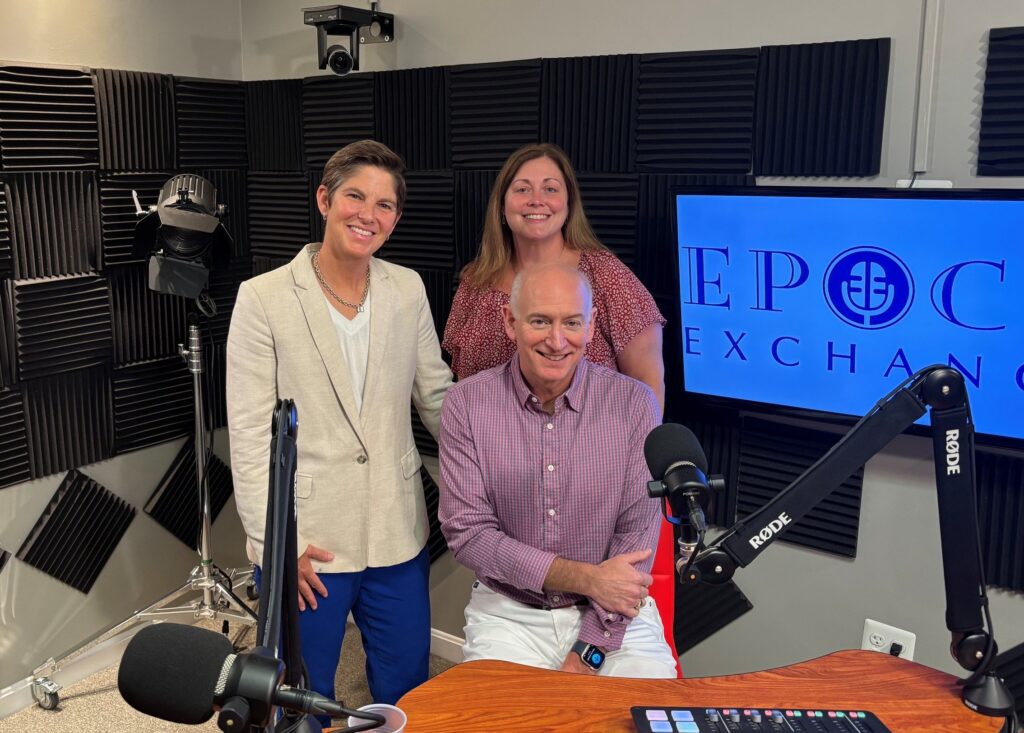
Guest:
Dr. Brent Forester, MD, MSC
Chair of Psychiatry and Director of Behavioral Health at Tufts Medicine.
Episode Transcript
Hello, and welcome to the EPOCH Exchange, a podcast where we bring together experts and community voices to share insight and guidance about senior living and dementia care.
I’m Erica Labb, Director of Team Member Engagement and Culture at EPOCH Senior Living. And I’m Sarah Turcotte, Area Community Liaison for our Bridges by EPOCH and Waterstone communities. Today, we’re honored to welcome Dr. Brent Forester.
He is the Psychiatrist-in-Chief and Chair of Psychiatry at Tufts Medical Center. He also serves as the Director of Behavioral Health across the Tufts Medicine system. Dr. Forester was recently awarded the prestigious Jack Weinberg Memorial Award from the American Psychiatric Association. This is a huge achievement and recognizes his outstanding career accomplishments in leadership in geriatric mental health.
Dr. Forester has previously partnered with Bridges by EPOCH to share guidance and resources for families and caregivers as part of our ongoing online education efforts.
And in this episode, we’re going to talk about the behavioral and psychological symptoms of dementia. We’re going to discuss how these symptoms affect both individuals and their caregivers, and what families should know about support, treatment, and the evolving future of dementia care.
Dr.Forester, thank you so much for being here with us today.
You are very welcome, Sarah and Erica. Thank you.
Great to have you.
Old friends, we are. Yes. So, the reason for having you here is dementia. All things dementia. Often, we think of memory loss, obviously. You talk with the Bridges community and the community at large, really, all over the world, about memory loss. But behavioral and psychological symptoms, agitation, anxiety, depression, aggression even, all of these changes in mood, personality, are really what a lot of families, caregivers, are impacted by in such a large way, and so directly.
So, can you speak to these symptoms and why they’re so important to recognize and address for this population?
First of all, thank you for having me here today. It’s an honor. And my relationship with the Bridges does go back well over a decade. And it’s been an honor to help care for your residents and support the families.
For us, too.
Yeah. Thank you. Truly. Yes.
So, Erica, what you’re pointing out is often ignored, frankly, in the medical community, the behavioral and psychological symptoms of dementia, that is. These symptoms are essentially universal over the course of this illness. Family members sometimes tolerate well the memory loss. They get frustrated by the repetitive questioning.
It’s very challenging to see the functional decline that occurs in dementia. But there are three major domains of dementia, symptom domains. Okay.
There’s the cognitive domains of memory loss, executive dysfunction, language, et cetera. There’s the functional loss: ability to dress oneself, bathe oneself, et cetera. But then there are the behavioral symptoms, like you’re mentioning. And they range the whole gamut of what we would see in all of psychiatry.
Wow.
Mood problems like depression, irritability. Behavioral problems like agitation, verbal or physical, and aggression, verbal or physical, anxiety, and then the psychotic-like symptoms of paranoia, suspicious feelings, or seeing or hearing things that aren’t there. All of these symptoms can occur over the course of someone’s illness with dementia, and at different time points in the illness, some are maybe more prevalent than others.
So, for example, early on in the illness, people, especially with no prior psychiatric history, who now in their 70s are getting sad and withdrawn, and apathetic, losing interest, losing motivation. That may definitely be depression, but it may be the tip of the iceberg of an underlying dementia.
Right.
The first symptom of dementia may not be the memory loss. It may be these mood and behavioral changes. And there’s a new condition that we’re recognizing in our field for people who have very mild memory concerns, like mild cognitive impairment, but prominent behavioral symptoms. And we’re calling that mild behavioral impairment, not because the behaviors are mild, but because the cognitive impairment is mild, and the behaviors are happening first and are paramount. But it’s a clue to what might be coming next. So that’s-
But if you didn’t know to look for that-
If you didn’t know to look for that, you might miss it. You would treat the depression, which is great. You need to treat-
Yeah the depression, but you’re missing the underlying dementia.
So, that’s one thing early on, depression, apathy, and some anxiety are pretty common.
What about paranoia? I think of that one.
That tends to happen as the disease progresses more.
It progresses, okay.
And the reason for that, most likely, is that the reason these symptoms are occurring, we think, is because it’s affecting different brain regions at different times. And if you’ve seen one person with dementia, you’ve seen one person with dementia.
That’s my favorite quote of yours.
Well, it’s true. And I also say, if you’ve seen one assisted living facility, you’ve seen one assisted living facility.
True.
That’s a true story, too.
But so, depending on where in the brain the dementia happens to be involved in reducing brain function, and unfortunately, brain cells are dying, that will predict what symptoms may be occurring and when.
So, paranoia is common in the moderate stages of illness. Hallucinations, like visual ones in particular, may be specific to certain kinds of dementias. Right.
It may be a clue that someone has the Lewy body type of dementia-
Right versus the Alzheimer’s type of dementia.
So, sometimes these symptoms are not just clues to the suffering that the person’s having and that we need to obviously treat it, but also what type of dementia it is. We may get to this, but I think the evaluation is critical. Mm.
Because you mentioned that these symptoms are really devastating to families, and it is true. Most people wind up in long-term care facilities or in hospitals acutely, like the emergency room or a psychiatric unit.
Right.
Not because of the memory loss, but because of these behavioral symptoms.
Right.
That’s when it’s like, “This is too much.” The good news is, and we’ll get to it, and I’ll let your questions prompt me as opposed to me talking. But the good news is there’s a lot we can do to help treat these symptoms. And the first thing we need to do is figure out what’s causing them in the first place.
Right. And that was going to be my question- Yeah is why is it so important for family member caregivers to really recognize and address these symptoms that they might be seeing?
So these symptoms may be the disease progressing, and this is happening. But it may be other problems going on that are extraordinarily treatable and reversible. So, for example, I think about three buckets of problems that drive these behavioral symptoms. One bucket is the environment.
It could be that it’s a reaction to the way someone is talking with a person with dementia who may be confused and not understanding what’s going on, and maybe they’re being asked to take a shower, and they had a prior traumatic experience in their life with a certain kind of person. Maybe they’re a woman and this is a man, and they’ve been traumatized earlier in life, and now they start fighting in the shower. Mm.
You know?
Well, who wouldn’t, right?
Right.
And again, some of the impulses are no longer inhibited by the frontal cortex because it may be degenerating, so some of these behaviors are disinhibition. The inhibitions come out.
So one is the environment. What’s going on in the environment that might be triggering these behavioral and psychological symptoms?
Right.
The second are medical problems. Infections-
Yeah really common in older people. The UTI.
We always say it’s the UTIs. UTIs.
Well, I’ve always wondered, why is that? Well, it’s because UTIs are common in older people.
Right.
And any infection can do it.
Fever can do it, right?
Right. Constipation, pain, medication side effects, alcohol, drugs of abuse, et cetera. All of these medical factors may be causing the symptoms, and again, very addressable by treating the underlying problem.
Right.
When COVID was starting to become paramount in our society six years ago, we started to see people who were older who were developing behavioral symptoms that were the first signs of COVID before they had fever or obvious signs of infection.
Right. Wow.
It was really agitation and confusion that was the heralding sign of an underlying COVID infection because COVID led to an inflammatory process, not only in the body but also in the brain that likely was precipitating some of these symptoms.
Right.
So that’s the second bucket, or medical.
Interesting.
The third and final bucket are psychiatric.
And what I mean by that is some people who develop Alzheimer’s in their 80s may have had depression throughout their life. And now they’re having a recurrent episode of depression, or maybe it’s a recurrent episode of mania, or maybe it’s a recurrent episode of psychosis. So it may be that the dementia is causing it because of changes in brain function, or it could be a recurrent episode of a problem they’ve had for a long time.
Mm.
And the reason it’s important to distinguish the two is the treatment approaches do vary, especially the length of treatment. If you’ve had a lifelong history of psychiatric illness and you now have dementia, it doesn’t prevent you from having recurrent depression.
Right.
And so ongoing treatment with medications and the way you approach patients behaviorally is going to really be critical. If someone develops psychosis, hallucinations only because of a UTI, and they’ve got dementia, they don’t need to be on medication forever.
Right.
They may need it for a little while. By the way, the antipsychotics don’t treat the infection, the antibiotics do, right?
Right.
But the antipsychotics or the antidepressants may be needed for a period of time to keep the behavioral symptoms under control. So you may need both, which is why knowing that piece is so imperative. This is all nuanced stuff.
And another thing we can talk more about is who actually assesses these problems in the medical community-
Yeah, I want to get to that because that is a challenge, yeah. Yeah, we should get to that.
The question I had for you with that is just sort of an offshoot, and we don’t have to get too far down that road, but I’m wondering how many of our older folks, patients that you see, clients, have the underlying mental health issue that was never diagnosed. Is that a common issue or less so now? I just wonder with the older generations, maybe the mental health part wasn’t addressed, so then you’re addressing it when you’re also addressing maybe other physical ailments and dementia. Yeah. Is that common, or?
So there’s a lot to say about that. I’ve been in this field now for 30 years, which is amazing. And earlier in my career, I would’ve said 100%. I would see patients who, for the first time in later life, in an episode of mania or depression or psychosis, they were coming in to see a specialist, right? But they had had this since their teens and 20s.
Right.
And it was brushed under the rug.
Bipolar disorder, classic story. Mom would have these episodes where she would be withdrawn and quiet and sleep and be in the room and not engaged with life. And then times when she’d be up in the middle of the night painting the walls-
And it’s just Mom and cleaning everything. That’s Mom.
“That’s just Mom.” Yeah. Mm.
And that’s bipolar disorder-
Yeah undiagnosed, right?
But more so diagnosed now with folks. So there was the stigma was just massive. And I would say it’s still there, but it’s getting better.
Oh, good.
We now talk about it. I actually now give talks to public settings about my own experiences with my family and their mental health challenges. And I don’t have a problem with doing that now. And I actually start a lot of my talks now in community settings, and I ask people, “How many of you have a friend or a family member who’s had some mental health issue, anxiety, depression, addiction?”
Everybody.
Every single hand goes up.
And even 10 years ago, number one, I wouldn’t have asked the question. Number two, nobody would’ve raised their hand. Right.
They would’ve been too ashamed-
Right and embarrassed.
The shame. Yeah.
So yes, I agree with you. But the cohort is changing.
Great.
So the 65 and above folks now, while the 80-year-olds are still probably in the stigmatized cohort- but the 65-year-olds, not so much.
Great.
The baby boomers.
Great.
And I think with our current generation of teens and 20s, this is commonplace.
People talk about it all the time. Yeah. Maybe a gift of COVID is that people started to talk about, who knows, the mental illness. People recognized-
Yeah that we had this epidemic on our hands-
Right
Which frankly was always there, it’s just that people weren’t talking about it.
Right.
We could do a whole other show.
And I think that although we’re-
Another show.
Back to dementia. Yeah. Absolutely.
And although we’re breaking the stigma, I still think that it can be difficult for families to navigate and get through these challenging symptoms. As family members are dealing with these symptom changes, they’re also changing their relationship, right? Whether you’re an adult family member, caregiver, or a spouse, their relationship is changing, and that can be really hard for a family member to cope with. And could you share maybe some advice that you’re sharing with caregivers on how they cope through this kind of relationship change?
So, Sarah, what you’re talking about is, oftentimes, adult children in particular feel like they’re in a parental role for their parent. Mm.
Or the nature of the relationship between a spouse and a loved one with dementia is just different now because of the cognitive changes and the person’s awareness of what’s going on around them. And in some ways, this is directly related to the grieving process.
I think, it’s one aspect of the grieving process is that this is not the mom that I knew, and this is not the husband or wife that I had, or the sibling that I loved.
And so, it’s like a long journey of grief, and part of it is related to this relationship, this change in the nature of the relationship. The most important thing, and it sounds so obvious, but most people don’t even think about this, is just to become aware of it. Mm.
Become aware of it and talk about it. Talk about how you feel about this. Recognize it for what it is.
Most people will be feeling this way but won’t have words to describe what it is that they’re feeling, or understand that it’s about this relationship dynamic change that they didn’t realize till they had a chance. This is why interventions with caregivers need to include whether it’s a group that does support, and you’re going to hear similar stories from other people. You’re totally not alone.
I know people go into those groups all the time saying either, “I don’t want to do the group because I don’t want to deal with it. I don’t have time to do it.” By the way, a lot of these are on Zoom now, and they work out extraordinarily well. And the relationships you even build on Zoom are pretty remarkable, actually.
Yes.
But once they have an opportunity to talk about how they feel, it is a form of psychotherapy to really understand the changing nature of these relationships. So the number one thing, first of all, is to recognize it’s happening, and number two is to understand if it’s related to maybe it’s grief, maybe it is depression, maybe it is something else. Because the caregivers suffer, not just feeling lousy about being a caregiver and feeling burdened, but a clinical syndrome of depression is very common in caregivers.
Caregivers, yeah.
Very common.
In fact, upwards of 50% of caregivers will have a clinically significant mental health condition related directly to caregiving.
Interesting.
And now, luckily, it’s being recognized as a problem that needs to be treated.
I love your work that I’ve seen. I’ve actually gotten to witness, which is such a joy, when you’re working with a patient, you’re working with the whole family. And oftentimes, you’re helping the family understand what you just shared with our viewers and our listeners. And then a lot of those folks, because you said that, will join one of the EPOCH Senior Living, either in-person or online support groups. Never would have done it- for all the reasons you listed, but because you said so, were like, “Oh.”
So for our listeners and those that are watching, if you have someone in your life who is a caregiver, you might be that person that can say, “Hey, go to a support group. Just go once.
If you hate it, you never have to go again.” But nine times out of 10, people are so thrilled that they went, because they have that. They get that support and that validation that this is actually part of the process, and by helping yourself, you’re not being selfish. It’s the old oxygen mask, right?
You put yours on first so you can help everyone else, and that’s what the caregiver has to do. So I love that.
Well, it’s interesting. It’s a great analogy, the take care of yourself first, because if you can’t take care of yourself, you can’t possibly care for your loved one. Boy, is that easier said than done.
Totally. Right?
So what I see is the opposite, of course-
The martyr syndrome
I see people who are just killing themselves, literally.
Yes. Yeah.
And I often will warn loved ones, and I see this more in spouse care partners than with the adult children. It’s a different relationship, where they just can’t stop doing what they’re doing, where they don’t want to look for help, where they don’t seek support because they’re like, this is their mission. This is what they vowed to do all those decades ago.
Right.
And they need this intervention, big time. Yeah.
And it just takes one conversation, often, to help them take a step back and really look at the big picture. And, a powerful, it doesn’t have to come from a physician, a family member like an adult child. I have a colleague right now who’s dealing with this in their family, and it was the adult children speaking to the dad to make the dad realize what the dynamic was that was going on, and how things just needed to change.
Yeah.
And that is, in hindsight, it’s so obvious, right? But when you’re in it, it’s not obvious at all.
Right.
And so when I see care partners struggling, I know you said that once I say it, they go. Nah. Not always. Definitely not always.
No. Sometimes you have to hear it a lot. Yeah.
You have to hear it a lot.
And I’ve seen care partners who go through-
Maybe we’ve primed them. Maybe you-
And then you come in well, you guys have primed them well, but some of these care partners will be in these groups, and then their loved one passes away, and they still stay in the group.
Yes.
And then some of them lead groups. Yes.
And I think people who have lived experience as care partners are, frankly, the most qualified to help other people.
Yeah.
And many of them love to do it, and they find it so gratifying, and they’re giving back-
Yeah because they know that they’ve been helped along the way. It’s like purpose.
Yeah. Yeah. Absolutely.
Connecting with one another and knowing you’re not alone and hearing other people’s experience because symptoms like agitation, suspicion, anxiety, and aggression can feel so personal, even when it’s a part of the disease. And why is that? I just don’t understand why caregivers put all that guilt and pressure on them. Yes. Yeah. It’s hard.
Well, I think part of it is the, sometimes- Especially if it’s the first time in their entire life where their loved one is experiencing these symptoms, which is often the case. Most of our patients never had psychiatric problems when they were younger. Many of them, most of them didn’t.
It’s very hard to differentiate what is disease and what is willful behavior. And I think sometimes there’s an impulse or whatever, and a gut reaction for the caregiver to say, “This is willful behavior.”
Why are they acting like this?” Right.
“Why are they doing this to me?” Yeah. As opposed to taking a step back and really seeing, well, this is disease going on called dementia that’s affecting brain function and brain circuits, and neuronal cell death, and neurotransmitter changes and inflammation, and you name it, biologically, is going on in the brain right now, and the symptoms you’re seeing are related to that. It’s not on purpose.
It’s not because they’re trying to be difficult. Yeah.
I want to get into a little bit about, you talked a little bit about environment and changing the approach, the things we can control, and sort of talk a little bit about that, and then sort of move into the role of medications when appropriate. If you don’t mind.
So the key is, like I said, those three buckets of causes, environment, medical, psychiatric history, really understanding what’s driving the behavior is really important. Okay.
And then in terms of developing a treatment approach, there’s what I would call behavioral approaches and then medication approaches or medical approaches. On the behavioral end of things, there’s so much we can do, and no matter what we do with medicine, we need to wrap the behavioral approaches around that as well. It’s what you wrap around the pill that matters the most. It’s never just the pill.
It’s never just the pill. Okay.
Not in dementia care. Yeah.
It’s never just the pill in almost any kind of medical care, but it’s certainly in dementia care. Yeah.
And so the behavioral approach is, I’ve often thought about this as really, if you look at the literature, it’s all over the place. I’m actually involved with a group, an international group right now, reviewing the world’s literature on what works for these behavioral approaches. Wow.
And it’s very ungratifying because there is no one answer, Erica.
Right.
It’s not like aromatherapy’s going to do it.
Right.
But it might for some.
Right.
Or pet therapy, or music, or rooms that are really quiet and allow people to sit there with a weighted blanket on and listen to music. It’s the way you talk to people, right?
It’s how you engage with people.
Right.
You don’t raise your voice, but your voice has to be loud enough so they can hear you, and you have to make sure they have hearing aids in.
Right.
And then you have to take into account who they are as a person, right, and what they like. And you guys do a great job at The Bridges getting information about their past history and their past lives. Like, what makes this person happy? What makes them tick?
Right.
What makes them feel calm and soothed? All of this needs to be taken into consideration, which is probably why the literature on this is all over the place, because it is so individualized.
So I think if you, and again, when I come in to see somebody, I’m not getting the full story until I talk to the family.
Yeah.
The folks who work there as the staff, they know the person from the time they’ve been there. The family knows their whole history.
History. Right.
And so getting that information and engaging with families around what the person needs and wants and likes is really important. So those are the behavioral approaches, and those will work. And if you read our literature in geriatric psychiatry, in the medical community, the behavioral approaches are always first, okay?
Right.
And they don’t stop, even if medicines are needed. Medicines are needed if the symptoms are rising to the point where there’s distress in the person- Yep or there’s distress being manifested by the person that’s causing a safety concern.
Okay.
For example, someone may be throwing things around the room, and it’s a dangerous situation.
Yeah.
Or they may be so depressed they want to end their life, or they may be hallucinating, and they’re scared, and they’re really fearful that somebody’s truly out to get them because they’re seeing them in the room right now with them. When you have symptoms that are of a severity to impact their function and their quality of life, that’s when medication’s really important.
Yeah.
And then there’s a very long discussion we can get into, and maybe I can abbreviate it, about how I even think, or how we think as a field about what medicines to use when. Okay.
It’s interesting.
I’m thinking about how you said if you’ve seen one case of dementia, you’ve seen one case of dementia. If you’ve seen one intervention, you’ve seen one intervention. Yeah. It’s very similar. Yeah that every case is so unique, and every intervention is so unique, and I hadn’t really thought of that, but I’ve lived it, and yeah. It’s such a wide scope of what you have to look at about the whole person.
If you think about it, there are 50, 60 types of dementias, so the presentation of the symptoms, whether they’re cognitive, functional, behavioral, will be different depending on which dementia.
Yeah.
There are different stages of illness. The symptoms will be different at different stages of illness. Some people are on 15 medicines, some people are on one. That will impact all of this.
Some people have 10 medical problems, some people have no other medical problems. And then some people had a prior history of psychiatric illness and trauma, and other people don’t. And all of this will impact how these symptoms manifest themselves- Right and how you should approach treatment.
It really is like a puzzle, and I feel like- It is when families are working and navigating these situations, there’s so much to consider, and what should they be asking? What should they be looking for and asking when they’re going through something like this?
First of all, is to not be alone. So you need to reach out for help. And so the first medical stop on the journey often is primary care. So families will have to now start getting more involved in medical visits with their loved one in the early stages of this illness to, number one, get the diagnosis. Once there’s a diagnosis, then you can kind of plan what to do next and try to be as proactive and not as reactive as possible.
Sure.
Tom Harrison, a law journalist colleague, who came to me with a book that he was working on called “The Complete Family Guide to Dementia,” so we published this four years ago- But in that book, we talk about the importance of getting a diagnosis and the fact that the front line, and this has been my experience the front line in dementia care is primary care. And yet primary care clinicians don’t have the time. They’re not equipped with the knowledge; often, it’s not that they don’t want to help their patients, it’s just something that’s not been taught in medical school or in residency. And the field has changed so much in the last five to 10 years, and we’re asking so much of them in the healthcare system to do everything. It’s completely impractical.
Right.
Primary care is broken in this country, we know that. And our state’s been very proactive in thinking about alternative payment models to try to support what the primary care clinicians need to do. But I say all of this because if you then take your loved one to a primary care doctor, you may feel unfulfilled, and you’re not getting the answers you need. And it’s not just the fault of primary care. And we can talk, if we have time, about ways to bring more help to primary care around dementia care.
I’d love to end on that. Yes. So we have a few minutes left. I want to talk about the closed-loop system that you’ve been advocating for. If you can give us a sort of a general feel on that, we might have to try to book you again. You’re a tough guy to nail down for another date, but we’d love to. But I’d love for you to finish with that, because it was something I hadn’t really thought of or heard about a lot, and so I’d love for you to share that with our listeners.
So, the state of dementia care today in 2026, for the most part, is that it’s delivered in specialty settings. It’s delivered in a memory clinic where you’ve got specialists like geriatric psychiatry, which is what I do, behavioral neurology, sometimes it’s geriatric medicine. Those are the three medical specialists that know how to treat people with dementia, but they also look at dementia a little bit differently.
Each one?
Each one, each one looks a little differently.
Okay.
Like the behavioral neurologists are all about diagnosis, biomarkers, new therapeutics, tracking the biology of the illness over time. Some of them are great with the behavioral symptoms and with families, but they are really the biological—
Geriatric medicine is also very good at holistic geriatric care, so it’s the other medical comorbidities and the other medications, and what medicines are they on that are really driving the behavior or the symptoms. Maybe the medicines are causing the cognitive problems we’re seeing. And then geriatric psychiatry, I’m biased, okay? It’s my field. We put it all together. We’re number one.
No, but we put it all together, right?
Yeah. Which you need.
You need to have that. Right.
But if I’ve got a patient with dementia who’s got Parkinson’s type dementia, I need a neurologist working with me, right? And if a neurologist is working with an Alzheimer’s patient who’s aggressive and seeing things, they need me. So the specialty memory clinics pull these teams together, okay?
Neurology, psychiatry, geriatric medicine, and neuropsychology that can do detailed cognitive workups to make sure we understand what type of dementia, what the strengths are, and what the challenges are. Increasingly, these clinics will also have social workers to help with the families.
Right.
And they’re often based in academic medical centers. Okay.
We have an amazing abundance and a richness of dementia specialists in the city of Boston and in the Massachusetts community. We are unusual in our state for this. And yet, if you live in the Boston area and you want to go into a major academic medical center to one of these specialized memory clinics, your wait time is going to be nine months to a year.
Wow.
Yeah.
That’s not good, right?
It’s unheard of, yeah. Okay?
So when I talk about closed loop, and I was talking before about primary care being the front line.
Yeah.
We got to change things up, right? So what I was doing at Mass General Brigham when I was there, and I’m now doing at Tufts, is building dementia care teams within primary care. And what those look like are pairing social workers and non-clinician navigators, they’re now called dementia care navigators. So we have an amazing pair at Tufts that we hired, social worker, navigator, supervised by a dementia physician expert. Could be geri-psych, could be geri-medicine, are usually the two that do that. And that team can help the primary care physicians assess and diagnose dementia.
Mm.
Can help refer them to a specialty clinic if needed because it’s too complex for them to manage. But when you bring that team to primary care, you’re bringing the core ingredients of the specialty clinic into primary care, and you’re augmenting what the primary care docs can do. The last thing you want to tell a primary care doctor is to screen for something that you don’t help them on the back end with once they’ve screened positive.
Mm.
So if 20 years ago it was depression, we were telling, “Screen for depression. Screen for depression.” Like, “I don’t know. Try tricyclic antidepressants. They’re safe.
They can hurt people.” Then Prozac comes out. Well, now, sorry, I’m dating myself. That was 1988. Yeah. So almost 40 years ago. Once the SSRIs came out, then primary care docs, “Yeah, I can screen. I can treat.” That wasn’t enough.
Right.
So then we added collaborative care, a similar model where you have a non-clinician mental health specialist called a behavioral health specialist and a supervising doctor or psychiatrist, who can help collaborate on the care of those patients. That’s the same idea.
Okay.
That collaborative care model morphed from depression into dementia. Okay. And those studies have been going on for like 15, 20 years. They work. It works. The problem is implementation’s challenging, and we don’t have a great financial model of care. We don’t. We can get into that on another podcast.
Yeah.
So by closed loop, I mean I want there to be the front line in primary care with a team like I just talked about. So dementia screening is happening routinely, that the care team is there to support the diagnosis, the communication of the diagnosis. The family gets support from day one on planning. They go to the specialists only if needed, and that’s going to be like 10% of the time if you do this right. So it would be like one-stop shopping for the patient and the caregiver. We need one-stop shopping for dementia care.
Now, I think what’s likely going to happen and what maybe should happen also is if you think about the world of cancer care in 2026, right?
And I’m not an oncologist, but I work in an academic healthcare system, and what I’ve seen in the world of cancer in my career is unbelievable, right?
Yeah.
So nowadays, you’re not screened for cancer in a cancer center. You’re screened for cancer-
Right in primary care.
Yeah. You have a mammogram, a Pap smear, a PSA, whatever. You’re screened positive, and then you go through a workup in a cancer center. And in that cancer center, when they make the diagnosis, they’re going after the biology of the illness. They’re looking at the genetic profile of your cancer, they’re looking at the imaging of your cancer, and they’re determining whether or not you meet criteria for cancer therapies that are on the market or for research therapies that are being studied because you don’t meet those criteria, and you may benefit from this drug. And there you see an integration of primary care sets the stage by screening, specialty care is integrated with research, so you have one-stop shopping in a cancer center. We’re so far from that in dementia. We’re 40 years behind, right?
Right.
But the model works. The model works, but there’s also a payment mechanism for cancer drugs, and there’s a payment mechanism for all these screening tests and for the surgery. So there’s actually a business model that supports that. There is no business model for dementia care. We now have new therapies that will generate revenue for these health systems, but the holistic approach to care is not fee-for-service medicine, where everything we do is a bill.
Right.
That’s not going to work for dementia. What is going to work for dementia is a population health approach where we have to think about a payment model where you get a certain amount of money to care for a patient over time that gets allocated for that patient, so that care managers and dementia care navigators and social workers, where the billable revenue is just not there, you can use resources in a different way to pay for them. So the connecting primary care to specialty care is the closed loop, but we do have to figure out a better way to financially support this, and that’s going to require a lot of advocacy.
Yeah.
And that, I think, is where our field needs to go. But frankly, it’s where society needs to go because we’re just seeing the tip of the iceberg-
Right
Of the baby boomers. We’re starting to see the dementia rise quickly because of aging, and that’s going to be the next 20 years.
Right.It will be a crisis if we don’t do something.
It already is.
Okay.
But it’s going to get a lot worse.
Okay. Yeah. Well, on that happy note.
Well, can I say something positive?
Please, yes. Okay.
That’s a great way to- Why have I done this work all these years?
Yes. Why have you? Yes.
What motivates me, right?
Yes. I would love that.
I love this work, and I’ll tell you why. I thought about going into primary care and being a family practice doc, and the reason why is that I wanted to care for patients over the course of their life and get to know their families.
Right.
That is what dementia care is. Dementia care, like you said, Erica, is a family disease. It’s true.
And I love working with families, and I love working with the people with the ailments. And my approach to dementia care is not what we have to take away from people with dementia or what people with dementia can’t do.
Right.
Because there’s certain things they can no longer do. At some point, they can’t drive. At some point, they can’t manage their meds. At some point, they can’t work. At some point, they may have a hard time with their relationships. But there’s so much people with dementia can do.
Yeah.
So much, and especially now that we see dementia not just as the person who winds up in a long-term care facility because they can’t feed and dress themselves, but this illness goes on for decades.
Right.
In the early stages of the illness, people with this illness are still working. They’re still enjoying life.
Having a great time.
They’re having a great time, which is why behavioral symptom control is so important. So that’s why I love this work. It’s a holistic approach to dementia care.
It involves the family. They’re eternally grateful.
Yeah.
You can follow people for a very long time, and you can see major changes in their outlook on life. And then from the science standpoint, because I’m a research scientist also, the changes I’ve seen in the way we understand the cause of this illness, how to diagnose the illness, and how to treat it, in the last five years, night and day. So what are the next five years going to be like?
Yeah. Amazing. Amazing.
The last thing I’ll just say is, and here’s the other hopeful message, I like to empower all of us because I just turned 60. Probably 10 years ago, 15 years ago, 20, when I was running a lot, I was probably doing good things for my brain. Exercise, nutrition, social engagement, cognitive stimulation-
Sleep
Sleep. Oh.
Hearing loss-
Yes, visual loss, pollution, they’re major risk factors for dementia that the Lancet Commission published two years ago. If we could eliminate all these, we would reduce the dementia prevalence in the world by 40-plus percent.
That’s unbelievable. And that’s all controllable.
So think about- Potentially the Framingham Heart Study- Yep changed the way we treat heart disease.
A lot of it’s prevention. Don’t smoke, right?
Right.
Go on a statin for high cholesterol.
All the things that work for your heart work for your brain. So if you take a heart-healthy, brain-health approach, I think there’s an opportunity for dementia prevention that we all can benefit from. And even if you do develop dementia, these factors, these interventions, will still help with course of illness over time. And that’s really positive news, and it’s never too early to start those, and it’s-
Never, never too late.
Yeah.
Right.
So if you’re listening, come to one of our trainings on that. We do a lot of trainings on heart and specifically brain-healthy lifestyle. We’re happy to help you.
Proactive Brain Health, that’s what it’s called.
Proactive Brain Health.
Dr.Forester-
Yeah that was a great way to end.
A treat.
And I mean, inspiring.
I hope that this podcast will– I know it will help our listeners and our- Thank you caregivers who tune in, but thank you for also trying to inspire our next generation of healthcare professionals because we do need them, and it’s very much rewarding work, and we’re so lucky to partner with you, so.
Yes, and I would just echo that, Sarah. Just from a professional standpoint, I have two students with me today watching this podcast and seeing people with me.
I want the young generation to know that going into caring for older adults is the most rewarding career in medicine, at least from my perspective. Unfortunately, they’re not exposed to the rewarding parts of geriatric care early on in their training, and they don’t have the role models. If they happen to have had amazing grandparent relationships, then maybe early on they think about it. So I want to see us really bring geriatric care to– If we’re going to bring geriatric care to all of us as we get older-
Yeah we’re going to need more people who want to do this work, so.
Take care of us, please.
Yeah.
So for all of you future healthcare professionals, caring for older adults is extraordinarily rewarding work.
Yes. Absolutely.
And you do it so well. Dr.Forester, thank you so much for joining us today-
Thank you
On “The EPOCH Exchange.” It has been a treat-
Yes as always.
Thank you so much.
Thank you both so much.
Great to be here.
Until the next time. Okay. Bye bye. Take care.
Want to Learn More?
Visit our guides to dementia and Alzheimer’s and memory care. These articles are a great place to start learning about this disease and what care looks like in a memory care community.
For more answers to quick common questions, visit our FAQ page.
You can also check out our upcoming events for caregiver education and support.