
In this episode, Sarah and Erica are joined by Tammy Pozerycki, a dementia care specialist and educator who works with Clear Guidance in Wellesley, MA.
Clear Guidance provides expert dementia care management through personalized assessments, behavioral management strategies, and placement assistance. Tammy creates and delivers meaningful engagement programs designed to support families at every stage of the dementia journey.
In this episode, Sarah, Erica, and Tammy discuss how dementia transforms relationships, and how challenging this is for caregivers, before proceeding to share advice on how to best communicate with loved ones with dementia. Listen/watch below:
EPOCH Exchange | Ep. 9 | Released February 2026
We discuss:
- How dementia transforms close relationships, and how challenging that can be for care partners to adjust as they deal with fatigue, stress, loss, and financial strains
- The need to find new ways to communicate as the disease changes unexpectedly, knowing we can’t predict what will happen and when.
- Seek support early. Build a “village” (professionals + community resources) instead of trying to manage everything alone at home for too long. Support groups are immensely helpful for this.
- How structure and routine can reduce uncertainty, support daily functioning, and make the day feel more manageable for everyone.
- Communication strategies: limit distractions, use a calm/lower tone, get to eye level, give extra time, offer simple instructions, and “validate” feelings even when the words don’t fully make sense.
- Closing takeaway: prioritize caregiver self-care (the “oxygen mask” mindset)—it’s one of the best ways to support the person you’re caring for. This is the foundation that allows you to communicate while remaining calm.
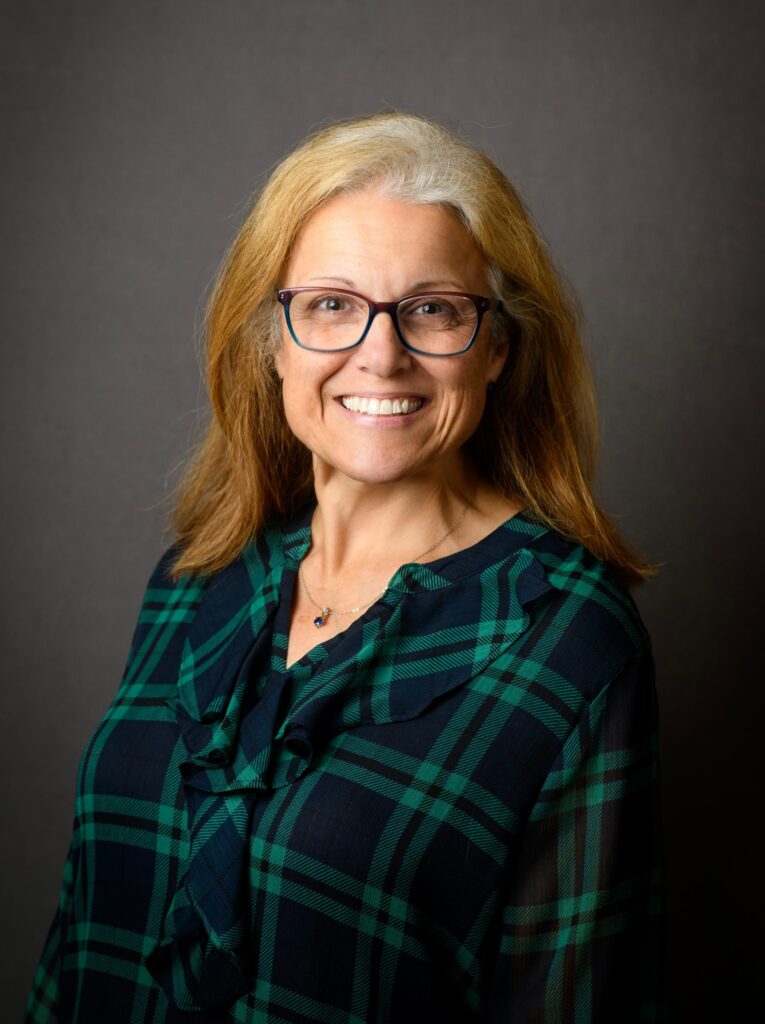
Special Guest:
Tammy Pozerycki
Dementia Care Specialist, Clear Guidance
Tammy has decades of innovative experience supporting people living with dementia, their families, and care teams. Her background also includes founding dementia-focused community supports in Massachusetts, including Pleasantries Adult Day Services, and helping launch memory-café programming through “Better Day.”
Episode Transcript
Hello and welcome to the EPOCH Exchange, the podcast where we have real conversations about senior life, senior living, dementia care, and the amazing people who make it all happen. I’m Erica Labb, Director of Team Member Engagement and Culture at EPOCH Senior Living, the premier senior living provider in the Northeast.
And I’m Sarah Turcotte, Area Community Liaison for several of our bridges by EPOCH and Waterstone Communities. Together we’ll be your host, bringing stories, insights, and expert voices from across our organization and beyond. Whether you’re a caregiver, a family member, a professional, or somebody navigating the early stages of dementia, this podcast probably has something for you. We’re here to share what we’ve learned, spotlight the work happening every day in senior care, and offer ideas and inspiration to support and wellbeing at every stage of aging.
Each episode, we’ll be joined by guests who are making a difference, from community leaders to care team members and clinical experts. Today, we are talking with Tammy Pozerycki, an established thought leader in memory care with a background in counseling psychology, and over two decades of hands-on experience. Tammy has been a keynote speaker on the international stage, but her heart is in the day-to-day work of helping families find a clear path forward.
She’s the founder of Pleasantries Adult Day Services, one of the first successful home-based social model adult day programs, which specialized in memory care. She also established the first memory cafe in Massachusetts, known as Create a Better Day Cafe, in 2011. Today, she joins us from Clear Guidance in Wellesley, a practice led by leading Gerontologists who provide highly personalized navigation for elder care.
They’re known for their immediate-impact philosophy, moving past templates to solve real world problems for caregivers. Tammy, welcome to the show.
Thank you.
It’s such an honor to be here. I’m excited.
What an amazing, like, wealth of experience. We both have worked with you in many different places and, uh,
Since the beginning, I almost feel like I’m sitting with a dementia guru superstar for sure. To be quite honest with you.
For sure. You’re like famous. You’re famous to us. So we’re so honored to have you on the show.
Thank you for finding the time for us.
Sure. Thanks for having me.
And you know, I’m really excited to have you share your experience and expertise with our audience because you really come with a wealth of experience helping to support people living with dementia and their caregivers throughout various stages of their caregiving journey. And I think, you know, many of us in this industry, we see one common denominator that is constantly coming up, and it’s managing challenging symptoms of dementia.
Yeah.
Um, so I guess, you know, as we dive in, um, I’d love for you to just kind of share, you know, what is usually happening in the moments when you’re working with caregivers when they finally say, I’m hitting this breaking point. I can, I can’t do this anymore.
I find that there’s a lot of folks who go beyond that, and there’s no turning back, so that caregivers are keeping their loved ones at home much too long, or they’re not finding their village of support. So they’re doing it all by themselves. And there’s a lot of partners out there where one person has dementia, and the partner is “healthy”, but really, how healthy is that person? And we see a very large percentage of care partners pre-deceased, their loved ones who have dementia, from the stress.
Mm-hmm.
So I think, um, in my work, since the very beginning, has been to support the caregivers.
Yeah.
It’s so, thank you for saying that. And I think by the time they’re calling you, it’s like almost, it’s not too late. Like, I’m so glad you called, but it’s, a lot of the damage has been done.
Yes.
And the hero, the martyr, the person bearing a lot of the responsibility is now overwhelmed to a point where it’s causing physical and emotional harm.
Yeah.
Wow.
Yeah.
And, and that’s how humans act. We respond in crisis, right?
Yeah.
We just wait until that time when it just boils over and we need help. And it’s unfortunate because there is so much support out there, but people don’t know about it, and they don’t know who to call. So…
And that’s why we’re here’s, right? I mean, that’s why we’re doing these, this podcast, and doing, having guests like you on. ‘Cause if this is like, Hmm. I feel if you’re listening, if you’re at home or you know, listening and you’re like, oh, those poor people that have gotten to that point, like, now’s the time to make some phone calls.
Absolutely. Sometimes people don’t even, you know, realize that they’re getting to this kind of breaking point, and, you know, what are you seeing or finding are some of the, you know, the conversations that are coming up that are draining these caregivers the most?
Yeah. Like the indicators I guess.
Um, I would say one of the big ones is the sandwich generation. Trying to raise children and trying to care for parents, um, with our young onset. The partner having young children and her husband or, um, the wife or life partner has a young-onset disease. Um, so that interferes that, that’s draining. Um, behavioral and psychological symptoms of dementia. Another very draining aspect of the disease. Um, financial.
Mm.
Financial is huge. Um, because this is just such a long battle, right?
Mm-hmm.
It’s such a long journey where, you know, the person needs to think about future care planning and what does that look like? And working as a care manager, we help set them up with the people they need to talk to, right? To figure that all out. Um, and then of course, not enough time, right?
Mm-hmm.
Don’t have enough time in the day. Um, patience is really lacking. Communication skills are lacking. There’s a lot of caregiver education that’s the missing piece. When they come to places like Bridges at EPOCH or when they get involved with clear guidance, that’s when we step in, and we provide that education. But until then, unless they’ve gotten themselves into a support group or something like that, they just are dumbfounded by what the heck do we do?
Right?
Yeah.
Education is key and it’s power and, and it’s a, a great, you know, way to kind of segue into, you know, share with the audience how Alzheimer’s is affecting the brain’s ability to find the words, to follow the conversation and process what someone’s saying and how difficult that is as a caregiver to try to manage and juggle all the things you just mentioned while navigating something like that.
Right.
Yeah.
That’s really, really hard. Um, the parts of the disease symptoms that we have no control over, right? When they pop up, this is such a disease of ambiguity; we don’t know the losses and when they’re gonna come and hit us.
Um, and I think at, at some level, um, they, they need to really look at how they schedule their structure and routine for the day.
Yeah.
Because what we’ve learned is that structure and routine actually give them a chance for the day. Otherwise they’re shadowing the person. They’re attached to the hip.
Right.
Because they don’t know what’s coming next in their day.
Right.
So, to caregivers who are burdened with this, and no one wants to be a burden. But it’s about reaching out and taking care of yourself, and it means picking up the phone, you know? Um, and also to your point about Alzheimer’s and how the brain is affected, taking away all the senses, right? All five senses, it lessens it. The, um, aphasia part, aphasia, the loss of ability to use language. Now, it depends on the disease because in frontotemporal dementia that can happen.
That could be one of the first symptoms we see is that they don’t have the ability to speak anymore and make their needs known. Um, I have had clients, many who are living at home in the community, partner is starting to lose their words, their ability to communicate. And the healthier partner is devastated because they don’t know how.
Yeah.
Mm-hmm.
If, if we as humans can’t use our words, how do we communicate? Right?
And that’s when we get into the education of the nonverbal, you know, what are the things we’re looking for? Um, feelings. It’s all about feelings that, that ability to connect through emotion.
Yeah.
Because the brain will never stop being able to connect based on emotion.
Sure.
Um, So then the words actually become less important.
Yes.
And it’s like conveying the, the, the emotion or validating or Yeah.
Yes.
Yeah.
And education and learning these kinds of approach techniques and how to navigate it really is empowering and working through these situations. So I really appreciate your passion in educating caregivers.
Yeah. ‘Cause you educate the caregivers, you also educate the educators like us. Um, so it’s kind of twofold. Uh, but one of the things I was just thinking about when you’re talking about, um, the care partner, so say it’s a spouse, I think spouse is especially is with the, maybe the word find issues, you know, communication issues.
There’s often frustration because it’s like, how is this person that I know to be so smart, who is my partner in everything, now I cannot have communication with them? And it’s like annoying or anger-inducing. And so then we’re exacerbating the difficulty with communication because we’re angry.
Not ’cause we’re truly angry but ’cause we’re scared, ’cause we’re upset, ’cause we’re sad, you know, frustrated. But, um, speak a little about how you coach the caregiver. So say it’s a spouse or a child or whoever, but particularly I think spouses or partners, because it’s so frustrating that the dynamic of that now your number one relationship presumably is now, um, feeling it’s being taken away. So, how do you coach that care partner?
One little step at a time, mm-hmm. And, and really making meaningful educational supportive sessions with them? Um, what’s happening with the care partner is that they are slowly losing.
We call it the receding of the known self. That’s part of the dementia grief journey. So receding of the known self means I know my partner, we’ve been together for 50 years.
We’ve worked together in a certain way. Our relationship runs a certain way. You know, I know his buttons and he knows my buttons.
And all of that disappears because that person that, that was in that marriage, that partnership is now slowly moving out of that partnership. It’s becoming a one-way street and it’s a grief process that family does not want to lose that person’s, you know, abilities.
Mm-hmm.
They’re scared. I can think of my grandfather, ’cause my grandmother had Alzheimer’s disease, we’re going way back. But he couldn’t prepare food. He couldn’t grocery shop, he couldn’t do laundry, he couldn’t do house cleaning. She did it all for all the decades they were together. So not only is he losing his partner, but he’s having to change the entire way he lives.
Mm-hmm.
And that’s basically what they’re facing.
Yeah.
So that’s why I’m saying small steps. You can’t come in and say you’re doing it wrong. This is the way you’re supposed to do it. And I, I do have a client, I’m working with a family where it’s really tough. It’s tough because the care partners create a great day for him. The wife comes in, and it’s all undone.
Yeah.
Because of the way she’s communicating with him, which if it’s not done in a certain way, actually creates negative feelings.
Right. A hundred percent. And I was actually gonna kind of segue into this. It’s really a great, um, segue, is that sometimes I think it’s hard to look at our approaches when we’re used to communicating a certain way. Like you said, over the years, you have this partnership and the way you communicate, and now it’s changing. So can you give some tips to caregivers as to, you know, how can they communicate with their loved one, perhaps sounding less patronizing or, you know, belittling someone, how can you make that person’s autonomy intact?
It’s funny because we tend to, when we are care partners, we tend to use our voice in almost an infantiling way.
Right.
And we don’t even realize it. I was doing a training the other day and we do a lot of, um, hands-on, you know, so I had this role play going on, and she started talking to the person who had the disease, and she went way high.
Mm-hmm.
Hi, is there anything I can get you? And I’m like, oh. So we, we used that as a learning experiment because basically their level of hearing, you can’t have any distractions going on because they won’t know what to listen to. It all goes in and gets jumbled. Um, and they actually hear a lower tone. So. a lower tone is much more respectful. It’s dignified. And we oftentimes will talk about matching that person’s emotion. In other words, if someone’s very angry and you know they’re angry, you don’t go up to them all happy and smiley.
Right, right.
Because that’s dismissive.
Yeah.
So it’s, it’s really getting into where the person is at and making the steps so that they feel like they can own their own feelings, you know?
Yeah.
But gosh, it’s so hard, especially for my grandparents, all they did was yell at each other.
I mean, same with mine. Like, it, it was like that was their relationship. It was yelling, and then you get to a point, it’s like you kind of have to stop because it’s not fair. It’s becomes, becomes unfair.
Right.
To the person with dementia, because it’s not a fair fight anymore.
Right.
If it’s at your, if your way is bantering at some point, then that, that becomes, um, unbalanced and it’s not fair. But I think to your point, you can speak to someone slowly with really particular commands or instructions. And I’m doing it now.
Yes, you are.
Without being condescending.
Yes.
Mm-hmm.
And it’s hard at first without using honey and sweetheart, unless that’s how you always talk. But if, if you don’t, I don’t always talk like that. So if I start to do that, I know I’m being condescending.
Right, right.
But I can be friendly, kind, warm, without infantalizing the person. They are a grown adult. You know, and somewhere in there they know that you are treating them like a child. And it might even be coming from the best place, but we still gotta remember as an adult.
Mm-hmm.
You know, that’s the hardest thing because what happens is, is that it’s going, um, back to like, they’re reversing, right?
Yeah.
They’re reversing with the disease process, meaning that their brain is reverting back to when they were much younger. Um, and so they may identify the care partner as someone else they may not recognize. Um, and it’s really, so ,just in what I just mentioned to you Right. They may not recognize them, they may address them by a different name. These are just little pieces of loss that add up.
So the, the, um, compounded serial loss is what we call it. Um, that the care partner just has to feel and experience every single loss of that person. This is why I really think support groups. I think they’re getting more accepted, right? As generations, um, go by. I think people are more apt to be, um, aware of their mental health.
Mm-hmm.
Yeah.
And support groups to me are the only way you feel like you’re not alone.
Absolutely.
Yeah.
I just spoke with, I think he’s 86. Um, I had helped with his wife at Bridges by EPOCH, and he, she passed away a couple years ago, and he still attends. And he said, you’d never guess he said, I, I would’ve thought like that. I wouldn’t first of all ever belong to a group like that, let alone continue to go so long after the passing of my wife. But it helps him. He’s helping other people and he’s maintaining these relationships with people that, you know, and these folks that end up going, like, these are people that have never maybe gone to therapy or never joined a group and are, you know, were sort of apprehensive that really gets so much out of it. And I love that people are sort of like shaking off, you know, any sort of feelings around just being like, I’m gonna go and see what it’s like, and nine times outta 10 you’re glad that you did.
Yeah, a hundred percent.
Absolutely.
And I think that also goes for not just the, the family member care partner or caregiver, but people who live with dementia themselves. I mean, just this morning I had the honor of helping with an early-stage support group. And to kind of touch on what you were saying, you know, one of the things that came up, a question we asked is, what do you wish people had more of an understanding that would help you day to day?
And one of the biggest things that came up was slowing down. Slowing down and feeling heard and validated. And that really coincides with everything that you’re sharing. And I, I just am appreciative to get this information out, to have people expand and kind of think outside of the box if you’re having a hard time communicating with your loved one.
And just to kind of also remind folks that this isn’t just about our verbal conversations, you know, this can play in our body language.
Mm-hmm.
And would love for you to kind of share a little bit on kind of non-verbal, um, communication and how that plays a role in, in how they’re communicating with one another.
You know, non-verbal, it’s, it’s facial expression, it’s body language, your stance. Um, we work on, when I teach, we work on not hovering over someone, you know, get to their eye level, allow them the time. Right. Um, and, and looking at and listening to sound because tone of voice has everything to do with it. And they could be speaking gibberish, but you can still tell the feeling behind it. And you may not be the best detective to find out exactly what is triggering this person. The validation gets you halfway there.
Yeah.
Halfway There.
And because there’s steps to connecting with that individual. The problem is, is a lot of people just go into fix it.
Yeah.
You know, if you’re my friend and you’re having a hard time, I wanna fix it for you. So, it’s not done to ignore them or to just get their mind on something else. It’s, you gotta take the time, you gotta stop. You gotta validate it and empathize with them. And when we talk about redirect with behavior, I always tell folks that the best way to redirect someone is to ask for their help.
Yeah.
They, you know, when, when you have a person that has lost so much of their faculties, they want purpose, they want meaning, and they wanna be there to help. So it’s, with the nonverbal, it’s still about validating the nonverbal.
Sure.
It’s just harder.
Yeah.
It’s much harder.
Yeah.
I think that couple that you were talking about, the husband and wife and she had done so much. Right.
So not only does he lose that from her, her role, but she’s lost that role. So if he can say, hey, can you help me with this?
Yes.
Right.
Even though it’s probably gonna take longer, you know, but then it’s something you can do together. And it makes her feel like she’s contributing to the family, which she had done for so long. So yeah, we find that too. I find that, like, in working with folks in the past, like we all, we all wanna feel productive and, and like we’re helping.
Mm-hmm.
And so that’s a great way to engage. So that’s something you can do anywhere. You know, as a care partner, you’re folding laundry, can you help me and hold this? Can you help me and carry this? Can you help me? Yeah. I love that. I love that.
And you know, I know we’re talking a lot about people navigating this through kind of the more earlier middle stages of this process, but communication is just as important in the later stages of this disease process. And I’m sure we have caregiver listeners, you know, who are tuning in that might want some advice as to, you know, when the communication is truly no longer there, what are ways people can connect or validate their loved one’s feelings?
I think there’s a lot of opportunity there. Um, what, what people, there’s this thing that happens when a family member doesn’t get recognized. They feel, what’s the point?
So family, friends, they start disappearing. And it’s really mainly because of fear and not understanding how to communicate with that person. They can hear you till the end, no matter what. They can feel you till the end. They may not be able to see you. Um, but touch, physical touch, as long as the person is accepting of touch.
Mm-hmm.
Um, a hug, a, a walk, you know, holding hands, walking in intimacy is something that is taken away.
Mm-hmm.
And it’s something that’s there forever.
Mm-hmm.
It’s one, it’s a part of our human need. So when people are losing themselves inside, they’re losing connections and human intimacy.
Yeah.
So if someone can’t verbalize, I need a hug.
Right.
We’ve gotta preempt that. We’ve gotta say, he looks, you look really sad, can I give you a hug? You know?
Yeah.
So, so it’s about, ’cause we as care partners can absolutely get them out of that moment and get them into a better space in their head.
Yeah. With touch or music. Or, yeah. I, I once had a conversation with a family member who their loved one was not recognizing. And so we sort of talked about letting go of like the titles, right. So like, I’m the spouse, or I’m the grandchild, or whatever it is that you are. And connecting like soul to soul, like being, to being whatever. It doesn’t matter what you believe, but like your innate self with their innate self. ‘Cause all of us, no matter what happens with the disease process, like they’re still somewhere in there. They still wanna connect somehow. And so if we can just, it doesn’t matter if they know exactly who I am, they’ll know that I’m there to be with them, that I care about them, that I love them, and they, that’s what they can feel. And so if we can get over the ego stuff.
Yeah.
And try to just say, okay, soul to soul connecting and that’s meaningful and we can let go of the rest for a few minutes. Like, I feel like you can, you can have magical moments that way with someone. And it’s a gift to yourself too, like shedding all that.
Mm-hmm.
And just being in the moment with that person, you know.
It is a disease of the moments. I mean, you know, it’s taking moment by moment as it comes, it’s not gonna be bad forever.
Right.
Um, you know, give yourself second chances. Give yourself timeouts. That’s another recommendation. You know, I just, I just need a timeout and then maybe I can come back and be a little calmer.
And when friends say, what can I do? You could say, come over for a half hour and let me go for a Walk. So that’s a, I’m glad you brought that up because we tell care partners you’ve gotta come up with what they can do.
Yes.
And when they ask you tell them, yes. Could you do this?
Yeah.
Um, I tell families, okay, who has talent? Like, I’ll give you an example. My sister and myself, I am the whole healthcare world. And she is the financial/business/home, all that stuff. So when it comes time to care for our parents, we have our roles.
Yeah.
And that’s what I think families need to do. Is kind of find their niche
And play off of each other’s Strengths.
Right.
And tap into it and use it. And you can do that with your friends too.
Yeah.
You know, can you do this? Can you take this grocery list and go run groceries? Or better yet, stay here.
Yeah.
And I’ll run groceries.
And play with Howe, you know, play pinochle with Howe while I go to the grocery store and get a manny, you know, or whatever it is that makes you feel good.
Yeah.
And if you don’t have a, a super big or strong support system, like Tammy said, join a support group and listen, you know, even if you don’t participate and share, you can listen and hear what other people are doing and what resources they’re leaning on to get through this.
And Bridges by EPOCH locations and other resources in the community have in-person. There’s a, so there’s online support groups, there’s in-person. And often what we see with the in-person is you meet someone at that group, you connect and you all go get coffee, and then you become friends.
Yes.
And then you take someone else under your wing and you bring them for coffee and you’re all kind of dealing with the same thing at home. And then you develop new friendships. So especially if you’re lonely in this, um, a support group is a great way to meet people that understand what you’re going through. And then you end up connecting personally and knowing you’re not alone outside the group.
Yeah.
Knowing you’re not alone because you’re not. You’re not.
Well I can’t even believe that we are at the end of our session. I already told you we were gonna need a part two.
Yeah. We went over actually.
Um, but before we part ways, is there anything that you wanna just share with our audience before we part ways with you?
Um, I would say my best recommendation and the best thing you can do for your loved one is to take care of yourself.
That’s by far the best thing you can do for the person you’re caring for. You know, you can’t, you, you know the oxygen masks theory.
Yeah.
Put it on you first.
Yep, yep.
It’s so true.
I believe it.
Well, I cannot thank you enough, both of us. I mean, thank you so much for being here.
You’re welcome.
Thank you for the inspiring work that you do each and every day.
Innovative and inspiring. You really, you’re making a difference in your changing lives each and every day. And we’re thankful.
Thank You.
Yes.
I appreciate being here. I hope to come again.
I hope so.
I hope too.
Hope so.
We’ll see all of you next time.
Thank you.
Yeah.
Until the next time, we’ll see you on the EPOCH Exchange. Take care.
Want to Learn More?
Visit our guides to dementia and Alzheimer’s and memory care. These articles are a great place to start learning about this disease and what care looks like in a memory care community.
For more answers to quick common questions, visit our FAQ page.
You can also check out our upcoming events for caregiver education and support.