
In this episode, Sarah and Erica are joined by Marie Clouqueur, LICSW, an expert from McLean Hospital. Marie founded and leads the dementia support program in the Division of Geriatric Psychiatry. Together, they discuss winter woes and how people with dementia can find these months particularly difficult. Marie speaks to what we can do as caregivers to lighten the load for those with dementia at this time.
EPOCH Exchange | Ep. 6 | Released December 2025
We discuss:
- What ‘winter woes’ really means, whether it’s apathy, fatigue, or depression.
- Why the lack of sunlight can make everybody feel a little down.
- Marie’s metaphor of ‘Jenga blocks’; when dementia removes the ‘blocks’ of well-being, caregivers must find approaches and therapies to replace these.
- How we can change the environment during winter to alleviate symptoms and keep loved ones safe.
- Why a change in mindset around winter may be necessary.
Learn more about the GUIDE model for dementia care.
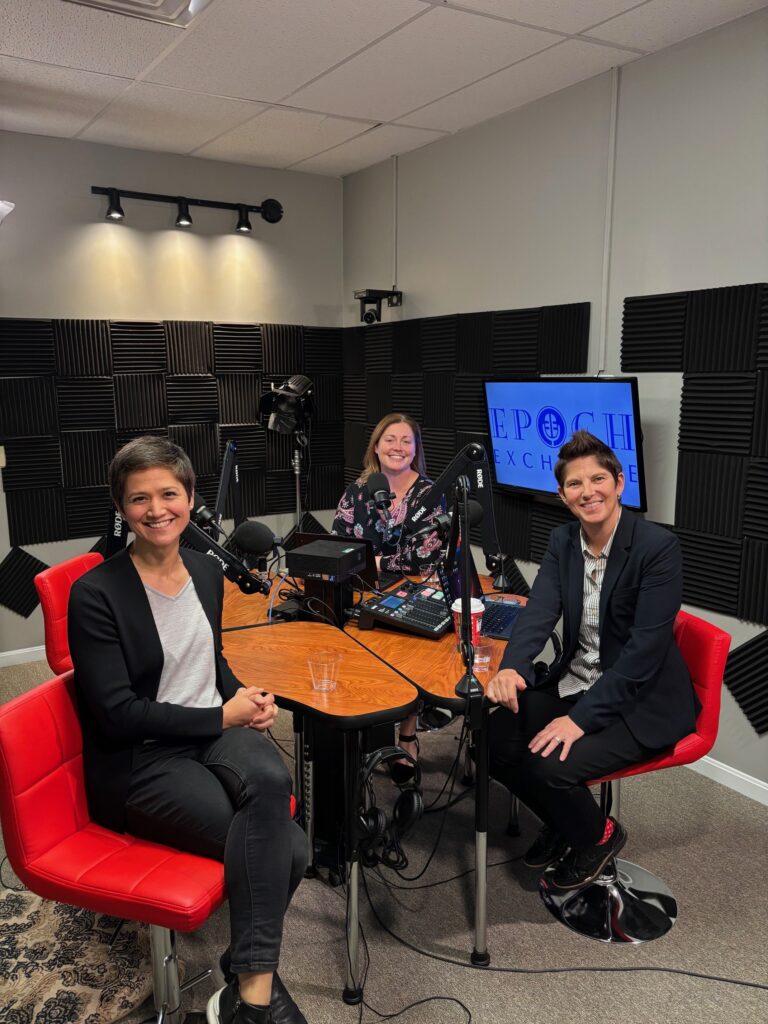
Special Guest:
Marie Clouqueur
Outpatient Therapist, Geriatric Psychiatry Outpatient Services
Marie’s clinical work provides group and individual psychotherapy to improve caregiver resilience and to support people living with dementia.
Marie has worked with Bridges to deliver expert educational sessions to help caregivers on their journey with dementia.
Episode Transcript
Hello and welcome to EPOCH Exchange, the podcast where we have real conversations about senior life, senior living, dementia care, and the amazing people who make it all happen.
I’m Erica Labb, Director of Team Member Engagement and Culture at EPOCH Senior Living, the premier senior living provider in the Northeast.
And I’m Sarah Turcotte, Area Community Liaison for several of our bridges by EPOCH and Waterstone Communities.
Together, we’ll be your host, bringing you stories, insights, and expert voices from across our organization and beyond.
Whether you’re a caregiver, a family member, a professional, or somebody navigating the early stages of dementia, this podcast probably has something for you.
We’re here to share what we’ve learned. Spotlight the work happening every day in senior care and offer ideas and inspiration to support wellbeing at every stage of aging.
Each episode, we’ll be joined by guests who are making a difference, from community leaders to care team members to clinical experts.
Today, we’re talking about winter woes, how shorter days, colder weather, and reduced sunlight can affect mood, behavior, and overall wellbeing, especially for those living with dementia.
And today, we are thrilled to be joined by Marie Clouqueuer, Director of the Guide Program and caregiver services at McLean Hospital, to help us understand how to recognize seasonal depression and what caregivers specifically can do to support loved ones during the colder months. Welcome Marie.
Thank you Erica and Sarah so much for having me. Thrilled to be here.
It’s great to have you. Yes, I am so excited to have you as a guest, Marie, especially ’cause you just come with a wealth of knowledge and expertise.
And, you know, before we dive into the topic, could you just share with the audience a little bit about your journey and how you got involved with the work you’re doing at McLean?
Sure, absolutely. So, as you mentioned, I currently work with people with dementia and their family caregivers in my clinical work.
And I got in, prior to doing that work, I started my career and did my training in the psychotherapy world.
So a lot of, um, mood disorders and, um, family conflict, uh, working with individuals, with families, couples, and groups.
And then I slowly worked my way up through the ages of, um, of clients into adult work and then into geriatrics.
And that’s where I’ve settled. Uh, I love doing that work, and I think dementia care, uh, combines both the specialty of geriatrics and dementia along with a lot of the family work because what we know is that, um, a lot of the care does fall on families, and then it’s stressful. It changes relationships.
It’s not just a medical care, but really brings up so much of the emotional, relational, um, changes that can happen.
Absolutely. And you really have a lot of great resources and wonderful programs for these caregivers, so thank you so much for the great work you’re doing. Yeah.
We love partnering with y’all. Absolutely. So many ways.
Many of our, our families are appreciative too.
And, you know, just kind of starting with the topic, can you first share, you know, what, why do shorter days and the colder weather seem to affect our mood so much this time of year?
Yeah, you know, it really comes down to some of our biologists, how we’re wired as humans that light is one of the signals that helps to regulate our body.
So light coming in through the eyes, we seem to be, uh, cues our circadian rhythms, which is part of the, um, timers of our bodies of releasing hormones and chemicals.
And so, without the cues of lighting, uh, it can be harder for our bodies to regulate and, and then kind of fall out into some of how our habits and how our bodies function.
So, there is truly a lot of science behind this, right? It’s not just something that we think or it’s made up, right? I mean, people can really feel the shift during this time of year.
Yeah. And I think all of us to some extent. So then you have, so you have the, in the fall, the fall back, plus the colder weather. So it’s like all of a sudden, and it felt, you know, in the New England area, it felt like it went from summer to winter, you know, it was like literally outside, you know, in shorts and a t-shirt. And then, within like two weeks I felt like I was bundled up.
And it’s almost a shock to your system and to your way of life, you know, your daily way of life. Of exercising and, you know, getting outside. Mm-hmm.
And the, the cold, the cold isn’t necessarily chemically doing anything, but it does kind of impede us from going outside.
It feels a little bit more, um, burdensome to get dressed in the morning to put on, you know, in the summer you toss on a t-shirt and shorts right. Run out and you’re out and you slip on some flip flops versus, once it gets cold, you’re putting on the long pants, you’re adding in extra layers, maybe you need a coat, uh, actually go back and need a scarf.
And so those kinds of things impede what already starts to um, can, can be hard for us.
Right. That makes sense.
So, we hear the term winter blues. Um, but, so I guess like the next, uh, next question would be sort of differentiating what is expected changes and what might be something a little more serious with somebody. Mm-hmm. Um, does that make sense?
So like, you know, we can say like, oh, you know, I, you know, I most of us definitely get bummed out with the change, right.
But like, what’s, when is it something that we really wanna like think about addressing for somebody?
Mm-hmm.
Yeah. So it’s normal with a cold, with a shift to feel a bit less motivated to feel like you wanna be cozying up. And part of what, um, you’re looking for is when you cozy up, when you stand, do you actually feel better?
You know, are you comforted by that? Is one thing. Um, because then you can just make those shifts, those little shifts.
I, you know, go to bed earlier or I come home earlier or something like that.
But when what we’re looking for that is kind of a blues versus when we start to cross into the line of more of a, what we say clinically is depression would be, you know, we do measure these things.
So, one, though, that kind of, um, symptoms that you’re seeing, which might be sleeping more, could be sadness.
Although in a geriatric population, often depression, not always sadness like tearfulness, but actually more of like an emptiness is more characterized.
Mm-hmm. Um, in geriatric depression.
How do, how do people share that? Are they able to articulate that like emptiness because I, I don’t know that I, I would even know to say that word.
Mm. Interesting. So that is a word that we hear. From some of our folks i
I guess I don’t have it. Um, so they say that word? It’s articulated with that word. Wow
Now, folks with cognitive impairment when, who may have more trouble choosing the words may not say that, but it could be something that their families who know them intimately would notice this kind of, um, not seeing the same pleasure, um, in their person or withdrawing, uh, as well as apathy. Mm-hmm. Um, meaning that it’s, it’s harder to kind of light up and it may sometimes, and apathy is actually different than depression.
Depression being more that sadness that would be, feel like a downward spiral, um, can be even like hopelessness.
Whereas apathy actually, it, you don’t light up, but it doesn’t necessarily mean that you’re down. It can just be like a full feeling.
It’s an equivalent of that when you’re full and someone’s like, do you want some more cake? And even if you like cake, you’re like, no, I’m good.
Don’t want it. Um, it’s not that you’re unhappy, you’re just full.
Right. Um, so that’s one of the things that I do like to think about with people when we are seeing someone who is not getting pleasure out of um, activities. Is it that they’re upset, they’re they’re not happy?
Or is it that’s just that they’re full? Yeah.
And apathy and depression, especially with cognitive impairment, can sometimes get confused as the same thing.
Apathy, we wanna pay attention to it, but you don’t actually have to treat it. They’re not sad. Whereas depression is, I described it as psychological pain. There is, it is not a, it is not a comfortable feeling.
Um, and that is something we wanna pay attention to
So, that is such an interesting difference for, um, lay people, you know, those of us in the community treat, working with folks, is like really differentiating that and getting the assistance to do that. Because they are two different things
With, you know, some similar, you know, uh, symptoms or, uh, they can presentations.
It’s a nuance to distinguish between the two.
And what I’ll say is that in fact, um, ironically, people, the caregivers who witness their loved one, what looks like depressive symptoms and then they know they can, are trying to treat it as opposed to they’re, they’re actually tend to be more distressed by apathy, which seems like nothing is working.
Mm-hmm. I can’t do anything to get, um, it’s distressing ’cause there’s all, it feels as if there’s nothing you can do because in fact, you know, if they’re full and your love language is to feed someone, you are so frustrated they won’t eat your food.
Um, whereas they’re like, but I’m actually okay. I’m Good. Yeah. And I loved what you um, said about, um, lemme see if I can get this right. Like, you know, so I joke, I always joke like, oh, this time, like, you know, by six, seven o’clock, six seven, I’m in my PJs, I had to do it six, seven, I’m in my pajamas. Right. For those of you who don’t know, that’s a lingo with the kids these days. I think it was the word of the year six, seven, but, uh, around six, seven o’clock, I, you know, in the winter I’m like, wanna get in my pajamas.
But like, the way that you just said that: is that actually, what is that making you feel better? Right. So like we say like, oh, in the winter I like to eat hearty foods and maybe some more sweet or comfort foods. And it’s like, but is that really making me feel better or cope better with my feelings around, uh, the time change, the less light?
And sometimes I think it’s a yes and sometimes a no, but I never thought to really ask myself that. Like, how do I feel after eating those warm cookies? Maybe the smell of the cookies would make me feel better than the actual cookies.Mm-hmm. Right. But I never thought to ask that. Like, is that actually because it sounds great. I mean, I have my little holiday cup here, uh, with my delicious beverage. Is that what I need? Mm-hmm. I don’t know.
That’s a great question though.
I bet you it’s all in the moderation of it. Right.
You know, it’s about, I think of everything as experiments. So, um, if we think about, I often think as I use this in teaching about dementia, but I use it for all humans.
If you think about ourselves as like a, a Jenga tower of blocks as blocks are stacked up, and if there’s a shake, you know, if you have a lot of blocks, that block stays that, sorry, that tower stays standing.
But with dementia, likewise with stress, um, you know, the blocks start coming up and start coming out. And so a shake may actually cause these blocks to really feel unsteady.
And if we think about the change of light, the lack of light, then
Those blocks out.
Um, well, it’s, yeah, it’s more blocks out because the, the, the brain is not being signaled to produce the right chemicals at this, um, at the right time necessarily.
And then dementia has already taken out some of those blocks that we’re thinking about slipping in blocks through different practices to intervene for what looks like dementia, uh, sorry, what looks like depression?
Yeah. Or lifting the kinds of things like, um, sleeping too much, um, irritability or sadness, um, fatigue, kind of this existential fatigue or withdrawing. And we know that as humans, we are meant to both sleep, but also to be awake and to be engaged when we’re awake.
And then, um, when we’re around people who wanna be able to concentrate on them, and we are, we are actually social creatures. And so depression, when we have those impulses, I wanna go inward, I wanna do less, um, we have to see like, does this bring me comfort?
Because, so often, actually depression, I think of it as, uh, almost like an outside thing that says, oh, you’re not feeling good. I got a good idea for you. Definitely cancel your plans.
And then you go and you cancel your plans and depression shows up goes, how do you feel? Like, I feel awful. Right. And you’re, and it’s like, well, I got a good idea. You should just stay in bed. You know, depression has like a one trick pony and it, and it draws us out, out, out.
And we have to stop and be like, depression, I know you’re trying to help me, but actually none of your ideas are working. Yeah.
It’s the same idea over and over and over, over again.
And so that’s where, again, when, and then once we feel depressed or if we have cognitive impairment or we feel stressed, we don’t have enough to dig deep within ourselves to our, our blocks are, are not steady enough. And so we actually have to put blocks in.
So the kinds of things that we do to, to treat depression, whether it’s seasonal, um, or in our everyday life, are to start to say, what kind of blocks would help me?
Well, one, if it’s seasonal, light is helpful. So, getting out in the light, and that can even be things like making sure your blinds are open all the way.
Sitting, if you have a place at the breakfast table, can you sit closer to the, to the light?
Um, physical activity, which is another light, um, tells our, helps to regulate our brains, but so does physical activity.
It tells us to, to get up, get moving, um, even eating on certain, on a schedule. Without light, you know, our internal rhythms of our body are pushed by when we have meals. So, eating on a regular basis,
like a Physical memory, as Erica would say.
Yeah. So those are some of the things that when you’re, when you have light or you, you’re feeling okay, you can let some of those structures slide. But when you are feeling unsteady, put it, putting those structures more firmly in place is what helps to sturdy ourselves in our tower.
Interesting. ’cause we talk about that with you. But, um, also a lot at our Bridges communities, which serves folks with all sorts of types of dementia. So like, it also is structure is a key support for people with dementia. So then even more so this time of year, if you’re supporting yourself and a loved one with dementia, like this is a great thing for all of us to put into practice, to add a little structure to check in on ourselves, but like, particularly with people with dementia, is to keep, maybe you had a great summer and there was a great schedule going, like keep that going even though it’s gonna, you know, maybe walking to the end of the driveway to get the mail or the newspaper or something is gonna take a little extra work. It’s still, this is, this is what we do every afternoon at three.
Can still do that every afternoon at three. And it’s enjoyable and it gets you outta the house and it’s an activity, you know, as an example. But keeping those structures in place as you transition into the year
And also, or substituting ones that aren’t possible.
So things like, okay, um, we can’t do a certain activity outside.Is there an indoor version that is maybe not quite as fun, not quite as appealing, but is a substitute?
So in, instead of just saying no to certain things, saying, okay, well, if you’re not gonna do that, what are you gonna do in its place?
I love that Adapting. It, it, it’s so important.
And I mean, I’m, I’m picking up cues ’cause I know for me, my mood and energy level definitely shifts during this time of year, but as we’ve established, this is even more so difficult for people living with cognitive impairment.
So, I would love to just touch base on maybe some environmental factors and things that, you know, families can be thinking about to help their loved ones with dementia through this time of year. You know, little things, like you were saying, poor lighting, the change in routine, you know, these things can oftentimes cause what we know as sundowning.
So, I would love to just talk a little bit about that and some environmental factors to keep in mind as we’re trying to help people through these tough, um, symptoms. Mm-hmm.
Yeah. And so sundowning, which is the experience of increased confusion, um, and often difficulty regulating emotions that tends to go, um, with the beginning of the sun going down in the late afternoon.
And, of course now with, uh, going back to center time, that that time shifts.
And, um, one of the things we’re not exactly sure what causes sundowning, but one of the things can also be the, the cognitive load that it, to get through the day with cognitive impairment, to remember what’s, what am I supposed to do now?And what’s happening next?
It’s like their motor of their brain is running twice as fast. And so part of that can be fatigue. And so as much as families can say like, I’m so worried my person’s sleeping more, what does this mean? Like, could it mean that they’re tired? Right.
And so one thing is like, can we allow for more rest and have that be okay?
And again, as an experiment, and say when they rest, do they come back and, um, uh, a bit more like recharged.
Um, one of the things I think about is with the, the days being structured, can we bring in, um, especially if we know this is we’re fearing the season, the, the darkness season. Well, that’s about, you know, four or five months. What about thinking about, um, bringing in social connection of a having a friend come over, even if they came over once a month?
You only ask ’em to come over four or five times. It can feel like a lot to ask for help.
But when we really break it down, if we’re trying to get, get through this season to shift our, our, um, mindset around dread, but rather like opportunities, what are we gonna do for, for a few months?
Um, setting up light is helpful. Seasonal affective disorder, uh, in general, um, even apart from cognitive impairment, there’s some pretty good evidence that shows that, um, addition of light at a certain intensity, especially early in the morning, that just kind of shines on your eyes in the way that the sun would, can be helpful.
You know, the truth is it doesn’t work necessarily for everyone, but trying that, especially if you’re a gadgets kind of person, that can be something to do.
Um, if you’re not a gadgets person, maybe that’s not your first line of defense, and maybe you wanna go out for a morning walk, but starting small and, um, and testing and see is it tolerable?
I had a conversation recently that makes me, it sort of connected the dots for me about, um, this time of year, it was with my sister who was saying, um, I’m like, I’m gonna change my mindset, and I’m gonna think of winter as my time to replenish and nourish and, um, look more inward.
And I was like, wow, what a nice way to put that. But when you think about like, how do we do that? Okay, so connection.
So maybe, you know, once a month, a special group of people that you potluck with or, you know, um, utilizing candles more or, you know, like, just finding those ways to just celebrate the change rather than look at it as so negative.
And I, especially, my heart goes out to, to caregivers who are feeling, huh, I’d like to be inward. Rather than saying, this feels like an inward invitation to me. They say, I feel like I’m going into prison.
And so, um, one thing I wanna say, as much as we’re trying to structure the environment for the person with dementia to kind of get them behaviorally activated to be engaged, I also want at the same time offer for, for caregivers to say, that’s a lot of effort to try to scaffold getting your person, um, who may be lacking motivation to do and, and can it be okay to say, I’m gonna actually have a neighbor stay with you and I’m gonna get out.
Yeah. Yeah. Yes, yes.
So that give, give yourself the permission.
We start to have parallel tracks of how we get through winter. Your person with dementia may not actually need that extra stimulation, but maybe you do.
Mm-hmm. And can it be okay that you need something different than your loved one?
And the answer is yes. Yes. It can be. Okay. Yes.
Fill your cup.
And I know Sarah tells folks that all the time to try to release the guilt. And we always say in this podcast, you put your own oxygen mask on first. And that is a great, that’s great messaging. It’s like the, the tracks can be different. Mm-hmm. The needs can be different and they are, they are different for households anyway.
Yep. You know what, cognitive impairment or lack of cognitive impairment, we all sort of need different things. So that’s a great point. Mm-hmm. Thank you.
So I really would like to also just touch base and bring awareness to maybe some safety concerns that can come up, you know, this time of year, most especially if you are a caregiver with someone you know, with dementia, things like wandering, you know, maybe, um, not utilizing safe heating sources. I don’t know if you’re able to just touch base on maybe some safety concerns that can come up this time of year.
Well, certainly, um, you, you just raised a, a few, um, that being outside, as the weather gets colder, then certainly folks with cognitive impairment can have difficulty, and especially in a moment of confusion of, maybe going outside without proper, uh, attire, um, to keep them warm.
Um, and so thinking about, um, it could be things like a, a sensor on the door that lets you know when someone’s going out, mm-hmm.
So that they’re not necessarily keeping them inside, but you would get the cue that they’re going.
Um, and as well as for inside, you brought up heating. So, going around and just seeing what, what your heating sources are, especially, you know, furnaces or, or, um, radiators that can be hot, um, covers for that or putting, um, if you don’t wanna do that whole, uh, putting cover,s physical barriers so that the person is not gonna, you know, put their hand right on there. They can’t get as close can be good. Um, good tips for that.
Yeah. No, and I’ll also share too, if your loved one does have a history of wandering or if it’s something you fear, they now even have some really great footwear or even insoles that you can put those little AirTag trackers to for just in case, God forbid, someone did get too far, you would be able to quickly locate.
So I appreciate that. And I mean, you have really been sharing some really great tips and advice, and I would really wanna just make sure if there’s any key takeaways that we might wanna make sure we covered. And I also wanna make sure we leave time for you to share some of the amazing resources that caregivers have access to with some of the programs you’re running at McLean.
Sure. Yeah. I mean, I think one thing I would add to this conversation that we haven’t quite yet touched on is that as we’re thinking about what I think of it as scaffolding, what scaffolding do we add to our structure routine to, to help us through winter?
There is, uh, a lot that we can do as, as people and as communities coming together.
And in the end, if, if, but part of what helps regulate someone’s internal experience of depression, there’s a chemical component to it, and medication can also be helpful. Even if it’s just seasonal, whether it’s for the person with dementia or also for the caregiver.
Um, and so that can be something to be considered when it feels like you’re throwing, you know, a lot of different experiments in and you’re not feeling like you’re getting a lot of, of, of movement, certainly talking with your provider, um, or your loved one’s provider about whether medication would be appropriate here again, even if it’s just as a trial to see if it helps advice.
And you can advice start small, right. It’s not like you have to take a big, you know, dose of something. It can really be done thoughtfully.
Yeah. And so, and the hope is that the, the medication would kind of turn down the volume of the, the depression or the kind of, um, symptoms you’re seeing, so that all the many things that you are trying of motivating of adding new activities actually can kind of stick.
So, so it feels like it’s more gratifying.
Um, so that, that’s one thing I wanted to add to the conversation.
Yeah. Thank You for that.
I love that advice.
And can you also, before we wrap up, Marie, just talk a little bit about the GUIDE program and some of the resources that you may be able to help guide families to? Mm-hmm. No pun intended.
Yeah. , at McLean Hospital, we offer a few different things for, um, people with dementia and their caregivers.
We certainly have our, our outpatient clinic, see many folks with cognitive impairment, and our diagnostics clinic to help with that.
And then for caregivers, we have, uh, a couple tracks. One of them is our caregiver services there, um, which is group therapy for caregivers. We find this not only a space where folks feel they’re helped very practically, but also because it’s this kind of higher level of therapy, even more than a support group in some ways, um, addressing the emotional and relational, um, challenges that can come up as a caregiver.
And then the Guide program, which is a, a new Medicare benefit, it runs through 2032, and it takes really all that we have known over the last number of decades of what helps people with dementia and their families live a higher quality of life, stay at home, as long as they’re able, um, and would like to. And, um, it packages them in these services.
So, folks who join the guide program, who have a diagnosis of dementia and have Medicare A and B as their primary insurance, are eligible, um, for this benefit where there’s a comprehensive assessment, there’s care planning that’s done ongoing.
Mm-hmm. You have access to, to clinicians and to a dementia, uh, trained care team to follow you longitudinally over the course of your journey to help with things like care coordination, resource navigation. Um, there’s even a, a small benefit, um, that will, uh, of an allowance for in-home respite care.
Mm-hmm. Wow. That’s great.
And so, these are the things that’s, that you hear this, you’re like, yes, this is exactly what people need from dementia care. This is what all the research has shown us. This is what family caregivers have told us over and over again, and it’s now rolling out as this, uh, pilot through Medicare for eight years, which is, you know, on par to become the national standard of, if you get a diagnosis of dementia, this is the kind of care you need.
Incredible. Isn’t that incredible work? That’s great.
That’s great.
I mean, Marie, I can thank you enough for being here and sharing as much information and advice as you did in this short period of time.
It’s truly a pleasure to work with you.
Thank You so much for having me in these really important conversations.
It was great to have you. Thank you. Thank You both.
And until the next time. Take care.
Take care everyone. See you soon.
Want to Learn More?
Visit our guides to dementia and Alzheimer’s and memory care. These articles are a great place to start learning about this disease and what care looks like in a memory care community.
For more answers to quick common questions, visit our FAQ page.
You can also check out our upcoming events for caregiver education and support.