
Listen/watch our EPOCH Exchange episode below:
Released February 2026 | Duration: 28:33
In this episode, Sarah and Erica are joined by Gretchen Bramanti, Wellness Director at Bridges by EPOCH at Westford. Together, they discuss how to manage challenging symptoms of dementia. Gretchen shares advice for at-home caregivers and explains what her team of nurses does in Bridges communities.
We discuss:
- The challenges of problematic behaviors for caregivers – the exhaustion this can lead to.
- The need to change our approach rather than the urge to change the behavior. You won’t win with that mindset. Instead, meet them where they are in the moment.
- How to deal with sudden aggression or anger
- Navigating hallucinations of delusions
- Approaching mealtime in a way that is helpful
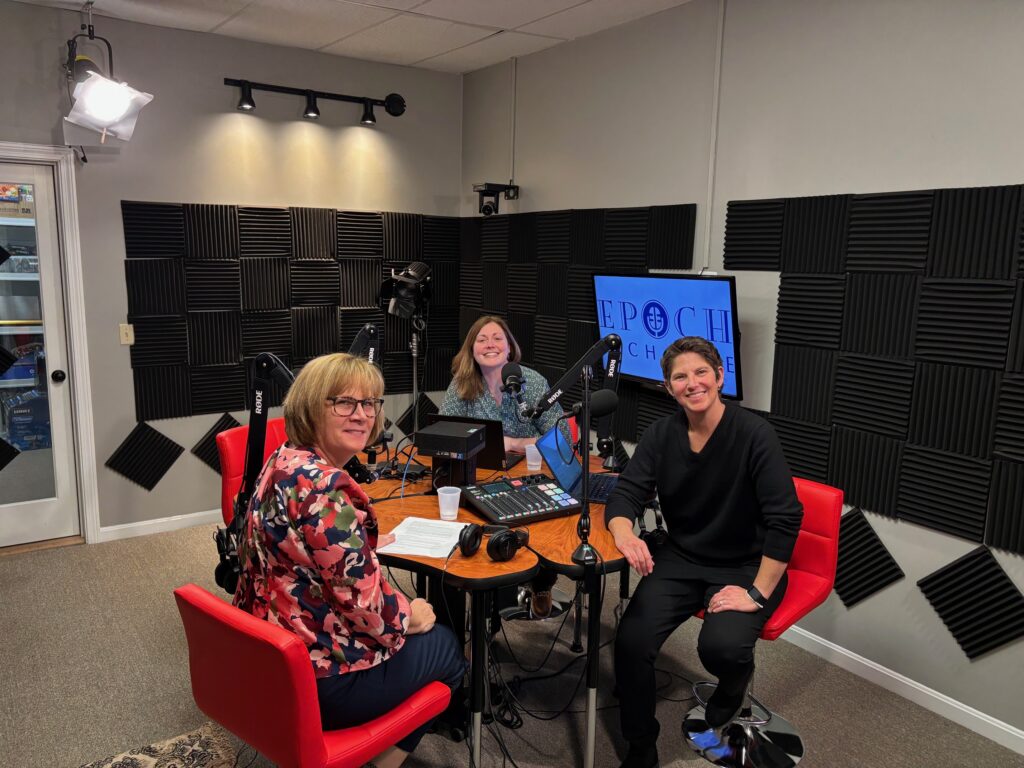
Special Guest: Gretchen Bramanti
Wellness Director at Bridges by EPOCH at Westford
Gretchen brings 30 years of nursing experience to Bridges Westford. While her primary role is caring for residents in Westford, Gretchen is also passionate about helping at-home caregivers.
Episode Transcript
Hello and welcome to the EPOCH Exchange, the podcast where we have real conversations about senior life, senior living, dementia care, and the amazing people who make it all happen. I’m Erica Labb, Director of Team Member Engagement and Culture at EPOCH Senior Living, the premier senior living provider in the Northeast.
And I’m Sarah Turcotte, Area Community Liaison for several of our Bridges by EPOCH and Waterstone communities. Together, we’ll be your host, bringing you stories, insights, and expert voices from across our organization and beyond.
Whether you’re a caregiver, a family member, a professional, or somebody navigating the early stages of dementia, this podcast probably has something for you. We’re here to share what we’ve learned. Spotlight the work happening every day in senior care and offer ideas and inspiration to support and wellbeing at every stage of aging.
Yes.
And each episode we’ll be joined by guests who are making a difference, from community leaders to care team members and clinical experts. Today, we are joined by Gretchen Bramant, going into her 30th year of nursing.
Yikes.
Gretchen is the Wellness Director at Bridges by EPOCH in Westford, which is the premier dementia care provider in the area of Westford, Massachusetts, where she has worked for over five years, a certified dementia practitioner and has worked in skilled nursing care for many years as well, bringing her expertise and compassion to the senior living industry and all the families she works with each and every day.
Sarah and I have both had the pleasure of working directly with Gretchen and are so happy to have the three of us back together here today as we discuss managing challenging behaviors and symptoms of dementia.
Well, it feels like old times to me.
It’s great
Just like old times!
Thank you for having me
And first and foremost, I cannot believe that you are in your 30th year of nursing because you do not look a day over 35.
Well, thank you, Sarah. But yes, and we know you work hard, so thank you.
You do. You do. And I would love, before we kind of jump into today’s questions, um, could you just share with the audience, ’cause you are a wealth of information, and just share a little bit about your journey and kind of what drew you into nursing and senior care.
Sure. So, growing up, we lived two streets away from my grandparents and I practically lived in their house all growing up. Um, my grandmother passed away and I actually moved in with my grandfather because he was having a little bit of a hard time trying to navigate being alone. So that was very eye-opening for me to see exactly what it is that he needed.
Sure.
I did go to school for management while I was in college. I decided this probably isn’t really what I wanna do. I got married, went back to school for nursing. Originally, I wanted to be a Life Enrichment Director, and then I said, you know what, I’m gonna go and I’m gonna do nursing. So, I went to school. It took me a couple of years to do it as I was married, going to school part-time, but it’s where I’m supposed to be, and I know it is exactly what I’m supposed to be doing with dementia.
Uh, I mean, I second that you are exactly where you’re supposed to be. And just another little fun fact is that you juggled this and got this career while managing and being a mom to seven children.
Yes.
I think it’s what kept me sane ’cause I knew I could go to work when my husband came home from work, so it worked out nicely.
That’s pretty wild when work is the place you go to relax.
Yeah.
And I would just say, you know, being a nurse and in your role at Bridges by EPOCH, at Westford, you know, you’re seeing families who are often reaching a breaking point and you are working as a resource and a collaborator to help them, you know, create care plans and support needed for their loved one. And, you know, what are the specific symptoms or behaviors that you’re, you know, find cause the most fear or exhaustion for these family member caregivers?
Great, great question. And I can answer this off the top of my head. I just did an assessment the other day, and what I find is people who are taking care of their loved ones at home are exhausted, that they are up all night because now their sleep week cycle has change,d and these people are up from one to four, and their loved one can no longer, you know, stay asleep. They have to be up and be worried that, oh, are they going to be leaving the house? Are they going to be, you know, doing something they shouldn’t be doing?
I had this, this gentleman, um, his wife sleeps all day now, and she is up all night, and he’s just burnt out.
Yeah.
I mean, it’s taking a toll on their relationship. Um, and he’s just, I, I can’t do this anymore.
Yeah.
It’s so frustrating. That’s a, that is a tough one.
Well, none of us are our best self when we’re not sleeping, and it just adds a whole nother layer to the dynamic.
Mm-hmm.
Yeah.
They’re lucky to have a whole team that can kind of guide them through those difficult times.
And what would you say is actually keeping them up at night? You know, what is it that’s happening that you are finding, keeping these caregivers up?
The actual caregiver or the person that we’re looking to assess, or both?
I would say both. You know, what are you finding? What symptoms are people, you know, living with dementia experiencing overnight that are causing our caregivers to be awake and trying to manage these needs?
So, a lot of the time, the person that I am assessing is now up because they are thinking it’s time to get up, and they can’t go back to bed.
They’ve gotten up either to go to the bathroom or, they’ve gotten to gotten up to rummage through something, and then they, you know, as many times as the caregiver will say to them, it’s time to go back to bed, it’s two o’clock in the morning.
No, it’s not. I need to get this done. I need to get that done. They’re worrying about what’s going to be happening the next day.
Um, so it’s very frustrating for that caregiver to get them back onto that cycle. And then I notice that the caregiver will become irritable with their loved one and, you know, snapping and arguing with them, which is not going to get them anywhere with, um, trying to redirect that person.
What are suggestions that you give to a caregiver, like tools?What are some suggestions you give to say to them, try this next time this happens, and I know you have to do this too with your team, your overnight team.
Mm-hmm.
Uh, and it’s, it’s a little nicer when you have an overnight team in a community because they’re awake and they’re, that’s their job is to stay awake and it’s a little different at home, but what are some of the tools you, you all use, um, one-to-one with someone when they’re awake at night?
So, we do tell them a lot to meet them where they are.
Yes.
Is it ideal that they’re up at one o’clock in the morning for you? Probably not, because I don’t wanna be up at one o’clock in the morning either. Um, but we tell them to meet them where they are. She’s getting up because she needs to go to the bathroom. All right, well, let’s bring you to the bathroom. What do you need to do next?
You know, and let’s do that next step. Well, she needs to pack because, you know, everything needs to be packed in her suitcase because she’s going away, which she really isn’t, but she’s going away. Um, again, you need to try and get them back into some sort of pattern. Is that going to happen overnight? Absolutely not.
Right.
And I can totally empathize with that caregiver that it’s just way too much for them.
But you’re meeting the needs in the moment.
Mm.
What are the, what’s your, you just said like, the way you said that was so great, like, what do you need next?
You need to use the bathroom. Great. Here we go. Oh, you need to pack. It’s not like, no, you don’t.
Right.
The instinct is like, go, where are you going? We’re not going anywhere. Don’t worry. We don’t have a trip. It’s like, oh, sure. Yeah, you’re right.
Mm-hmm.
We should have packed, we should have done that sooner, but let’s do it right now, then you’re done. Now what?
It’s not just about fixing the behavior. You’re really trying to figure out what needs are being unmet. What is causing this symptom or behavior that’s coming up?
Mm-hmm.
Right.
And then using that storyline, well, we better get some sleep before this trip.
Right.
You know, or however to, because you’ve met check, you’ve met the unmet need, you’ve, you’ve validated their feelings. Now let’s try to get them back in bed so you can meet your unmet need, which is a good night’s sleep.
Right.
And it’s so hard. You know, everyone, they, they want to argue, and it’s, you know, it’s, it would be you and I having a conversation. I might not, why are you packing Erica? That, that’s ridiculous. You don’t need to pack. But that’s feeding into that resident.
Yes, I do need to pack. No, you don’t. Yes, I do. No, you don’t.
Right.
Just live in that moment, at that time.
Yep.
Let’s pack. Because you know what, when she’s not looking, I can unpack everything and put it back where it belongs. Right?
Mm-hmm.
Absolutely. And I think could you touch a little bit on that? Because I feel like a lot of times when we see someone packing or someone who’s getting up to get ready for the day at 2:00 AM as opposed to 9:00 AM, it’s really kind of their form of non-verbal communication.
Right.
They are trying to get something across. So, can you just explain that idea that this symptom and how it’s kind of coming up that way?
Sure. So, sometimes when people pack, they’re looking to go back home to their parents’ house for whatever reason. Um, we had a resident that every day, I’m going back to Waltham, we are in Westford, but I gotta catch my flight to Waltham. So okay, let’s go pack, let’s pack what you need to pack for that trip, and then we’ll figure it out when we get to that moment where, okay, well the flight has been canceled or, um…
I think of that word like ease, right? Like it’s an, um, it’s like you’re easing the moment, like you’re, you’re taking like the trouble, whatever the trouble is that they have, you’re believing, it regardless of whether or not it makes sense, and then you’re trying to ease that unmet need. You’re like, what’s the easiest route to get the most compassionate and empathetic way to get from point A to point B, like, is with leading with compassion and empathy.
And I think especially I know we’ve seen with people, spouses, most especially, ’cause who’s more annoying than the spouse, right? Like, and so you can’t fathom that they don’t understand we’re not flying tomorrow, right?
Mm-hmm.
Um, the frustration that’s there, but it’s like you have to kind of put that relationship aside and say, what’s the most compassionate thing I can do right now? And the most compassionate thing is to give ease to whatever the trouble is, and join them where they are.
Mm-hmm.
Most especially, where you might see something, you know, a common symptom with some dementias can be hallucinations and delusions and, you know, just like a scenario to share, you know, if someone’s loved one is convinced that there might be a stranger in the house or seeing things that aren’t there, it can lead to fear or, you know, accusations. You know, why would trying to prove someone wrong who’s in this state, you know, showing them an empty room or trying to just kinda reality orient them, how can that make a situation worse?
Well, because they actually believe that they are seeing what is there. And, the approach to that can come in many different forms. One would be to say, try to bring them back to reality and said, well, I don’t see that person that you’re seeing. Can you tell me a little bit more about them? What are they wearing? What are they doing? Um, and they might be able to say, well, she’s having, she’s wearing a yellow dress, and she’s out in the field.
I, I, I’m really sorry, but I still don’t see that. Um, another approach might be to, um, go along with it.
Mm-hmm.
Um, yeah. I see them, um, it is so real to that person, and to argue with them and say it’s not there is only going to escalate the situation.
Yes, if this is a constant thing, I would definitely refer them to their doctor, to a geriatric psychiatrist to come in and say, because it can be very frustrating for that person that, oh, I’m seeing bugs all over the floor.
Mm-hmm.
I’ll get housekeeping in to clean them up for you.
Absolutely. Right.
And we’ve talked about non-pharmacological ways to address, you know, the challenging symptoms. Right. These are the non-pharmacological ways, these are the ways we try trial and error. Before you call, before you make the call to the doctor to say like, is this something we can ease through our reaction? Like changing the environment around this person, which I know you are probably constantly doing.
Constantly doing, yeah.
That validation goes, uh, a really long way rather than to try to reason with someone who does not have the ability to reason due to this disease.
Right.
And I see, I’ve seen you in real time, and you, for that matter, you know, when we work together, like one minute you are somebody’s girlfriend, you know, they think you’re somebody, the, the maintenance director’s girlfriend, or they think you are their daughter or they think you are, you know, whoever. And you have to like, pivot really fast. Um, and it, and it takes a long time to learn, but it can be taught, you know, to family members, to caregivers at home.
Like, how do you pivot? It’s almost like an improv class.
Yes.
Mm-hmm. It, it most certainly is.
Yeah.
And it, it’s, it’s hard. It’s, um, for that caregiver when it’s their loved one. Like for me, it’s a little bit, I don’t wanna say easier, but it’s what I do every day. And for someone who’s, you know, just one-on-one with that loved one and constantly arguing or constantly picking or constantly, I can totally see that caregiver burnout. And it’s like, I wanna step in. I can remember coming back from doing an assessment at one point. I’m like, Erica, we need to get her here now. Like, this family needs our help.
Right, right.
Um, yeah, because it’s, it’s tough.
Yeah.
It’s tough.
I want, do you wanna go? Go ahead.
Well, I was just gonna say too, you know, and a lot of times, you know, families, they don’t think about little things in their environment that might be contributing to some of these symptoms that are coming up. And I would love for you just to kind of share a little bit about some environmental factors that you might see that you try to control and manage at Bridges to try to kind of limit some of these distractions or heightening some of these symptoms that come up.
Mm-hmm.
So, one distraction is noise. A lot of people don’t like the loud noises. And we do great activities, great entertainment, a lot revolves around music, which at times can be loud, you know. So, we would pick and choose who would be appropriate to go to that. And we always bring the resident that might be a little bit turned off from the loud noise and we sit them in the back, but we’ll try to make that accommodation for that person that they’re not gonna miss out on what it is we have to offer.
Mm-hmm.
Because what we have to offer is, is amazing for our residents, and we don’t want them to miss out.
And little things like even if you’re not at a Bridges and you’re at home, maybe your TV is on, and it’s too loud and distracting or, you know, one common thing we’ve seen is the type of music we’re playing during the time of day. You know, if you’re playing really upbeat, energetic music at six o’clock at night, that can be, you know, increasing someone’s anxiety or agitation because of the momentum of the music in that time of day.
And temperature, especially for older folks.
Mm-hmm.
Um, and being mindful of that. Are they cold, are they hot?
Do they need to use the bathroom? Are they fidgeting because they need to get up to go to the bathroom? There’s, you know, a million things that we can, you know, pick up on and meet their needs.
Um, I wanna pivot to, ’cause we talked a little bit about being up at night and, you know, sort of hallucinations…meals.
Right?
So, one of the best opportunities for engagement, also for joy, for nourishment, is the mealtime. Um, so I wanna talk, talk a little bit about how you manage folks who are pushing the plate away or refusing to even sit down and eat. Maybe we should take that one first.
So, you’re at home, and your loved one won’t even sit down to a meal. What are some ways that we can, like, using all the tools we’ve sort of talked about, help them enjoy food that’s a little outside the box?
Well, we deal with that on a regular basis. Um, we have one resident who’s constantly up and down, and we go with it, you know what, she’s gonna sit down for 30 seconds, we’re gonna get a bite into her. She’s gonna be up, she’s gonna be walking around, we guide her back, she still gets another bite, so we’re gonna meet them where they are.
Right. Um, is that ideal? No, but you know what? That’s what works for her, and we’re gonna make that work for her.
Right.
And sandwiches can walk, we can walk around with a sandwich or a cookie.
Right.
And I was gonna say, you know, a lot of finger foods that are just easy for her to pick up that she doesn’t need to worry about getting that spoon in there or that fork in there, and she can take the sandwich on the run.
And you can do that at home.
Yes.
Just because, for the last 50 years, you’ve sat at that table every night at dinner, does not mean you have to keep doing that.
Right.
You might have to change it up. You might have to move it to 4:00 PM instead of 6:00 PM. You know, you may have to do it on a walk.
And I also think too is that we, I know, for me, we’re used to having a big dinner or a lunch, and it’s like three meals a day. And sometimes those meals can be overwhelming for someone with dementia when it seems like it’s too much on a plate. So almost like creating mini meals, or you guys have even been creative with, you know, not just serving an Ensure, but let’s put a few scoops of, you know, ice cream in it and make it a, a milkshake, you know?
Absolutely.
I mean, we had a resident that, that’s all she drank was, or, or ate, was yogurt.
Yogurt. Yeah, I remember that.
And we would just put in protein powder cream. And she is the most she’s ever weighed in in her life. The husband said.
Did She start eating other things, too?
Yes.
Because she started to kind of trust y’all.
Yes.
It’s amazing.
She doesn’t even ask for the yogurt anymore.
That’s wild.
It was Chobani key lime yogurt every day. Six of them, seven of them. And that was it.
And now she eats, she eats food.
Not that Chobani. It’s, I mean, I love my yogurt, don’t get me wrong, but
I’m just not sure I could eat six or seven of them every day.
But yeah.
If that’s what works though, and that’s what’s getting the nutrition, right?
And that’s what we went with with her.
Right.
Because he’s like, that’s all she eats. Well, that’s what we’re gonna give her. We Will.
But slowly, with trust, we introduced, you know, different foods for her.
And she, I mean, and that was years ago that that started. And now she’s thriving with good foods, and that’s great.
I also know that you guys do a little bit, um, a lot a bit actually, with color contrast at the Bridges when it comes to plating. Could you talk a little bit about color contrast and how that can also help this, you know, mealtime process?
Yes. It has been a trial and error with us. We get new, um, dishes, silverware at times. And recently we had blue cups. Well, the residents weren’t able to see the coffee in the blue cup because it’s pretty dark. And, um, we’re all like, what? Why is everyone spilling their coffee? So we switched it out to white cups where they, there’s that distinct, um, color change. You can see the, the black Coffee.
I just did that at home, by the way. My mugs are black inside, and I’m like, I drink my coffee black. I’m like, I don’t know if I have any coffee in here. Same thing.
Yeah.
But I wouldn’t have thought of it.
Senior Living at Erica’s house!
I’m like, do I have coffee in this cup? But you pivot it
Yes. Yeah.
You did the detective work.
Right.
And it’s like, okay, this is not working. You know, even with glasses, sizes of glasses, um, I’m trying to lift this up. I can lift the glass, but I’m looking at some people like, this is too heavy for them. We need to figure out something else that’s gonna be, you know, easier for them to pick up. I don’t care if I have to fill it 10 times. This is way too heavy for someone.
Right, right. No, I, I appreciate that. And I think it’s thinking outside of the box, right?
Right.
It’s if we’re not getting the results that we want, like you were saying, try out different things. Try a different meal size, try a different utensil or plating method to see if you get success.
And changing everything around the person to manage the symptoms rather than the, you’ve been in the business a long time, as have I, we used to just be like, “we gotta stop this behavior.”
Right.
This person is doing this, this bad, bad behavior.
Mm-hmm.
Oh, he has bad behaviors. That’s kind of what we’d say.
Mm-hmm.
And now it’s like, I mean, there are behaviors that cannot, you know, continue because they’re unsafe. But when you look at something like, oh, I just want to eat yogurt, it’s like, meet them where they’re at. We changed. We went out and bought a bunch of key lime yogurt so we could provide for that person.
Then we slowly introduced stuff, but we just changed the entire atmosphere for that one person. And then slowly, that person was able to like budge, but we didn’t like focus so much on that person changing.
Right.
It was everybody else. And I love that. And I love that you can do that for 52 people at a time.
Mm-hmm. Yeah.
It’s really amazing. I even think of just a kind of quick sidebar story as a, I saw a recent article about someone who was not eating their food because it was being brought out on a tray. He kept pushing the tray away, and he was someone who worked his whole life and always ate his lunch that his wife prepared for him, mostly out of a thermos.
And a family member got the idea to say, let’s bring the thermos and see if we can pour the soup into the thermos cup and see if it makes a difference. And it did. I mean, he got excited, he lit up. It was something familiar, and he was able to enjoy the soup right out of the thermos cup.
I love that. I love that story.
I remember one, vaguely remember, one person who had moved into a Bridges who only wanted takeout. And we were like, oh, how are we gonna do this? So we finally just went and got takeout containers and just put all the same food in.
And he was like, thrilled, because it was takeout, but it was like, you have to think outside the box.
Right.
That’s what we call therapeutic fibbing.
I like it. I like it. I mean, it’s even better than takeout. It’s just back in those styrofoam boxes.
Um, alright. So kind of switching gears again, Gretchen.
Mm-hmm.
Just ’cause we really wanna have the time to pick your brain here. You know, sometimes with dementia symptoms can come up kind of out of the blue, or suddenly it could be a sudden resistance or aggression, and a typically calm person can suddenly shout out or push away a caregiver during routine tasks. Like, you know, helping with personal care, hygiene, even putting a coat on. Can you just talk a little bit about situations like this that might arise, and maybe ways people can kind of get ahead of it?
It does happen frequently. And again, we wanna meet that person where they are. No, I don’t wanna put on my jacket. This is the stupidest jacket I’ve ever seen. You can’t make me wear this jacket. You know, I am going to walk away at that moment.
I’m not gonna argue. There’s no sense in arguing. I’m going to reapproach, and I’m gonna go back and say, you know what? I found this different jacket for you. Or I might hold up two different jackets. Do you wanna wear this blue one instead or this green one? Because they both look great on you.
And there’s no yes or no choice. There’s no yes or no. You can’t, you’re not asking yes or no, this or that.
Right.
And, and I have learned that too over the years. It’s, I don’t wanna ask them a question that they have that opportunity to answer yes or no. To me it’s not, hey Sarah, you wanna come to this activity with me? No. Sarah, why don’t you come with me to this activity? Um, you know, but for someone to be, you know, aggressive, you, you’re right. You never know when it’s gonna happen. Lovely resident. And all of a sudden he snaps because someone said no to him or get out of here or go away.
And I think you bring up a really great point about offering choice, because I feel like a lot of times people who live with cognitive impairment and memory impairment oftentimes feel like decisions are being made for them. Even if they can’t voice it, it’s almost like they can feel it, and it empowers them to have that independence and to make choices for themselves.
Yeah.
Makes a big difference. I think.
Independence.
Oh, Absolutely. With, you know, giving that choice. It’s the last piece of independence that they have.
And you can do that at home. So, especially with spouses or if you’re a caregiver or a child, you know, grown child, caring for a parent, you don’t wanna be the bossy pants. Especially if you were in a role where that, where that person was sort of in charge. You know?
So, there’s ways to say things in a way to your parent that gives the feeling that they’re still the one in the charge. You know, mom, I really hope you can help me buy da da da. Or can you help me with this?
Mm.
Or rather than, mom, you need to get your coat on! Right.
No one wants to be parented.
No, no.
Especially by their children.
Right, right, right.
So just like flipping a little bit, like using those ways of saying things and giving the choices can shift that dynamic back to something that’s more comfortable for the person you’re working with.
A hundred percent. And you know, I also want families to take a step back, right? If this is something that is sudden or seems out of the blue, I mean, as a nurse, Gretchen, when this happens at Bridges, what are some of the first things that come to mind when you see something that comes kind of out of nowhere?
So, I’m calling the nurse practitioner and asking, listen, this is out of the blue, hasn’t done it before. Can we get a urine on this person? Maybe there is something medically happening. Should we draw a few labs to see if there is something going on with his lab work that really needs to be adjusted and looked at.
Mm-hmm.
I would say nine outta 10 times someone’s change in behavior is related to some sort of urinary tract infection.
Mm-hmm.
Or their lab work might be slightly off.
Mm-hmm.
And a little antibiotic and they’re back on the road!
Yeah.
Back on track.
Could even be things like the UTI, it could be dental pain, right?
Yeah, yeah, yeah.
You know, I think of someone that I remember having agitation outta nowhere and we couldn’t figure it out and all day long, you know, we’re running the tests. But at the end of the day, what we found was she had a, um, a bra hook that was kind of warped and was digging into her back.
Oh my gosh.
And she couldn’t voice that. She had something digging in her back.
Ouch!
We had fixed it, obviously changed that. And she was like, back to her normal self. So, sometimes, it’s just kind of problem-solving, and trying to figure out, where is this coming from?
And I, I want, we, I can’t believe we’re like at the end of our, of our show, but I, I would love for you to speak directly to at-home caregivers. Like they’re feeling like they’re at wit’s end or they’re feeling like a failure. What is your message to them? Where should, what should they do?
Take a breath.
Yeah.
Take a breath, walk away for a couple minutes, reapproach them with a different style/approach. It is hard. It is hard. It is your loved one. And you know, try not to argue because you’re not gonna win.
Yeah.
Sometimes it’s easier to take the blame, right?
Yeah.
You know, it’s your gift to them.
Yes.
But just take a breath. It’s…reach out, call a friend, see if someone can come over with you.
Yeah. Great advice.
So that you’re not doing it by yourself.
Great advice.
Give yourself the grace. Allow yourself the time.
This is great. Honestly, I felt like we needed a whole hour because I still had so many questions.
I can’t believe it. So maybe we’ll have to have you on a future show, ’cause I do think it’s an important topic and many families are facing these challenges, so I appreciate your expertise.
Oh, thanks. And sharing your knowledge.
Great to be with you.
Great to be with you guys. And you know, even if no one, um, is looking to place their loved one with us, we’re also a great resource. You know, I’m happy to talk to anyone about what can I do? Where, what should I be doing?
Happy to talk to them.
Bridges By EPOCH in Westford.
Yes.
Thank you so much for being here.
Gretchen Bramanti, the great nurse of Bridges by EPOCH at Westford.
One of the best. The best of the best. And until the next time, we hope that you’ll join us again on our next EPOCH exchange. Thanks for being here.
Thank you.
Thank you all so much.
Want to Learn More?
Visit our guides to dementia and Alzheimer’s and memory care. These articles are a great place to start learning about this disease and what care looks like in a memory care community.
For more answers to quick common questions, visit our FAQ page.
You can also check out our upcoming events for caregiver education and support.