
Listen/watch our EPOCH Exchange episode below:
Released August 2025 | Duration: 39:54
In this episode, Sarah and Erica sit down with Dr. Shaun Patel, founder and CEO of React Neuro and a neuroscientist affiliated with Harvard Medical School.
Together, they explore the idea of proactive brain health—how we can “train” our brains to build cognitive reserve and potentially preserve neurological function over time. Dr. Patel also shares how React Neuro’s VR technology supports this mission, offering users guided brain workouts with measurable results.
We discuss:
- What proactive brain health means in practice
- The ability of our brains to continue to build neural connections as we age
- How we can measure heart health, but have historically struggled to measure brain health
- How React Neuro – a VR headset – may be able to bridge this gap as a way to measure brain health
- How this VR technology could lead to a democratization of healthcare.
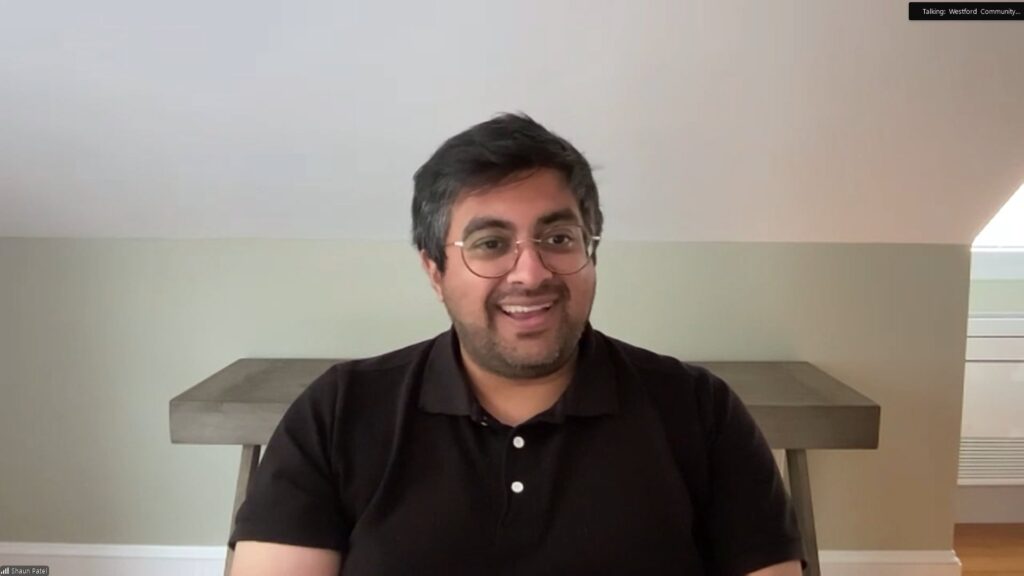
Special Guest:
Dr Shaun Patel
Founder and CEO of React Neuro
Shaun has graduate degrees in medical sciences, neuroscience, and machine learning from Boston University School of Medicine and Harvard Medical School.
Episode Transcript
Hello everyone, and welcome to EPOCH Exchange, the podcast where we have real conversations about senior life, senior living, dementia care, and all the amazing people who make it happen. My name is Erica Labb. I am Director of Team Member Engagement and Culture at EPOCH Senior Living, the premier senior living provider in the Northeast.
And I’m Sarah Turcotte, Area Community Liaison for several of our bridges by EPOCH and Waterstone communities. Together, we’ll be your host in bringing you stories, insight, and expert voices from across our organization and beyond.
Whether you’re a caregiver, a family member, a professional, or somebody navigating the early stages of dementia, or somebody considering assisted living, this podcast probably has something for you.
We’re here to share what we’ve learned. Spotlight the work happening every day in senior care, and offer ideas and inspiration to support wellbeing at every stage of aging.
And each episode, we’ll be joined by guests who are making a difference from community leaders to care team members and clinical experts.
Today, we are so excited to welcome Dr. Shaun Patel, who’s going to discuss proactive brain health and digital innovation in aging.
Before we do that, a little bit about Dr.Patel. Um, he’s a neuroscientist, entrepreneur, and co-founder and CEO of React Neuro, a digital health company, leveraging virtual reality and machine learning to reimagine the way we assess and treat brain health, all from the comfort of your own home. He is also the founding general partner of Drads Capital, a venture capital fund, focused on disruptive technologies in healthcare, energy, and technology.
Prior to this, he was a faculty member at Harvard Medical School and Mass General Hospital, where he pioneered some of the earliest studies, reading and writing the neural code in awake and behaving human subjects undergoing deep-brain stimulation surgery.
Dr.Patel has graduate degrees in medical sciences, neuroscience, and machine learning from Boston University’s School of Medicine and Harvard Medical School. In his spare time, if you can believe he has any spare time, he’s a pilot and avid aviation enthusiast, cruising around New England at 5,000 feet.
Um, so anyway, we thank you Dr. Patel, for being here. We’re so honored to have you on the show. Can you start by sharing for all of our, uh, viewers and listeners why proactive brain health matters?
Yeah, I’d be happy to. Um, so this was actually not obvious to us. You know, we had this realization years ago when, uh, my colleagues and I at MGH were having a conversation, and we stumbled upon this peculiarity, which now in retrospect seems so obvious.
The example we came across is when you go to your annual wellness visit, you go and see your doctor, you get all these numbers and measurements taken, your weight, your blood pressure, cholesterol, blood biomarkers, and you leave that visit feeling healthy or not. But if you kind of take a step back for a moment and think about it, all of those numbers are really pointing to your heart health. And in fact, there’s very little, if anything, we do for our brain health, as one of our co-founders likes to say, there’s no checkup from the neck up.
I like that.
And that was the real kind of realization is because scientists and physicians, and most everybody today, know deeply how those numbers influence our heart health.
You know, I go all around the world, and I always ask this to the audiences I speak to, which is a simple question, is high blood pressure good or bad? And I’ve yet to find an audience where that is not an ingrained part of their world knowledge.
Mm-hmm.
It’s like, we all know this. We all are empowered by this knowledge. We know that if we have high blood pressure or we’re overweight, what to do about it, and we know the importance of it, how it can dramatically influence our longevity, and specifically, our heart health.
But what’s really fascinating is that we actually know the same things are true for our brain. Meaning, as humans, we’ve done these studies, tens of thousands of people longitudinally for years and years and years, examining the roles of all of these important factors and how they influence our brain health. So, it’s not like we don’t know, it’s just we don’t address it.
And we really thought about why that might be the case, and it all boiled down to that visit, that we get all these numbers, but we ignore our brain. And so we set out to kind of build something that was as simple as the blood pressure cuff, which is this marvelous innovation, no battery required, gives you these numbers, but enabled all of this downstream value around our heart health. We knew that we needed something similar to that, but focused on our brain.
Right. So to lead you into sort of the next top, like sort of moving, moving forward with this, the argument, I guess would be that the brain health, that information that we’re not getting at those appointments is just as important as the physical numbers that we’re getting.
So, can you talk a little bit about like what that, you know, um, why the attention is necessary, and maybe what that would look like?
Yeah, that’s a really great question. And, you know, it really kind of taps on the core of the problem, which is that the heart is this very important organ, but it really does one thing. It pushes blood through our body. And so, from a, from a kind of a, an engineering mindset, if you will, the scope of the problem is very narrow.
You can create all sorts of different ways to measure how well blood is moving through your body. Blood pressure and cholesterol and Apple Watches and all these different things are kind of all tapping on that same problem in slightly different ways. It is very easy for us to kind of understand that. On the converse, the brain on the other hand, is also kind of just one organ, but it does hundreds, if not thousands, of different things.
You know, things like what we think of as memory or attention or our ability to process senses. And each one of them are, uh, very complicated and nuanced, uh, on their own.
And so, as a result, you know, I always like to give this example, like, if you have a heart problem, you’d go to a cardiologist.
But if you have a brain problem, well, there’s like half a dozen to a dozen different people you might go see, depending on the specific thing. Because each one of those areas of our brain is so complicated that we have entire, uh, careers built on them. And so as a result, we basically are subjected to these like very, uh, poor qualitative, um, assessments that typically look like an interview or maybe a paper-based assessment where you get a score, um, or, uh, you know, hard to access because it requires, um, an an elite specialist for whom they’re too few, or it takes, you know, nine plus months to get an appointment.
And that kind of creates the core friction for even beginning to think about, you know, measuring our brain. That’s really what we’re intending to solve.
Right. So interesting. Um, and before we continue, so our show is focused very much on seniors and senior living. When is it, for all of our viewers, like when do we start looking for or thinking about brain health, um, day to day? Like, you’re, you’re much younger than I am, but you know, should, is this something we should be looking at markers, like at what age?
I know it’s like, you know, if you’re over a certain age, we know you wanna start, but is it, is it ever too early to start looking at brain health?
When do we wanna pay attention, Dr. Patel?
Yeah, good Question.
Yeah. I think this is the other kind of challenge that we, we have is like today we basically ignore it, or we relegated our mind to something we’ll do later in life. But the reality of it is, is that it matters all throughout life, and it manifests in different ways. Typically, you know, a young child might, uh, be experiencing different types of brain-related concerns, maybe with attention deficit disorder or, you know, strabismus or lazy eye or, you know, they’re, they’re playing sports, and they want to prevent injuries like concussions.
And in the middle part of your life, uh, it manifests in slightly different ways. Maybe you are, um, you know, juggling a career and a young family, so you’re not sleeping well, you know, back pain, you know, laughably starts on, on the dot, you know, when you turn 30 and 40.
And then as we get older, we, we challenge ourselves with, uh, different types of experiences, right?
So, we are worried about how, uh, we’re aging, we’re worried about our cognitive abilities, things like our memory and attention. Maybe we’re, you know, addressing, um, more serious concerns like neurodegenerative disease, you know, Alzheimer’s and Parkinson’s. Maybe it runs in our family. So, we wanna be very proactive. And so really this is, um, this is something that is kind of a lifelong endeavor. Um, but, you know, the, the, the gating function has been till date, like, how do we even think about this? How do we address this? How do we empower ourselves to not only learn about ourselves, but then to meaningfully do something that will, um, be goal-oriented and, and kind of put us in the driver’s seat?
Yeah. I think of when you, when you said that about young people, you know, avoiding concussions in sports or lazy eye or all these different things, and then middle age, like sleep, lack of sleep, all these things often in, even in the industry of, of, um, memory care and, and senior living, we’re waiting for that, like, bad diagnosis or we’re waiting for, um, a sign, oh, I forgot my keys. Like, we always say like, oh, forgetting your keys, or this, or leaving your keys in the refrigerator or your phone, you know, in the bathroom, or things like that, these signs. But it’s like, it’s way before that. Like, we wanna start thinking about it way before we see any problems, uh, related to the brain health. So, I love that, like really thinking about it, lifelong and thinking about it for our family members, lifelong.
A hundred percent.
And, you know, you’re talking Dr. Patel just about tools and, and I’m really excited to dive into React Neuro, uh, exciting project that you’ve been working on that is going to become and is currently a tool for proactive brain health. And for someone who’s never really heard of React Neuro, can you describe what it does and how it works? ’cause this is really exciting stuff.
Yeah, I would be happy to, and yeah, I wouldn’t hold it against you if you haven’t heard of it, because no one has really, you know, our world is, um, is completely, um, changing to think about our brain health, and we’re kind of, um, in the, the position to kind of create what we believe will be, um, the, the kinds of tools and services that, you know, we all deserve. Um, so, uh, as I mentioned, this started from that observation. Uh, what I didn’t, uh, mention was the reason why we got excited about it is because in this moment in history, we are sitting at the, the first time where a tool like this is even possible. And what I mean by that is that, um, you may have, uh, heard about or seen, um, a technology called virtual reality.
Mm-hmm.
Yep.
These are these, uh, VR headsets. You know, you might have somebody in your life, you know, usually they’re young kids who, uh, you know, put ’em on to shoot zombies or play other kinds of fun games. Uh, but what might not immediately strike you is, though this is a great gaming tool, this is actually the world’s best brain health tool. And in fact, none of this would be possible without this underlying technology. And let me help explain why that is.
So, when we’re born, our brain is a blob of these things we call neurons, and they’re essentially randomly connected. There’s no meaningful structure to it. But when you open your eyes, and if you kind of remember or kind of look back to an experience where you saw a newborn, when newborns are first born, their eyes are, are mostly closed, and they start to open and they begin to slowly in the beginning days of life and, and weeks and months they’re in, get exposed to what we would call light, you know, photons.
And that starts to hit the eyes, and the brain starts to respond to this light. And over the course of a few weeks and months, you start to develop the ability to, um, see faces. So, there’s these like clear milestones that happen where baby sees mom’s face or dad’s face and begins to recognize them.
That’s the brain actually rewiring and starting to make sense of the information it’s experiencing. And the same thing happens for light, sound, and touch. And then later, as the baby, uh, develops, you know, it’s the, the motor system.
So, you know, crawling and rolling and walking, and subsequently, it’s even more advanced things. And as we kind of go through our life, we continue to develop our brain and develop more and more sophisticated things. And ultimately that produces what we think of as kind of our brain.
Now, the magical thing about virtual reality is that when you put this headset on your head, your brain cannot tell the difference between “reality” and this kind of virtual version. And if you want to kind of experience that and convince yourself of that, go on YouTube and type in VR fails. And you’ll see all these funny videos of, say, a family mom and dad. You know, mom puts the headset on for the first time, and they’re in their home. Kids are so excited, and though mom knows she’s in her home, she knows exactly her home. You know, two seconds later, she turns and runs into the wall or falls to the floor, whatever it is, based on what she’s seeing in the headset, her brain is convinced that what she is seeing is real.
And what that tells you is that this tool, this VR headset, is an incredibly powerful, uh, modulator or actuator of your circuits. Those circuits that form from birth to, uh, through life as you develop and as a result becomes this incredibly powerful, and also, might I add, a fun way of measuring how well all these circuits are working.
Now, the key to unlocking that power is designing the experience. You know, shooting zombies unfortunately won’t give us a lot of information about, uh, you know, our memory and attention. But you can imagine now if we build games that are really designed from a first principle’s perspective about how these circuits underlying, you know, vision and audition and memory and attention and reaction time, et cetera, you can get now very precise, high quality measurements that are also super fun to, to engage with.
Wow, that’s so cool. It’s really so incredible. And, you know, this tech technology is just so advanced, so incredible. Can you just touch a little bit on how this type of testing is different than what someone is getting currently when they’re going to their doctor’s office for cognitive testing? Can you talk about the differences in what you’re seeing with this kind of testing?
Yeah, absolutely. So, you know, I kind of learned this all, um, in real-time as we were building this, you know, so we had this observation, and we thought, oh, you know, this is something we know how to build, but we didn’t really appreciate what the kind of standard of care is in the world today. And I was really just surprised to learn what it was. So, if you show up, um, and really it doesn’t matter, you know, the age, you know, what age range you’re in, but if you’re like, we’re here in Boston, we have the world’s best hospitals.
If I go to my doctor and say, you know, I’m having a memory issue or an attention issue, you know, the doctor that I interface with, my, my general doctor, you know, isn’t the person to kind of measure those things, I’d have to then meet a specialist. And those specialists, um, are uh, very limited, unfortunately. I mean, you’re talking like eight plus months to, uh, go and visit one here in Boston.
And in many other cities, that doesn’t vary. The real kind of surprising thing is when you go and visit that specialist, um, you know, the experience looks like this. It is a multi-hour experience where, um, you sit and you do a series of these, uh, paper-based, um, assessments.
You know, you can think of ’em like a worksheet, uh, that you might see a young kid doing, see a picture of a rhinoceros and you’re asked to name it or, um, you know, some number game, all sorts of various kind of, uh, exercises. And those are all then scored, and you kind of get scores on across a range of these, uh, assessments. And that’s the kind of input to the clinician in helping them figure out what might be going on.
Um, and one of the things that’s the least appreciated in this is what is called the white coat, uh, effect, which is if you go and somebody says, hey, I’m going to like, assess how well your brain is working and they’re wearing a white coat, like your anxiety and blood pressure goes through the roof.
Yeah.
And that therein influences your ability to perform these things. So, these were all like really critical elements that we did not really appreciate when we started building React, but started to uncover, uh, as we started using it with our users. Now with React, the experience is fundamentally different.
We knew from that the very first most important thing here is that this has to be fun.
Mm-hmm.
Nobody wants to go to the doctor for anything. It is a dreadful experience. And humans now, we’ve made nearly everything in our life fun and easy and accessible, with the exception of healthcare.
So we knew, okay, we have an opportunity. We have this fantastic platform, this VR headset, which is, by design, made to be super fun and engaging. We need to lean into that and make these experiences fun.
They also need to be short, ’cause you’re not gonna want to spend hours and hours and hours doing, you know, exercises. We’d rather have them be very short and enable you to do them with much more frequency, which is also really important for, you know, just tracking and, and, um, and measuring your health.
And they need to be accessible. Meaning, you know, you shouldn’t have to be sitting, uh, in Boston or a major city near a major healthcare provider to be able to get this. You should be in the middle of Vermont comfortably in your home, you know, being able to do these things.
Um, and you know, that’s, that’s kind of the direction that we have, uh, we’ve gone in. It’s really just so incredible. And I also would love for you just to share with the audience, you know, we understand that React Neuros roots include working with professional athletes, um, such as the New England Patriots.
Can you share with us or tell us how that partnership came about and how it helped shape the vision for what React has become?
Yes, absolutely. So, um, a couple of my colleagues and co-founders, uh, Rudy Tanzi, um, and Brian Mayhead, they’re both, um, uh, remarkable and amazing scientists, um, at the MGH as well. Uh, and, and, you know, unusually also involved in the sports world. So, Rudy, for a long time, was the Brain Health advisor to the New England Patriots.
And Brian, uh, serves as, um, uh, an unaffiliated neurotrauma consultant to the NFL. So, he’s the doc at all the, the Patriots, uh, matches, the games where if somebody gets injured, you know, he’s doing the tests. So, uh, one day we were having a conversation with, uh, coach Belichick, who used to be the, the head coach of the New England Patriots.
And he had expressed a frustration of his, if you, uh, know anything about him, you know, he is a very memorable character, to say the least. And, um, you know, uh, he has a very, um, powerful way of communicating his frustrations, as you might imagine. Uh, and he was really frustrated with how, as, um, players were assessed for concussions, uh, because he deeply cared about the health of his players.
So, it was like one of his, um, his topmost priorities. And to him, you know, he kind of nailed it. He’s like, when something so important happens, you know, some doc comes and does this kind of follow my finger test?
He made a funny joke. He’s a religious person, so it looks look like, uh, he was, he was giving him his last rites. And y’know, getting out there.
And, you know, we kind of heard that and were just taken aback. Uh, and then instantly understood the importance of what he was describing, and realized the flaws with all the things that we do today, as we were discussing before with these subjective assessments. Um, and knew that, you know, we could, um, we do just like we have done for other areas, uh, make the neurological assessment of what we would call ocular motor function.
So, you know, head and balance, um, much more quantitative and much faster and much more reliable. And that kind of, um, was an opportunity for us to, to realize actually the brain is the brain is the brain. It’s like we all have one, we use it in different ways, whether we’re, um, you know, getting older in life and wanna manage our health and, and increase our longevity, whether we’re athletes or, you know, um, high performance individuals or trying to eke out every little bit of ability, whether we’re young kids and parents and, um, and war fighters and, um, centenarians.
You know, we work across the range, and that’s kind of a core, uh, component of how we’ve built React. It’s to serve everybody.
So. That’s so cool.
Um, I’m wondering if you could lay out for us what a session for, you know, a just someone at home who is really interested in this amazing technology. What does that look like for them? Like logistically, physically sitting in their home, participating with React Neuro? What does that look like for one of us, uh, who wanna get involved with that?
Yeah. I think the best, um, analogy here is to use the heart again. So, say you are an individual, and you now are motivated to become fit for one reason or another, but you might not be familiar with all the complexities and information in that world. So, you might not really know about what diets to use.
And if you go to a gym, there’s like a hundred different pieces of equipment, it’s like very confusing as a novice what to do and how to do it. So, if you’re in that situation, you might, um, find a friend or hire a personal trainer. This person is really selected for their ability to kind of motivate you, right? That’s their core. But they also have great aptitude in understanding the importance of nutrition and how to create exercise programs based on your goals and your, um, your, your strengths and also your weaknesses.
So, if you have arthritis, you know, you might not go and do certain types of exercises, but if you had a very creative, uh, coach, they’d be able to kind of still utilize all of that resource, the equipment and knowledge to create a program for you. Now, what React is is very, very similar, with the exception that we don’t need that physical location with all of those, uh, pieces of this, uh, of equipment.
The, the beauty of React is like, that equipment is just this VR headset. So anywhere that VR headset can be, you have all of the pieces of equipment, uh, built into it, so to speak. It’s the different, uh, programs, the different games that we have, uh, built in.
I just wanna say for our listeners and viewers who do not know what that is, it’s a simple device that you purchase, right? That goes kind of over your head and covers your eyes, correct?
That’s right.
Yeah.I mean, a very simplistic way. It’s, it’s imagine like a small TV attached to your head.
Thank you. Sorry, I just wanted to insert that. For folks who are not familiar, Sarah and I are very familiar as we have tweens, but not everyone’s familiar. Thank you.
Yeah, that’s, I mean, it’s great. Like, almost nobody, uh, like virtually nobody, uh, when we work with new, new people have ever used a VR headset. So that, that’s really, really important.
It’s also very important to, to note that these are, you know, super fun and very easy to use. So…
Yeah, really fun. I mean, my favorite VR game Is Dance Saber, just saying!
It’s, it’s incredible. I mean, it’s really marvelous. Um, and so, yeah, that, that’s really, uh, how it works is that we, uh, we use this portable gym, if you will, in the VR headset as, uh, the tools and a tool set. And what we do for, um, our users is, um, we have a, a brain health coach. This is very much like your personal fitness coach, um, a person who’s just incredibly personable and affable and, um, motivated to help you accomplish your goals, but also to learn about your brain because, you know, your brain is complicated. You know, it’s, there’s so much to know.
And not everybody also wants to know everything about their brain. They wanna know the level of information that they want to know. And, you know, it goes across the spectrum.
Some people wanna know everything. Some people wanna know the least amount. Some people wanna know exactly what are the things that they should be doing.
And that coach will be able to, um, personalize those experiences and that knowledge, uh, for you. And they’re kind of empowered, uh, in doing that because they have this VR headset that has all of the tools that they would need to use, um, to help you on your journey.
So, it would be an assessment and then the tools to meet your needs for where, you know, maybe some of the, the, uh, weaknesses are, or, you know, areas of opportunity we like to call them.
Yeah. I guess, you know, after the assessment, how is that information used, you know, for folks, you know, once the assessment’s taken place?
Yeah. So, um, you know, the, there is not like a, this is kind of part of the, the education process of what this is. ‘Cause you know, today we don’t do anything for our brain. So we have these, um, we have these relics, you know, we go to the doctor, we get our measurement, then that measurement means X, Y, or Z, and then I have to do this, that, or the other.
I think that’s the, the limited way of thinking about it. I think the new way of thinking about it is, imagine now you had the tool that could measure whatever you wanted, anytime you wanted, in just a few minutes in this fun experience. Well, it turns out that many different things influence how our brain, uh, performs.
For example, um, you know, when I was, I have young kids, um, and so when our kids were born, you know, we were using React regularly, of course. And, you know, I noticed all of a sudden that my, um, my verbal fluency, just some measure of how well I could come up with words, plummeted, just like completely plummeted. You know, I’d be on meetings and just like searching for words and, you know, I would look back on my data and see, oh, my verbal fluency was here, you know, at some level.
And then all of a sudden, it went here. And what I realized in that moment was, it’s because, you know, I was waking up three times in the night to feed our kids, and my sleep was getting crumbled. There are, um, you know, a dozen, uh, different things like this that happen to us constantly that we have been conditioned to ignore.
And with our seniors, this is like highly, highly likely. We see this constantly in all of our, in all of our users. And, and it often has to do with things like sleep and nutrition and what we eat and when we eat it relative to our, our, our routines. How we, uh, sleep. You know, what’s our wind down routine, what our day looks like, are we exercising? What’s our mobility? There’s a, uh, you know, hundreds of different factors like this that influence it, but you would never know.
We just chalk it up to, oh, you know, I’m getting old, and that’s just how I’m gonna keep going. And I think most people are pretty tough, and they’re just gonna, you know, go through it without realizing that those things are happening and without realizing that they’re very modifiable if you identify it.
Mm-hmm.
The reason why that’s so important is because of what we would think of generally as resiliency. It’s like if your brain, the foundation of your brain, is very resilient, then you are in a better position to whatever might come in the future than if your brain wasn’t. Even something as simple as a cold can completely change the trajectory of your longevity if you’re not in a resilient place.
Mm-hmm.
Or, you know, even something worse, like a fall. And so, it is wildly important to track and measure these things and to just improve and use all of the variety of things our brain can do, because very simply, it keeps your brain resilient. It’s that old adage, use it or lose it. That’s really critical. It’s critical to everything, not just our brain, but it’s especially important for our brain.
Yeah. Yeah.
It’s like listening to you say that about, like, it’s similar with falls with physical health. The stronger we are physically and we have an unfortunate like physical event, any sort of event, we’re gonna be more resilient. Same with brain health.
So, but we largely overlook that there’s anything proactively we can do about it at any age. And so, this is really an opportunity for the folks using React Neuro to start improving upon their brain wellness, like immediately. And, and so do you find the folks, um, that are clients of React Neuro that are using this tool in their home, are they making changes? Do you see that they’re impacted by the data enough to, uh, make lifestyle or, you know, different changes for themselves, uh, to improve brain health?
Absolutely. Yeah. So, you know, one of the, I think one of the, the big game changers is when you’re able to see the data for yourself, you know. To date, like, you might get an assessment, and you get a measurement and you have to kind of take the word of the person doing it. Uh, but when you can actually see, because all of this is so quantifiable, the, the report, the reporting back to the user really pinpoints exactly the, the critical elements of their performance as they play these games.
And how that then relates to the, the topic at hand, the strength or the weakness. And you just mentioned something very interesting about say, brain and also motor. Well React is actually measuring both of those things.
The motor ability to control your body is an incredibly important part of what our brain is doing. And so like, that, that can be a precisely great example is like if you’re playing a game, but it is taking you say, you know, 300 milliseconds longer, something that seems laughably slow and imperceptible, but meaningful from a brain health perspective, can be highlighted every time that you’re doing this thing, it’s taking you this much longer.
Or when you are using your working memory, say, uh, you’re making more mistakes, and your eyes are moving this way.
And when you are, you know, shown an image like this, uh, where the, the balance might be off, your body starts to tilt. And so, there’s all these different subtleties that we’re emitting constantly. Sometimes we perceive them, it’s like the, the where are my keys again, or what am I doing?
But many of them we never perceive because our brains are just not wired for that. But we’re constantly emitting these little tells, and we will miss them, our friends and family and loved ones will miss them, but these quantitative digital systems will capture them with high fidelity over and over again.
Now, it doesn’t know anything. All it’s doing is it’s measuring the ability, and it’s just gonna tell you, hey, you know, it took you this much longer and your eyes move this much, and your body move this much, and, you know, whatever the results might show you.
But then when empowered with a coach and with a, with the, um, you know, a user, we can start to now make sense of what those really mean and, um, what we can do about it.
Yeah, it’s really incredible, and I really wanna be able to just share some brief kind of final thoughts and reflections, Dr. Patel. This has really been great information. But, you know, with everything you’re sharing, you know, what gives you the most hope about where this kind of technology is heading? Like, what are you most hopeful about with this program?
Yeah, I am the most excited about this, um, because of the idea of democratization. And what I mean by that is, you know, there’s a really great example. It’s a vision. You know, this is an extremely common example for many people around the world, especially, uh, our seniors. Very often we meet people who, um, have gotten accustomed to wearing their glasses and maybe their prescription is, you know, a few years old. And of course, uh, our vision can deteriorate as we get older, but it’s good enough. You know, you can see good enough. What we don’t realize is like, imagine your lenses are getting blurrier and blurrier. The information to your brain is getting noisier and noisier. It might be fine for you.
You can still probably navigate your life and, and do everything just fine. It’s not, um, not a huge inconvenience, but now let’s think about it from your brain’s perspective and that use it or lose it, uh, idea. Your brain is getting noisier and noisier information slowly over time. So the information it’s processing is noisier and noisier, which makes the circuits less resilient.
It makes them weaker. And then we, we don’t realize anything happens until that one moment that, you know, something unfortunate happens, our foot gets caught on something, or we walk up to an escalator and we have a momentary lapse and, you know, um, these small little tiny things that are hard to even imagine, but like the needle in the haystack and tips the, the, the risk, uh, against us.
Now, this happens because of a very preventable and easy thing, a vision exam, but it’s so inconvenient to go and schedule and do it. So, we don’t do it. The, the pain and, um, annoyance of going through that outweighs this really important value. But now let’s say, what if you could do a complete vision exam equivalent, in fact, better than what you would get with, um, you know, your optometrist or ophthalmologist, uh, in your home in a matter of less than a minute.
And you can do it whenever you want, anytime you want.
And in fact, imagine now you could do that for, uh, not just vision, but for all the things for hearing and balance. And, and now imagine you can do that without feeling like you’re doing an exam. You’re just playing a game, just like you might play your crossword puzzle, and you just do it periodically because it’s fun.
And now imagine not only is that measuring you, but it’s also improving all of these functions. And now imagine it is adaptive, meaning no matter how well you are playing the game, it will always adapt to you and, slowly, behind the scenes, it will become slightly harder Aas you do better.
Imagine what that would do from an individual’s perspective in terms of maintaining and strengthening their brain. And lastly, imagine all of that could be done better than any clinician or any, you know, institution anywhere in the world. That’s the part that really, I think, excites me because this concept is completely new.
Nobody can imagine any of those things today because it’s, it’s just impossible to even to think about. But what’s really exciting is that it’s real.
Well, that is Dr. Shaun Patel blowing our minds with React Neuro. It’s really unbelievable. Unbelievable.
Great Work, Dr. Patel. You and your team are amazing and cannot thank you enough for being here to share your expertise and, and React Neuro and brain health. I think this is valuable information.
Yeah.
Thank you for the work you’re doing. What a pleasure to have you on our podcast. This is Erica and Sarah signing off from EPOCH Exchange.
Thank you, Dr. Patel.
We’ll see you all soon.
Want to Learn More?
Visit our guides to dementia and Alzheimer’s and memory care. These articles are a great place to start learning about this disease and what care looks like in a memory care community.
For more answers to quick common questions, visit our FAQ page.
You can also check out our upcoming events for caregiver education and support.