
When a loved one starts forgetting names, misplacing familiar items, or repeating questions, it can be confusing and unsettling. You might wonder whether this is part of normal aging or something more serious.
The word dementia looms large in these moments. But what is it?
Dementia is a general term for conditions that affect memory, thinking, and behavior. It occurs when brain cells are damaged and can no longer communicate effectively. These changes make it harder for people to manage everyday life and maintain relationships.
For an overview, check out our guide to dementia.
How Many People Are Affected by Dementia?
More than 55 million people worldwide live with dementia, according to the World Health Organization. In the United States, more than 7 million adults aged 65 and older live with Alzheimer’s disease or another form of dementia, a number projected to nearly double by 2050, according to the Alzheimer’s Association.
Of course, when we consider how many people are affected in total, the number is far greater. Dementia is a progressive disease, and symptoms worsen over time. Loved ones and friends must adapt to care for the individual experiencing memory loss.
What Is it Like to Have Dementia?
Each person’s experience is different. One individual may remain physically active but struggle to remember conversations. Another may have sharper memory yet experience changes in mood or decision-making. These differences occur because dementia takes many forms, each affecting the brain in its own way.
Why is it Important to Know the Type of Dementia?
Understanding which type of dementia is involved can help loved ones and care teams create more effective treatment plans.
“While there is some crossover in symptoms and treatments, there are enough differences to make differentiated care valuable. Knowing the type of dementia can also help loved ones predict what is likely to happen. The typical ‘path’ of each dementia can be very different, so this is useful to know.”
Alicia Seaver, Vice President of Memory Care Operations
Before exploring the most common types of dementia, let’s look at how cognitive decline begins and how it differs from normal aging.
How Does Cognitive Decline Progress? Mild Cognitive Impairment and Dementia
Not every memory lapse is a sign of dementia. It’s normal to forget a name or misplace an item from time to time. However, when forgetfulness starts to interfere with daily life, it may point to a more serious change.
Key point: If forgetfulness does interfere with daily life, speak to a doctor to get a cognitive assessment.
The earliest measurable stage of decline is often Mild Cognitive Impairment (MCI). People with MCI notice small but consistent issues with memory, focus, or language.
They might forget recent conversations, rely more on notes, or feel less confident handling tasks that once came easily. Despite these challenges, most people with MCI can still live independently and don’t need substantial help.
Know this: MCI does not always progress to dementia. Some people remain stable for years or even see improvement thanks to various things:
- regular medical care
- mental stimulation
- healthy habits
Dementia represents a more significant decline. It affects memory, reasoning, and emotional control. People may struggle to follow directions, manage bills, or recognize familiar faces. They might also become irritable, withdrawn, or easily confused. These changes make independent living difficult, even unsafe.
The table below outlines the main differences between normal aging, MCI, and dementia. Note, these are still generalizations:
| Feature | Normal Aging | Mild Cognitive Impairment (MCI) | Dementia |
| Memory | Occasionally forgets details but remembers later | Regular memory lapses that others notice | Severe memory loss that disrupts daily life |
| Decision-Making | Thinks more slowly but remains sound | Sometimes struggles with planning or organization | Frequently makes unsafe or illogical choices |
| Language | Occasionally searches for words | Increasing trouble following conversations | Loses words or cannot express ideas clearly |
| Daily Functioning | Fully independent | Uses reminders and support tools | Needs help with personal and household tasks |
| Self-Awareness | Aware of minor changes | Recognizes difficulties and seeks help | Often unaware of decline or resists assistance |
The key message here is to try to differentiate between what may be normal aging and something potentially more worrying.
If you notice signs of MCI or early dementia, schedule a medical evaluation. Early testing can identify reversible causes such as vitamin deficiencies or medication side effects. It also allows loved ones to plan care and lifestyle adjustments with clarity.
Simple tools like the Self-Administered Gerocognitive Examination (SAGE) can support this process. You’ll learn more about that screening method later in this article.
Learn more about dementia and its symptoms:
- Our guide to dementia
- Managing challenging dementia symptoms
- What dementia does to the brain
What Are the Most Common Types of Dementia?
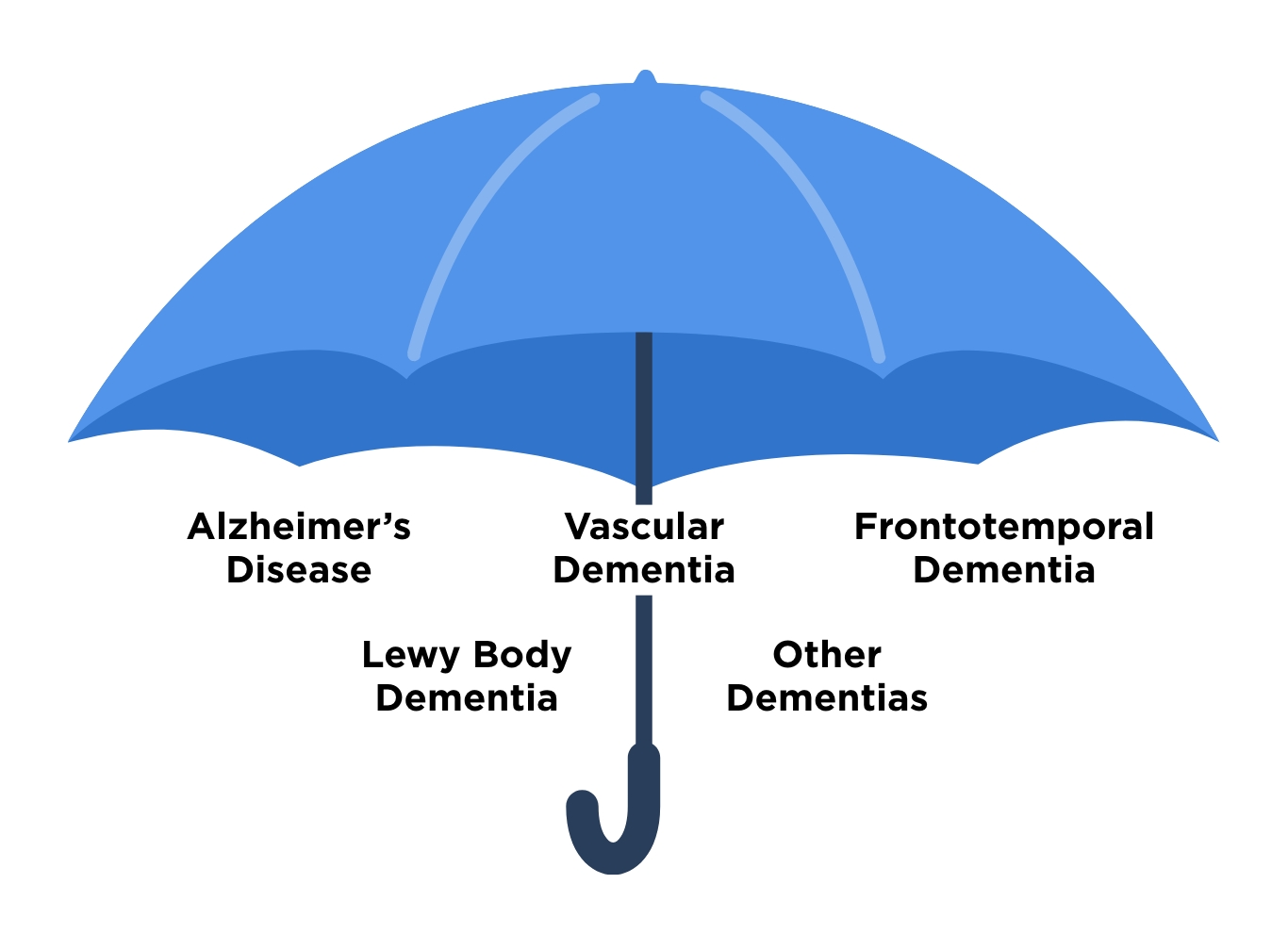
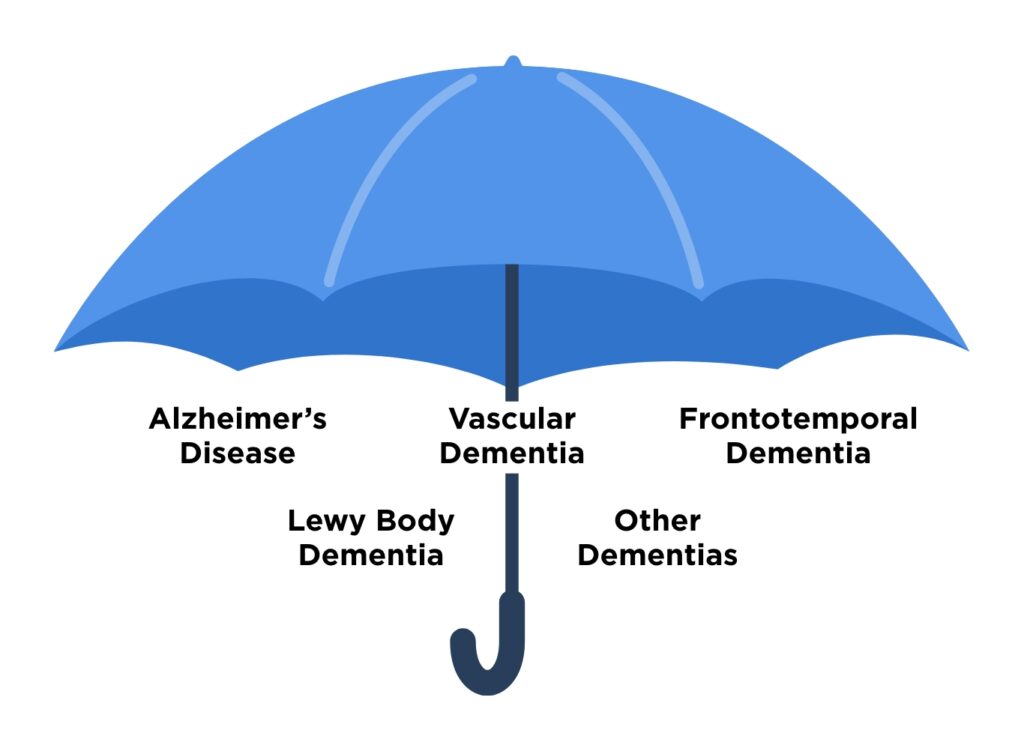
Dementia is not one single condition. It describes a group of disorders that damage brain cells. The way in which each disorder damages the brain leads to different symptoms.
Knowing the type of dementia helps families understand what to expect and how to plan for care.
Below are the most common types of dementia and how each one affects the brain and daily life.
Alzheimer’s Disease
Alzheimer’s disease is the most common type of dementia, responsible for roughly 60 to 80 percent of cases. It develops when abnormal proteins build up in the brain and disrupt communication between cells.
Common Symptoms
- Forgetting names, conversations, or recent events
- Repeating questions or phrases
- Difficulty with language and problem-solving
- Personality changes, irritability, or anxiety
Treatment and Care
- Medications may slow cognitive decline
- Routine, structure, and calm environments reduce confusion
- Cognitive stimulation and exercise support quality of life
Vascular Dementia
Vascular dementia occurs when blood flow to the brain is reduced, often after a stroke. Damage depends on which areas of the brain are affected.
Common Symptoms
- Trouble focusing or planning tasks
- Slowed thinking or disorientation
- Speech difficulties or sudden confusion
- Changes in mood or movement
Treatment and Care
- Managing blood pressure and heart health helps prevent further decline
- Physical and occupational therapy improve mobility and confidence
- Supportive care helps with memory and daily functioning
Lewy Body Dementia (LBD)
Lewy body dementia involves the buildup of abnormal proteins in the brain, affecting both cognition and movement. It shares traits with Alzheimer’s and Parkinson’s disease.
Common Symptoms
- Visual hallucinations or vivid dreams
- Shifting alertness and concentration
- Tremors, stiffness, or balance problems
- Sudden changes in mood or behavior
Treatment and Care
- Medications may improve alertness and motor symptoms
- Gentle exercise and consistent sleep routines support well-being
- Safe environments reduce the risk of falls or injury
Frontotemporal Dementia (FTD)
Frontotemporal dementia affects the brain’s frontal and temporal lobes, which control speech, emotion, and behavior. It often begins earlier than other types, usually before age 65.
Common Symptoms
- Personality or emotional changes
- Poor judgment or impulsive behavior
- Loss of empathy or social awareness
- Trouble speaking or understanding language
Treatment and Care
- Speech and behavioral therapy help manage changes
- Structured routines reduce frustration
- Family support and counseling ease emotional strain
Mixed Dementia
Mixed dementia occurs when two or more types develop together, often Alzheimer’s and vascular dementia. Overlapping symptoms can make diagnosis difficult.
Common Symptoms
- Worsening memory loss
- Disorientation and confusion
- Difficulty walking or speaking clearly
Treatment and Care
- Treatment targets the most prominent symptoms
- A balanced diet, exercise, and cognitive activity support overall brain health
Parkinson’s Disease Dementia
Parkinson’s disease dementia develops in people who have lived with Parkinson’s for many years. It affects thinking, movement, and emotional control.
Common Symptoms
- Difficulty focusing or remembering information
- Visual misperceptions or hallucinations
- Muscle rigidity, tremors, or slower movement
- Depression or anxiety
Treatment and Care
- Medications help manage cognitive and motor changes
- Occupational therapy supports independence in daily routines
- Emotional support improves coping for both patients and families
While each type of dementia affects the brain differently, many symptoms overlap. Memory loss, confusion, mood changes, and communication challenges can appear in almost every form.
The most effective support often looks similar, too. Consistent routines, familiar surroundings, physical activity, and emotional connection help people feel secure and calm.
What’s key is to stay present and observant. Providing appropriate care will rely on your being flexible and patient as you go on this unpredictable journey.
Lesser-Known but Important Types of Dementia
Beyond the most common forms, several rarer types of dementia can also affect thinking, movement, and behavior.
Below is a quick overview of some lesser-known types of dementia:
Other Types of Dementia
Normal Pressure Hydrocephalus (NPH)
Caused by a buildup of cerebrospinal fluid that leads to walking problems, incontinence, and memory loss. Often mistaken for Parkinson’s or Alzheimer’s.
Typical treatment focus: Surgical shunting to relieve pressure, along with physical therapy and balance exercises.
Huntington’s Disease
An inherited disorder that damages brain cells, causing changes in movement, behavior, and cognition. Usually appears in middle age.
Typical treatment focus: Medications to manage mood and movement symptoms, plus speech and physical therapy for daily functioning.
Creutzfeldt-Jakob Disease (CJD)
A rare, rapidly progressing condition caused by abnormal proteins called prions. Leads to swift cognitive and physical decline.
Typical treatment focus: Palliative care and safety support focused on comfort, as no cure currently exists.
Posterior Cortical Atrophy (PCA)
Linked to Alzheimer’s, this form affects visual and spatial processing rather than memory. People may struggle to read or navigate familiar places.
Typical treatment focus: Occupational and cognitive therapies that help adapt to visual challenges and maintain confidence.
Wernicke-Korsakoff Syndrome
Results from severe vitamin B1 (thiamine) deficiency, often tied to alcohol misuse or poor nutrition. Causes confusion, coordination problems, and memory gaps.
Typical treatment focus: Thiamine supplementation, nutrition therapy, and structured daily routines to rebuild stability.
Understanding the Role of Mild Cognitive Impairment (MCI)
“MCI causes noticeable changes in memory or thinking, but these changes are not severe enough to disrupt daily life. It often prompts the question of whether dementia is developing. Many people with MCI remain stable, but some decline over time.”
Alicia Seaver, Vice President of Memory Care Operations
Research shows that about 10 to 15 percent of people with MCI develop dementia each year.
Common signs include:
- Forgetting appointments or names
- Losing items
- Trouble concentrating or problem-solving
- Difficulty following conversations
Treatment focus:
- Cognitive monitoring
- Cardiovascular health
- Exercise and diet
- Structured routines
- Getting enough sleep
“The key takeaway here: If you or a loved one has MCI, take a breath. This is not an emergency, and it does not mean you/they are destined to develop dementia. Many people live with MCI for years without any major decline.”
Alicia Seaver, Vice President of Memory Care Operations
MCI simply means the brain is showing changes that you should monitor over time. It is a signal to pay attention to, but not a prediction of what will happen next.
You can take practical steps that support brain health and may help reduce further decline. These include:
- Staying physically active
- Managing blood pressure
- Improving sleep
- Staying socially engaged
- Protecting hearing
- Eating a balanced diet
The good news is that these changes will benefit overall health as well as your cognitive health.
Why Does Early Detection Matter?
Early detection gives you time to plan, adjust, and act with clarity. It helps you understand changes you see in a loved one and respond before safety or independence declines. It also opens the door to treatments and lifestyle supports that work best when started early.
An early diagnosis allows you to:
- Learn what type of dementia you may be facing
- Start routines that support brain health
- Create a safe home environment
- Explore medications that may slow progression
- Access caregiver support and educational resources
- Make decisions together while your loved one can still participate
See our interview below with Camille Ciarametaro, Senior Advisor at Bridges by EPOCH at Lexington. In it, she discusses the benefits of an early diagnosis:
Understanding Dementia
Understanding the different types of dementia helps you make clearer decisions and reduces the fear that often comes with uncertainty.
These conditions share many symptoms, and many care approaches overlap, but there is no single path through dementia. Each person changes in a unique way, and daily experiences can shift without warning. Focus on what your loved one can still do and remain flexible and patient through changes.
When you want education or community support, you can join our caregiver support groups and events.
If you want more guidance on dementia care, you can explore our other resources.
If you are considering long-term care or want to learn more about specialized support, you can visit our Bridges communities.
Help exists, relief is possible, and steady support can transform each step of the journey. Don’t hesitate to get in touch by filling out the form below.