
By Luidja Jean Louis, Executive Director, Bridges by EPOCH
I know the holidays can bring mixed emotions when you care for somebody with dementia. I’ve seen this every year at Bridges. Loved ones hope to hold on to joy while carrying the weight of inevitable changes. It’s bittersweet.
At Bridges by EPOCH, we understand this complexity. You want to create happiness while managing expectations. We’re here to say that you can still create memories with loved ones, even when things look different.
Listen to our recent podcast to hear more about supporting your loved one through the holidays.

Luidja Jean Louis
Executive Director at Bridges
Luidja originally joined Bridges as a Wellness Director. Now, as Executive Director, she leads our dedicated team members in carrying out the unique Bridges® approach to memory care.
How Can You Let Go of Perfection During the Holidays?
“When you release pressure to make everything ‘just right,’ you open space for an appreciation for the small things.“
Every year, I meet families who want to make the holidays “like they used to be.” I understand that impulse. But when dementia becomes part of your life, holding on too tightly can lead to frustration.
Focus on what brings comfort now. A simple activity or quiet moment can hold deep meaning. Maybe your loved one hums along to carols while you decorate. Maybe they smile when they see the lights. Those small moments matter.
When you release pressure to make everything “just right,” you open space for an appreciation for the small things.
What Are Your Loved One’s Behaviors Trying to Tell You?
Behavior is communication, especially for someone living with dementia.
Dementia affects how a person experiences the world and how they communicate. I’ve learned to watch what they do more than what they say.
When your loved one becomes upset, restless, or withdrawn, they are trying to tell you something. They may be tired, overstimulated, or confused.
Watch for signs during the holiday season, when routines can be different. Notice what helps them relax. Maybe the room feels too noisy or the lights are too bright.
When you read their behavior as communication, you can respond with understanding:
- Stay flexible
- Adjust the environment
- Help them feel safe and seen
- Try to understand their emotional need
- Respond to them in the moment, not how you expect them to act
How Can You Keep Holiday Traditions Alive in a New Way?
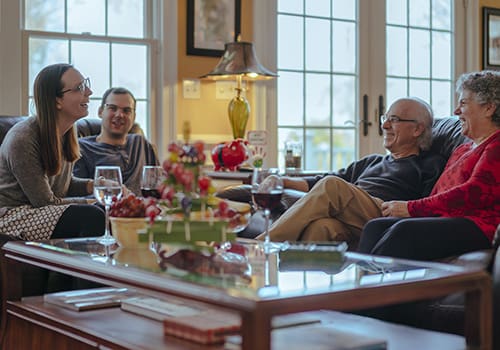
Holiday traditions can still bring joy. You just need to adapt them.
If baking feels overwhelming, simplify it. Let your loved one sprinkle sugar or stir the batter. Invite them to smell the cookies as they bake. They may not be able to fill the same roles they used to, but that’s okay.
At Bridges by EPOCH communities, we do the same. We tailor each activity to fit every resident’s ability. We celebrate participation in any form.
You can do that at home, too. Look for ways your loved one can join in, aiming for a positive connection rather than a recreation of the past.
How Does Bridges Celebrate the Season?
“A sense of togetherness defines holidays at Bridges.”
Our communities celebrate any traditions and customs that bring people together and hold meaning for our residents.
One recent event was our pumpkin-carving party for Halloween. Some residents carve with impressive skills, while others scoop seeds and laugh at the mess. Some prefer to watch. Every role has value; it’s really just about being present with each other.
When families and caregivers join in, they often tell me how relaxed they feel. They know they’re in a safe space with specialists on hand.
Whenever we host these parties, there’s always music and laughter. It may sound corny, but we humans really do embrace these moments of togetherness and community, even if some of our residents get confused or choose to take a nap. That sense of togetherness defines the holidays at Bridges.
How Do You Create Calm During the Holiday Chaos?
“The goal is comfort and to avoid any unnecessary agitation.“
Holidays can bring extra noise and activity. I’ve watched people with dementia retreat when a room gets too busy. When you try to have fun, there is a risk of causing agitation.
At home:
- Keep the environment calm
- Use soft lights and familiar, soothing scents
- Play gentle music
- Serve a favorite meal
- Keep to a predictable routine where possible
These actions help your loved one stay comfortable through change and unexpected visits.
At Bridges, we plan visits with care. Families can use a quiet room if needed, like our community conference rooms. Team members can adjust activities based on each resident’s mood or energy. You can try to do the same at home.
If your loved one feels uneasy, pause. Step into a quiet space, and return when they are ready. The goal is comfort and to avoid any unnecessary agitation. So, there is no pressure to complete a full schedule.
How Can You Help Family and Guests Feel Prepared?

Before visits, prepare your family and friends:
- Explain that your loved one may not remember names or details
- Encourage calm, short conversations, and a little patience
- Prepare children to use gentle voices and short greetings
- Limit group size and visit length
A few peaceful interactions can mean more than hours of noise and confusion. I’ve seen firsthand the soothing power of a grandchild’s smile and a simple “Hi”.
If you are thinking of exchanging gifts, look for comfort and familiarity. A soft blanket, photo book, or favorite snack can bring joy. Avoid complex devices or clutter. Choose items that connect to memories and senses.
How Do You Care for Yourself During the Holidays?

Caregiving takes energy, but the holidays are known to deplete those levels. I’ve watched families push past exhaustion because they think they should do it all. Know you don’t have to.
You may feel pulled between caring for loved ones with dementia alongside providing attention and excitement for children in the family. This dynamic can make holidays a pressure cooker. Think four key things:
- Give yourself permission to slow down
- Ask for help
- Say yes to any support offered by friends or family
- Let some things go
At Bridges, we host caregiver support groups and social gatherings throughout the holiday season. You can share stories, laugh, and take a break. Even a short conversation can ease stress and provide some relief.
At home, build small routines for yourself. Take a walk. Enjoy a quiet coffee. Perform breathing exercises during a spare minute. Your calm helps your loved one feel calm, too.
What Does “People Caring for People” Mean During the Holidays?
Our motto is at the heart of our approach to the holiday season: People Caring for People. For me, the motto is a reminder of the human stories that drive what we do, and that, as a leader, we care for team members and loved ones as well as the residents.
Our team plans activities that lift the spirits of everybody affected by dementia.
Some residents dance. Others listen to music or watch the festivities with a smile. Team members and loved ones celebrate together. You might even get lucky and catch a live performance. One year, Elvis dropped in for a singalong!
Through it all, our team stays ready to adapt because every day brings new needs.
This approach can guide you at home, too. Keep plans simple. Let each moment unfold naturally, and stay present to appreciate the good ones. Notice what works and adjust as needed.
How Can You Make the Holidays Meaningful This Year?

You can create a meaningful holiday, even if things look different from how they used to be.
Focus on presence and understanding. Each small act of care builds warmth and comfort.
Whether you celebrate at home or at Bridges, remember that help is always available. You are part of a community that understands your journey and supports you through it.
Reach out to get in touch if you need any help at all this holiday season.